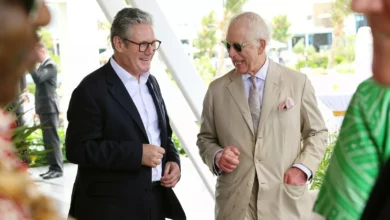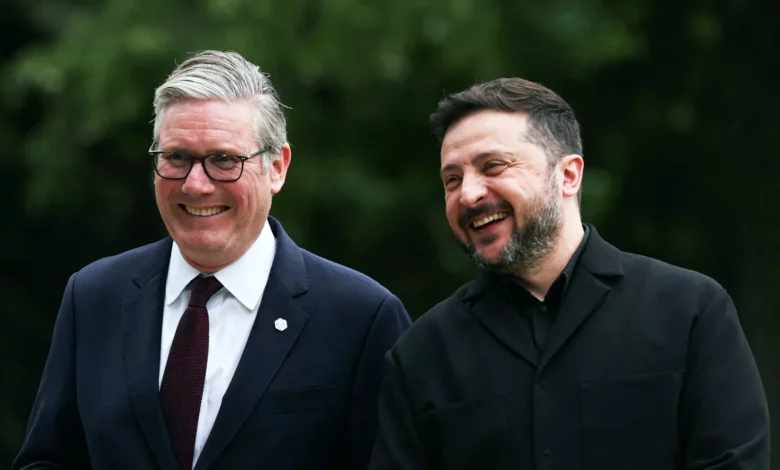
Volodymyr Zelensky has declared that Sir Keir Starmer will always be a welcome guest in Ukraine, paying an emotional tribute to the outgoing Prime Minister for his “steadfast” support during the war against Russia. In a post on X accompanied by a photograph of the two leaders embracing, the Ukrainian president thanked Starmer for “all our cooperation, your support, and the joint decisions that have helped make our Europe and our protection of life stronger.”
Zelensky highlighted that every meeting and conversation with Starmer had been “filled with real substance” and that Ukraine “deeply value[s] Britain”. He praised the Labour leader for “always striving to do what is needed and what will truly help”, adding: “Keir, you are always a welcome guest in Ukraine.” The warmth of the tribute reflects the depth of the relationship forged during Starmer’s premiership, which saw the UK sign a 100-year partnership agreement with Ukraine in January 2025 covering defence and security, and pledge annual military assistance of no less than £3 billion a year until 2030/31.
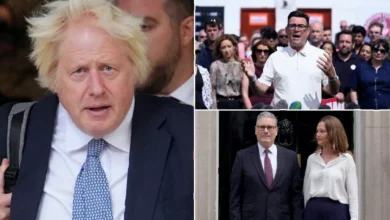
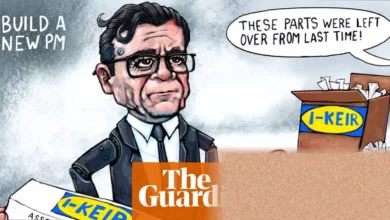
Starmer announced his resignation as Prime Minister on 22 June 2026, following poor results in local and devolved elections the previous month that triggered a leadership crisis. His premiership, which began with a landslide victory in July 2024, had been beset by missteps, scandals, economic headwinds, and policy U-turns. Rachel Reeves’s October 2024 budget pushed the tax burden to its highest recorded level, while a controversial decision to strip winter fuel allowance from most pensioners drew sharp criticism. A breakthrough trade deal with the United States slashing tariffs on cars, aluminium and steel was undermined by President Donald Trump’s criticisms, and the Mandelson scandal – involving Peter Mandelson’s alleged failure to pass security vetting for an ambassadorial role – led to the resignations of Starmer’s chief of staff and director of communications. On the domestic front, his government scrapped the two-child benefit cap, which Starmer said lifted half a million children out of poverty, introduced the Renters’ Rights Act ending no-fault evictions, launched 1,000 new family hubs, and rolled out 30 hours of free childcare per week. Protesters near Downing Street played the EU anthem during his resignation speech. Andy Burnham, the former mayor of Greater Manchester, is considered the front-runner to succeed him. The Kremlin’s chief spokesperson offered a starkly different verdict on Starmer’s foreign policy, stating that he had “not done anything to distinguish himself on the issue of British-Russia relations”.
Yet it is on the international stage, particularly in his response to Russia’s war in Ukraine, that Starmer leaves his most significant mark. Earlier this month he hosted Zelensky alongside French President Emmanuel Macron and German Chancellor Friedrich Merz at No 10 for talks on the conflict. The meeting came after a public dispute between Kyiv and Washington, prompting Starmer to take the lead in uniting predominantly European leaders behind a new security initiative. That initiative, announced on 2 March 2025 and co-led by the UK and France, was dubbed the “Coalition of the Willing”. Its aim is to establish a peacekeeping force for Ukraine that would deter any future Russian aggression should a ceasefire or peace deal be agreed. The concept marked a deliberate move away from over-reliance on the United States, whose involvement in Ukraine had scaled down under President Trump, and is now being considered for replication in the Middle East.
The implications for European security are profound. Ursula von der Leyen, the European Commission president, asserted that “European and Ukrainian security is stronger because of you”, adding that Starmer “did a true reset built on trust” and that “it can take many leaders years to grow into the statesman you became in just two years.” The Coalition of the Willing, however, faces significant hurdles. Russia has already refused to accept any Western troops on Ukrainian soil, and participating nations have so far lacked clarity on specific commitments. Despite these challenges, the initiative represents a fundamental shift in European defence thinking – one that Starmer helped architect at a moment of transatlantic strain.
Von der Leyen was not alone in paying tribute. European Council President António Costa remarked that under Starmer’s premiership “we turned a new page in EU-UK relations” and expressed hope that his successor would continue the path of resetting ties. Starmer had described Brexit as “damaging” and pushed for closer alignment with Brussels, including a bill to adopt EU single market rules without a normal parliamentary vote, though some EU officials considered his ambitions unrealistic. A planned EU-UK summit scheduled for 22 July 2026 has now been postponed.
Taoiseach Micheál Martin commended Starmer for his “significant role in resetting the Irish-British relationship as well as relations between the UK and the European Union”. He noted that Starmer’s government had worked to set a “new direction and depth in the relationship” and had jointly published a framework addressing the legacy of the Troubles in Northern Ireland. Martin described Starmer as “a person of great ability, decency and honour”. In contrast, Sinn Féin leader Mary Lou McDonald framed his departure as “more chaos from those who have no interest in Ireland”. Starmer had previously expressed strong support for the Good Friday Agreement and criticised the approach of recent Conservative governments.