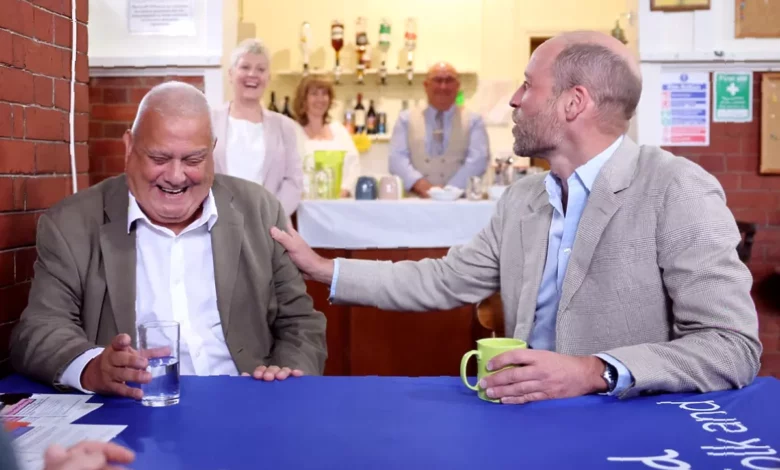
Prince William has spoken of how a pervasive sense of isolation he observed among the public prompted him to launch a mental health pilot project, describing the experience as a “nod” that compelled him to act. The revelation came during a visit to a community hub on the Sandringham estate, where he comforted an emotional supporter and detailed the personal origins of his long-standing commitment to the cause.
A personal mission born from public need
Explaining the roots of his involvement with the pilot programme, the Prince of Wales said he had become acutely aware of how many people were feeling cut off. “What I noticed was there was a lot of isolation going on,” he said. “People were stopping me and talking to me about it, and I felt that was a bit of a nod to say ‘well, can you do something about it?’.” That observation, he indicated, set the course for the two-year initiative co-funded by himself and Catherine, Princess of Wales, which launched in 2025 and is now operating through Norfolk and Waveney Mind.
The Prince’s own experiences have given him a deeply personal understanding of isolation and its toll on mental health. He has previously spoken candidly about the emotional weight of his former role as an air ambulance pilot, describing the repeated exposure to trauma and bereavement as something that “took a toll” and left him feeling isolated and lonely after he left the job. He has also acknowledged that he takes “a long time trying to understand my emotions,” a reflection that underpins his belief that mental health struggles should be discussed openly and without shame.
That belief has driven more than a decade of advocacy. In 2016, he launched the Heads Together campaign alongside Catherine and Prince Harry to break the stigma surrounding mental health, noting at the time that “not one celebrity wanted to join us” – a sign of just how deep the resistance to the topic once ran. A year later, William and Catherine introduced Shout, a 24/7 crisis text line offering free, confidential support; by November 2020 it had facilitated more than half a million conversations. Other initiatives followed: Mental Health at Work in 2018, which attracted 100,000 site visitors within six months; Heads Up with the Football Association in 2019; and Our Frontline in 2020, providing support for emergency workers during the pandemic.
Suicide prevention has become a particular focus, especially among men. The Prince has highlighted that men are three times more likely to die by suicide than women, and that it remains the leading cause of death for men under 45. He has visited construction sites, where suicide rates are significantly above the national average, to discuss the issue, and through The Royal Foundation launched a new national suicide prevention network. His support for James’ Place, a charity offering rapid therapy to men in crisis, has been consistent: after backing centres in Liverpool, London and Newcastle, he officially opened their Birmingham facility in May 2026. The charity was founded by the parents of James Wentworth Stanley, who died by suicide at the age of 21.
Comfort in the community
The Prince’s visit to Anmer Social Club’s Community Hall, located on the King’s Sandringham estate near his own Anmer Hall home, was part of this broader effort to see how local, community-based support can make a tangible difference. The pilot programme run by Norfolk and Waveney Mind is designed specifically for rural and farming communities in northwest Norfolk, targeting those living and working on the Sandringham Estate and the wider area. Its services include one-to-one counselling, drop-in sessions, parent-and-toddler groups, menopause support groups and men’s groups – all aimed at tackling the acute sense of isolation that can affect people in remote areas.
During the visit, William met staff, volunteers and users of the charity. One of them, 71-year-old Paul Gannon, became visibly emotional while speaking about the difference the charity had made. The Prince placed a hand on his shoulder and told him gently to “take your time.” Kensington Palace later shared photographs of the encounter alongside a statement that said: “Supporting mental health in Norfolk. A visit to Mind to see how community-based mental health support is helping people build connection, resilience and wellbeing.”
The Prince has long argued that more male role models are needed to normalise conversations about mental health, and that talking about it should become “second nature.” The pilot in Norfolk, he indicated, could become a template for other rural estates across the country. The Royal Foundation, established in 2009 as the primary vehicle for William and Catherine’s philanthropic work, has made mental health one of its core pillars alongside conservation, homelessness and support for emergency services. For the Prince, the project is not just a policy initiative but a direct response to the quiet, everyday struggles he saw unfolding around him – a chance to turn that “nod” into something lasting.