A growing chorus of cancer specialists and campaigners is urging a fundamental rethink of the NHS breast screening programme, as new data reveals a sharp rise in cases among women under 50 — a group often missed by the current age-based system.
Sophie Dopierala-Bull, director of services and engagement at the breast cancer awareness charity CoppaFeel!, said early diagnosis currently depends “too heavily on whether young people know their bodies, whether they feel confident seeking help, whether they can access healthcare, and whether they are taken seriously when they get there.” She warned that younger patients with symptoms are “routinely dismissed” by health professionals.
Rising Cases in the Under-50s
Statistics from CoppaFeel! and broader cancer registries paint a stark picture. Diagnoses in people under 30 jumped by 78% between 2001 and 2019. In the single year from 2022 to 2023, breast cancer rates increased by 5% among 25- to 49-year-olds. Over a longer timeframe, the incidence among women aged 30 to 39 rose almost fourfold between 2000 and 2021.
Today, around one in five of all new female breast cancer cases occur in women under 50. Approximately 2,500 people under the age of 40 are diagnosed every year in the UK — an average of seven diagnoses per day. Breast cancer is one of the leading causes of death in women under 50, and in females aged 25 to 49 it accounts for almost a third (31%) of all cancer deaths, making it the most common cause of cancer death in that age group (based on 2016–2018 data). In 2024, it was the leading cause of death in women aged 35–49 and 50–64 in England and Wales.
Younger patients also face a more aggressive disease profile. According to the research, patients diagnosed under 50 are almost twice as likely to have late-stage cancer compared with someone in their 60s. Those under 25 are more than twice as likely to be diagnosed with late-stage disease. Women from ethnic minority groups are more likely to present with advanced stages, associated with poorer outcomes.
How the Current Screening Programme Works
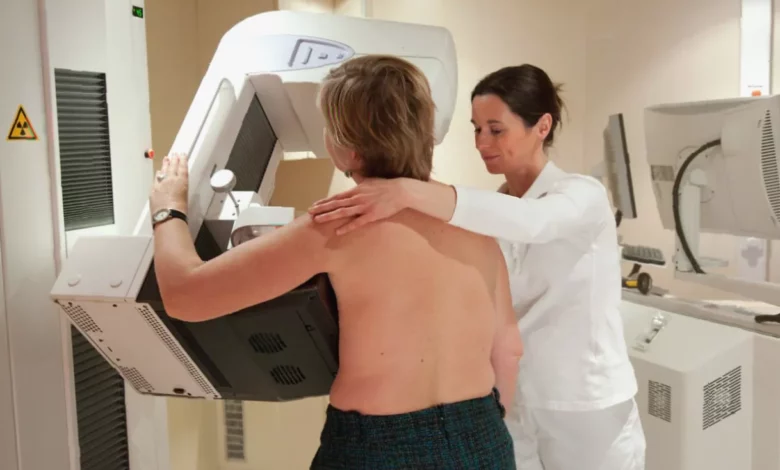
The NHS breast screening programme offers mammograms to women from age 50 up to their 71st birthday, typically every three years. The first invitation is usually sent between ages 50 and 53. Women over 71 are not automatically invited but can request screening every three years by contacting their local service. The programme is based purely on age, not individual risk factors.
Mammograms are generally less effective for younger women because of denser breast tissue, which makes images harder to analyse. This technical limitation compounds the structural gap in screening coverage.
On the whole, breast cancer remains a significant burden in the UK. Every year, around 59,000 new cases are diagnosed in women and 420 in men — about 160 cases daily. Breast cancer accounts for 15% of all new cancer cases in the country. Some 96% of breast cancers occur in women over 40, and 25% in women over 75. Each year, roughly 11,200 women and 85 men die from breast cancer, approximately 31 deaths per day, with over half (51%) of deaths in those aged 75 and over. Female breast cancer mortality rates have fallen by 42% since the early 1970s.
The Case for Risk-Based Screening
CoppaFeel! is among the organisations pushing for a more personalised approach. The charity recommends piloting a seven-minute risk assessment that takes into account family history, genetic factors, and breast density to identify individuals who may benefit from earlier or more frequent screening. It also calls for breast awareness education to be integrated into routine NHS appointments, and for clinical breast cancer trials to include at least one in six patients under 50.
The charity argues that the healthcare system must treat young people’s breast cancer as an urgent issue, not an afterthought.
The National Institute for Health and Care Excellence (NICE) already advises that women at high risk — defined as a 30% or greater lifetime risk, or an 8% or greater 10-year risk — should be offered additional mammographic screening from age 40 to 60, and potentially risk-reducing medication. Those at moderate risk (17–29% lifetime risk, or 3–7.9% 10-year risk at age 40) may be screened with mammography from age 40 to 50 and “considered” for risk-reducing medication.
However, these guidelines are not uniformly applied, and the vast majority of women are not assessed until they reach the standard screening age.
Research and Emerging Evidence
Several UK trials are examining ways to improve detection in younger and higher-risk women. The Age trial investigated the effects of screening women in their forties on breast cancer death rates, with mixed results for statistical significance but showing good attendance rates. The BRAID (Breast Screening — Risk Adapted Imaging for Density) study explored whether abbreviated MRI, contrast-enhanced mammography (CEM), and automated breast ultrasound (ABUS) could improve cancer detection in women with dense breasts. The BCAN-RAY study is specifically examining breast density as a risk factor in women aged 30 to 39.
Beyond mammography, researchers are investigating advanced imaging methods such as MRI, ultrasound, and 3D mammography (DBT) for women with dense breasts, who face both higher cancer risk and reduced mammogram sensitivity.
Barriers to Early Diagnosis
CoppaFeel! stresses that early detection relies on a chain of factors that often break for younger patients: self-awareness, confidence in seeking help, access to healthcare, and being taken seriously by professionals. The charity claims younger people with symptoms are “routinely dismissed” — a barrier compounded for ethnic minority women, who face lower awareness of symptoms and risk factors, stigma, fear, mistrust of healthcare professionals, and financial burdens. They are less likely to be of screening age and more likely to present with symptoms, often at more advanced stages. The absence of pain as a symptom can also delay help-seeking for some women.
The underlying risk factors for breast cancer include age, genetics (such as BRCA mutations), family history, breast density, and lifestyle factors including alcohol, smoking, and obesity. These factors are not currently used to tailor screening for the general population under 50.
With an average of seven under-40s diagnosed every day and late-stage disease more common in younger and ethnic minority women, campaigners say the age-only screening model is failing a growing cohort. CoppaFeel! and allied organisations — including Breast Cancer Now, Prevent Breast Cancer, METUPUK, and the Pink Ribbon Foundation — are urging the government and NHS to pilot risk-based assessments that could catch cancers earlier in those currently falling through the net.