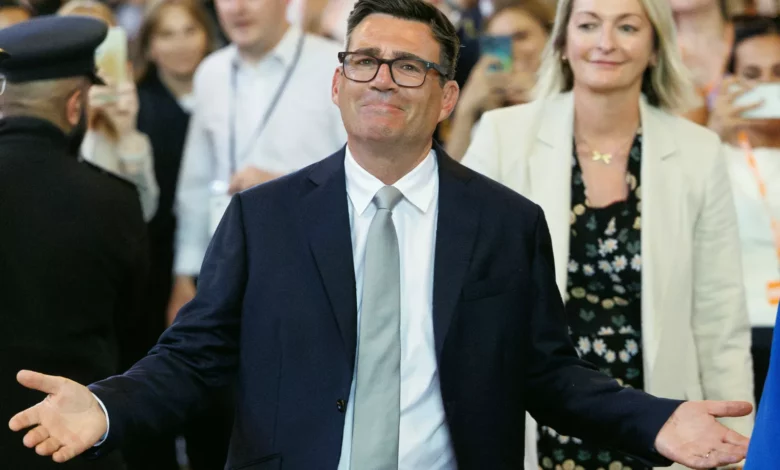
Andy Burnham’s prospective cabinet is already taking shape as a deliberate departure from the narrow factional base of Sir Keir Starmer’s government, with the former Greater Manchester mayor’s choice of chancellor set to be the clearest signal of the change in direction. Burnham, sworn in as the MP for Makerfield on 22 June and the sole declared candidate in the Labour leadership contest, is expected to enter Number 10 by mid-July if his bid runs uncontested. His team is likely to reflect a broader spectrum of Labour opinion, from the soft left to the Blairite centre and the party’s right wing, in what allies describe as an effort to generate real change after Starmer’s resignation the same day.
The Chancellor: The Key Decision
The appointment of the Chancellor of the Exchequer is widely regarded as the most consequential choice Burnham will make, setting the economic direction of his government. Rachel Reeves, the current chancellor and the first woman to hold the office, is widely expected to be removed from the Treasury — and possibly dropped from the government entirely. Her economic policy, built on “modern supply-side economics” inspired by Joe Biden, and her tight borrowing rules would likely be replaced, though Burnham has said he would stick by them.
Three names dominate the discussion for the role, each representing a distinct economic philosophy. Ed Miliband, the Energy Secretary and a former Labour leader, has hankered for the job for some time and is considered a leading contender from the soft left. However, his candidacy has provoked unease in financial circles: some banking industry sources have warned his appointment would be a “disaster” and could trigger market instability, given his past advocacy for higher borrowing and a larger state role. Wes Streeting, the former Health Secretary and a Blairite centrist, is considered a frontrunner by some, with bookmakers’ odds reportedly favouring him. Streeting withdrew from the leadership race on 22 June and endorsed Burnham; *The Independent* revealed over the weekend that he had asked for the Treasury as part of a deal to step aside. He remains deeply distrusted by the left of the party. Shabana Mahmood, the Home Secretary, is positioned on the right of the party and is said to want the job, though some sources indicate she may prefer to remain at the Home Office to complete her immigration reforms. She is seen as a potential compromise candidate, described as having “political nous” and being unafraid to shake up the system. Other names in the mix include Yvette Cooper, Miatta Fahnbulleh, Darren Jones and John Healey, leaving open the possibility of a surprise appointment.
Other Key Cabinet Roles
Beyond the Treasury, Burnham’s cabinet is expected to be more diverse in gender and factional allegiance. Lou Haigh, who was forced out of Starmer’s cabinet as transport minister over past criminal convictions involving mobile phone fraud, has revived her career as a pivotal coordinator of Burnham’s campaign. She is expected to take the key coordination role of Chancellor of the Duchy of Lancaster, running the Cabinet Office. Anneliese Midgley, the Knowsley MP and another key campaign figure, would likely get a plum role — possibly Leader of the Commons. Angela Rayner, the former deputy prime minister who resigned from Starmer’s government in September 2025 over tax affairs (she was later cleared of wrongdoing), has quietly put aside her own leadership ambitions to back Burnham. She is described as a “powerhouse in the party” and a leading figure on Labour’s left, and is now looking at a top job, perhaps home secretary. Lucy Powell, Labour’s deputy leader and a close ally of Burnham’s, would also likely get a cabinet post; she may replace Steve Reed in local government, housing and communities, or take the education brief. Lisa Nandy, the current culture secretary, is set for a promotion — she too will be eyeing education. On defence, former armed forces minister Al Carns, a former Royal Marine who resigned on 11 June over defence spending, is a contender for defence secretary, with supporters citing his frontline military experience. John Healey, who also resigned as defence secretary on the same day over the defence investment plan, could land that job or even foreign secretary. Yvette Cooper, the current foreign secretary and a former leadership rival who finished marginally behind Burnham in 2015, is likely to survive any cull but would probably move to a different role. James Purnell has reportedly been chosen as Burnham’s chief of staff.
Who Might Be Out
Wholesale change is on the cards, meaning some surprising figures could find themselves on the backbenches. David Lammy, a close ally of Starmer and the current deputy prime minister, is widely expected to be moved aside. There is also speculation that Burnham would move on from the “Morgan McSweeney” allies — notably welfare secretary Pat McFadden and housing secretary Steve Reed, even though both are seen as highly competent. Tech secretary Liz Kendall, who previously failed in the welfare job, is unlikely to land a role in any Burnham cabinet. As with any new cabinet selection, there are always surprise names that emerge — but the shape of this government may become clear within a few weeks.