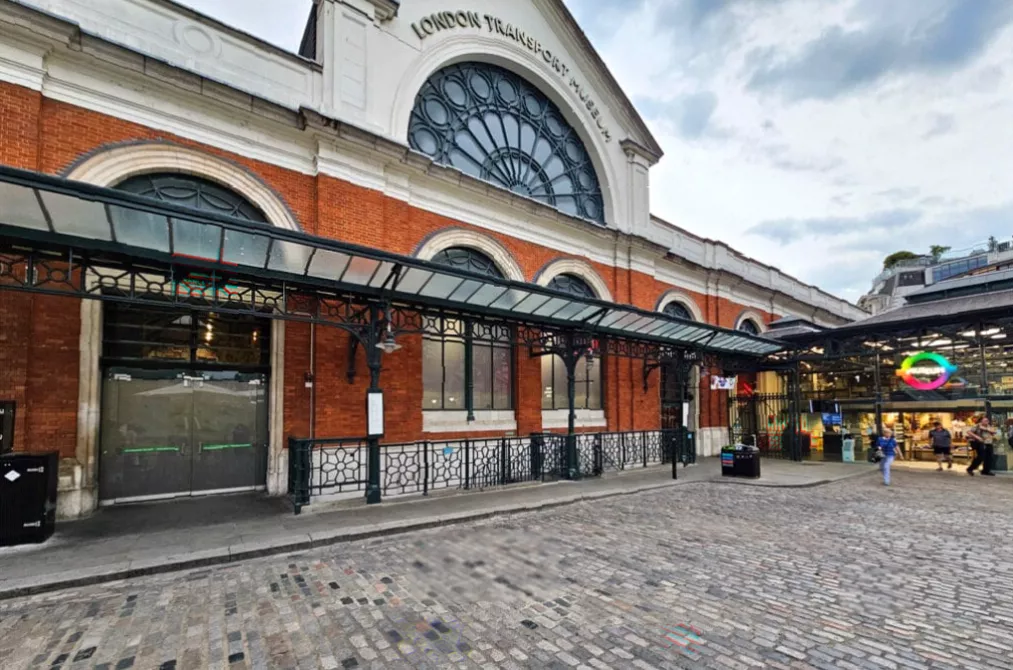
The London Transport Museum is returning its main entrance to its original location as part of a £26 million overhaul of its Covent Garden home, a move that will restore the historic building’s intended layout and create a dramatic new arrival space.
New entrance, new flow
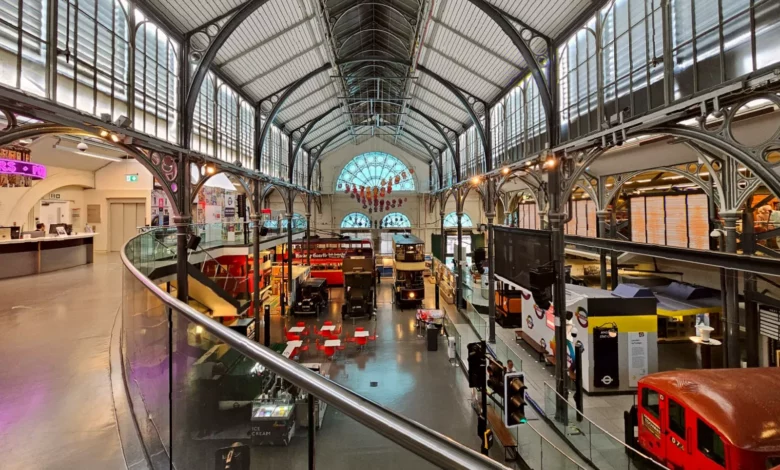
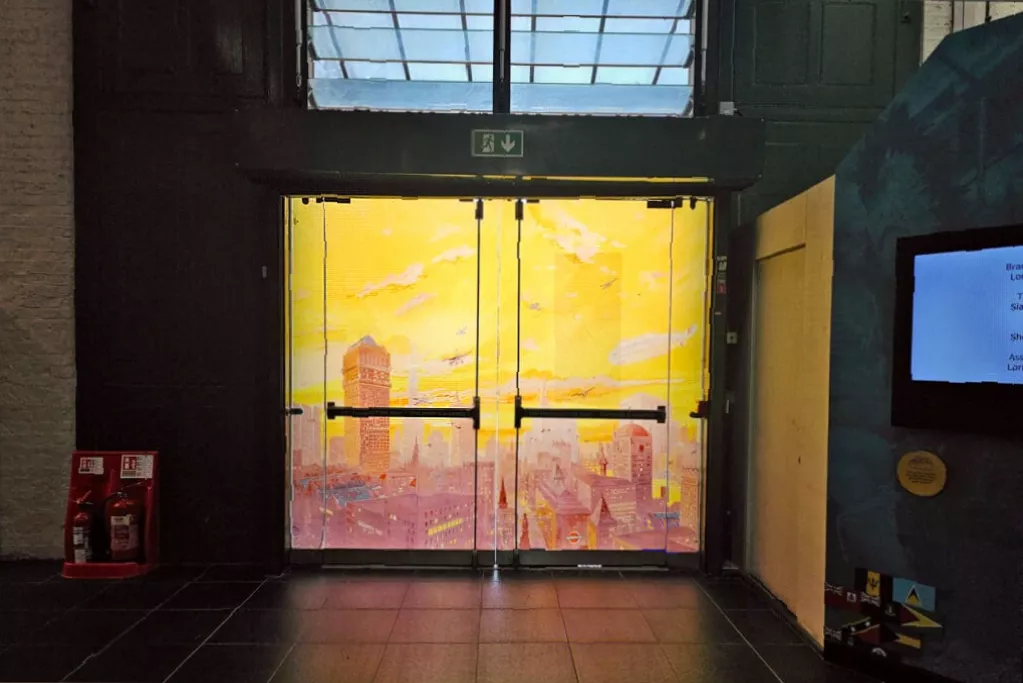
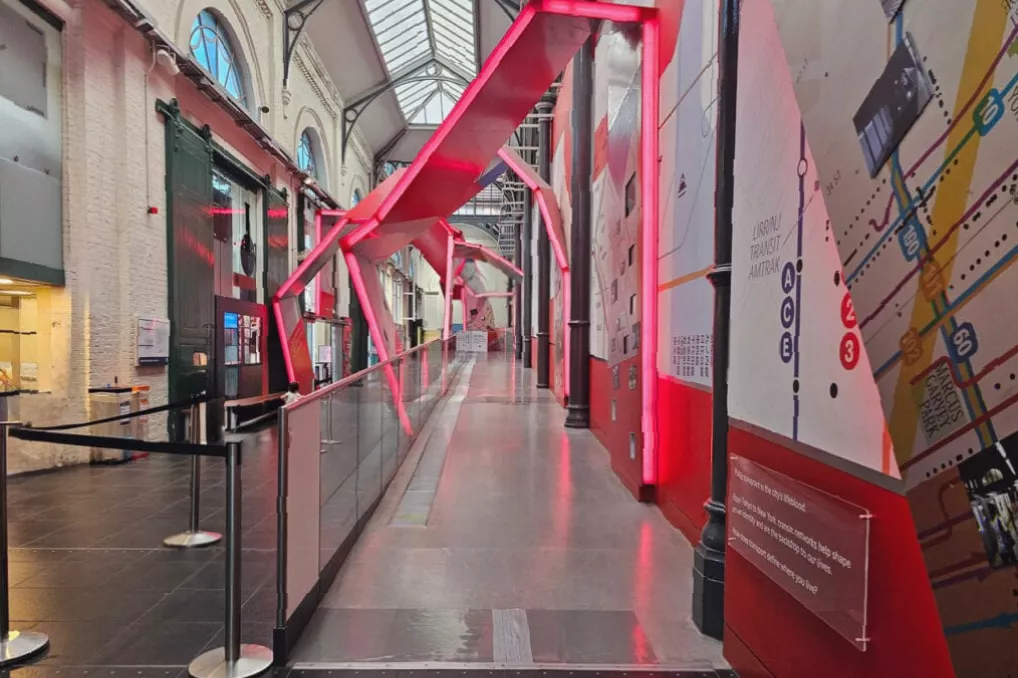
Visitors currently enter through a side route via the shop, a configuration introduced during the 2007 refurbishment. That arrangement means guests face a long, largely featureless corridor before they reach the galleries. Under the new plans, the entrance will flip back to where it originally stood, allowing people to walk straight into the museum. The design aims to maximise the double-height space by moving the buses away from the centre to the sides, creating what the museum calls a “wow factor” on entry. A large graphic on the fire escape showing a futuristic image of London in 2026 will be taken down to make way for the new doors.
The current entrance corridor will be transformed into an event space. Elsewhere, the bridge that currently spans the main gallery will be removed, letting visitors walk around all three other sides of the hall and through a new space at the far end of the building.
Why the ramps were needed – and why they can go
The existing layout is largely a consequence of accessibility works carried out in 2005. Because the museum could not excavate into the historic floor – a constraint imposed by the building’s protected status – the lifts were installed around a metre above floor level to accommodate their lift pits. This required extensive ramps throughout the building, with much of the ground floor raised on a platform and additional ramps connecting different areas. The long blank corridor was a secondary result of those compromises.
Modern lift technology no longer requires such deep pits. This allows most of those ramps to be removed, freeing up valuable gallery space and creating a more intuitive layout for visitors. The redesign will unlock approximately 500 square metres of additional public space, mainly by rationalising back-of-house staff areas and reconfiguring the floor plan. The museum expects this to accommodate an extra 90,000 visitors per year on top of the 450,000 it has welcomed annually in recent years – a record 449,599 came in 2025, the highest total since the museum opened in 1980.
Some changes are already under way: a new video room has been installed next to the toilets, and a new gallery is being built. The museum will remain open throughout the redevelopment, and everything is scheduled for completion in time for its 50th anniversary in 2030.
Commercial heart and hidden upgrades
The shop and cafe – the shop alone attracts more than twice as many visitors as the museum itself – will also be refurbished as part of the project. Behind the scenes, the work will address several essential but less visible issues: upgrading drainage, removing gas boilers and improving rooftop solar panels, all part of the museum’s target to reach net-zero emissions by 2030. A new brand identity, including a redesigned roundel, was unveiled in July 2024, and the museum recently opened a “Platform media gallery” featuring video content on London’s changing life over 200 years. Its popular Hidden London tours, which explore disused stations and wartime shelters, saw record demand in 2025, with 48,630 ticket holders and, for the first time, places opened to younger visitors aged 10–16.
Funding the transformation
The total cost of the project is estimated at £26 million. The museum has so far secured £13.3 million: £1 million from Arts Council England (allocated through the Museum Estate and Development Fund), £300,000 from the London Transport Museum Friends, and a £12 million grant from Transport for London (TfL). The remaining £13 million is still to be raised, but work can begin before all funding is in place, with the museum drawing on its reserves to finance the early stages. Elizabeth McKay, the museum’s Director and CEO, said: “London’s transport story is one of the greatest innovation stories in the world, and this transformation is about sharing that story in a bigger, bolder and more inspiring way than ever before. For generations, Londoners and visitors have come to the Museum to explore the city and its stories through its transport system. As we approach our 50th anniversary, we’re creating an experience that captures the energy, creativity and optimism of London itself – while opening the doors to even more people.” McKay took over in August 2023 after a 28-year tenure by Sam Mullins OBE, and has championed a five-year strategy focused on inclusion, relevance and STEAM engagement for young Londoners.
Acton Depot and future collection
During a briefing for museum supporters, an update was also given on the museum’s Acton Depot, where the majority of the collection is stored. The museum confirmed that the depot will remain in Acton as part of any future plans. Options under consideration include redevelopment around the depot, and it could even emerge with slightly more space than it has today – a useful prospect given the size of the collection of trains and buses. The museum also confirmed that it expects to acquire one of the older DLR trains when they are withdrawn from service.