Women’s health experiences must be believed to end medical misogyny, says Alison Downham Moore

For centuries, women presenting with pain or ill health have been told it is “all in their heads” – a manifestation of hormones, nerves or emotional fragility. This pattern of dismissal is not anecdotal but systemic, as evidenced by a survey of more than 5,100 UK women and men which found that 56% of women feel their pain is ignored or dismissed, with nearly a quarter reporting that no one took their suffering seriously. The same study revealed that half of all UK women say their health concerns have not been taken seriously because of their gender, rising to 64% among those aged 18 to 24. Health Secretary Wes Streeting has acknowledged that “medical misogyny” is letting women down, stating that the NHS has failed women “too often and for far too long”. Yet a separate survey of 2,000 UK adults found that 63% had never heard of the government’s Women’s Health Strategy, which was explicitly designed to tackle the problem.
A History of Dismissal: From the Vapours to the Gender Pain Gap
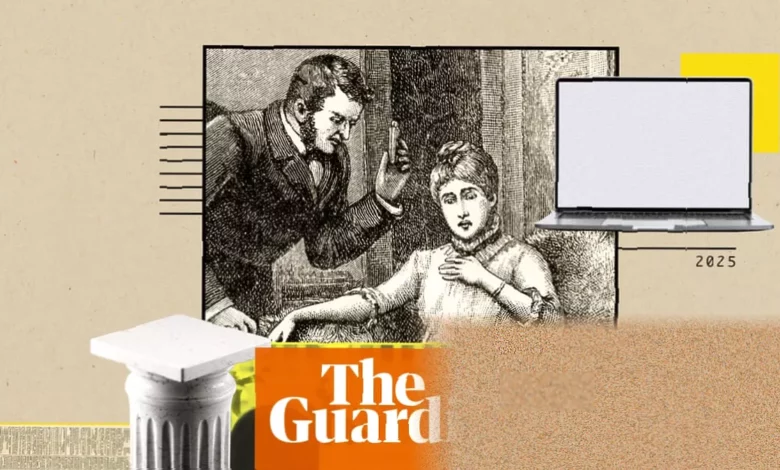
The roots of this distrust run deep. For centuries, Western biomedicine treated women’s bodies as governed by reproductive organs understood to be inherently volatile. In the 1700s, women were still thought to be ruled by nervous disorders such as “the vapours”. In the 1800s, they were defined as the “sicker sex”, their ageing reduced to menopause, and they were made targets for experimental treatments and commercial exploitation. The Australia Institute has described the despair many patients report when trying to access hormonal and reproductive healthcare, noting that it is not simply a matter of a few bad clinicians but part of a long pattern in which medicine has repeatedly treated women’s testimony as unreliable, women’s pain as less urgent and women’s reproductive bodies as peculiarly available for unwarranted surgical intervention.
This injustice is fundamentally about whose knowledge counts. Women are wronged not only in what is done to their bodies but in their status as the knowers of those bodies. Their bodily experience is doubted and psychologised, and their accounts of symptoms and mistreatment are dismissed. Consent is often assumed from silence or trust rather than being freely given. The issue is also built into the very making of medical knowledge. Modern biomedical research has used men’s bodies while treating women’s bodies as deviations from the norm, leading to chronic under-research into conditions that disproportionately affect women – such as breast cancer – and the application to women of treatments tested only on men. For decades, clinical trials historically underrepresented women, with researchers citing the complexities of the female reproductive system as a reason to exclude them. This bias extended to preclinical research, where male animals and cells were disproportionately studied. The result is a persistent gender data gap that leaves women experiencing more years in ill health: Office for National Statistics figures show that women in the poorest areas spend only 62% of their lives in good health, compared with 68% for men in the wealthiest areas.
Gynaecology and the Unwarranted Knife
Gynaecology offers a particularly stark example of how innovation, authority and violation have fused. The history of hysterectomy disrupts the common myth that radical gynaecological surgery is an unavoidable answer to women’s suffering. The first potentially survivable hysterectomies using antiseptic measures were performed in the 19th century on women with benign fibroid tumours who were often not told what surgery they were receiving or that their tumours were not cancer. More than half of them died. There were vigorous debates, competing treatments and repeated warnings about unnecessary mutilation throughout the history of the procedure. Yet patients were often told little, and what counted as consent was frequently shaped by misogynist assumptions about marital authority and medical prerogative rather than by the patient’s autonomous choice.
Through the rise of modern gynaecology, women’s reproductive organs came to be treated as the cause of wide-ranging illness – and as disposable once they seemed redundant. By the late 20th century, that attitude resulted in more than a third of all women in the West having hysterectomies by the time they reached old age. When rates began to decline, some medical researchers warned that cancer rates would rise if women were allowed to keep their uteruses. As late as the 1970s, US surgeons proposed hysterectomy as the treatment of choice for women of the lower classes whom they thought could not manage their own contraception. The same rationale contributed to the forced sterilisation of First Nations and Black women in many countries. Hysterectomy has served, in different contexts, as therapy, cancer prophylaxis, gender transition surgery, covert Catholic contraception, population management and administrative convenience. Its history cannot be traced by technical refinement alone.
Seen in this longer frame, present-day complaints about women and gender-diverse people being steered too quickly towards hysterectomy for benign uterine tumours are not unfortunate residues on the margins of an otherwise settled system. They belong to a pattern in which patients are not fully informed of alternatives, the long-term effects of radical intervention are downplayed and clinical authority too readily replaces dialogic consent. This is troubling because it may shortcut proper decision-making and ignore new evidence of long-term consequences for ageing and wellbeing. The same concern is echoed in Australian reports of aggressive pelvic surgery and the dismissal of women’s pain – a pattern that should be read in a wider historical and intellectual context. When women report feeling herded into procedures they did not fully understand, or later discover that pathology did not support the scale of intervention undertaken, this should not be dismissed as anecdotal dissatisfaction. It raises the question of whether medicine has relinquished one of its oldest habits: treating patients not as persons but as units in a population quantum.
Gaslighting, PCOS, Endometriosis and the Fight for Recognition
The undervaluing of women’s bodily knowledge extends beyond surgical overreach. Until just a few weeks ago, polyendocrine metabolic ovarian syndrome – the most common endocrine disturbance affecting women, with approximately one in ten in the UK – was reduced to ovarian cysts, much to the frustration and confusion of patients with this systemic condition. PCOS is a multisystem disorder associated with hormonal imbalances, insulin resistance, and increased risks of type 2 diabetes, cardiovascular disease and adverse mental health outcomes. Yet variation in presentation and care often leads to delayed or missed diagnoses, with an overemphasis on reproductive problems and insufficient recognition of its serious long-term comorbidities.
Endometriosis suffers from similar dismissiveness. The average time to diagnosis in the UK has risen to nine years and four months, up from eight years in 2020. For ethnically diverse communities, the delay can extend to 11 years. Around one in four women reported needing to visit their GP ten or more times before endometriosis was suspected. More than half of those with symptoms attended A&E, and 46% were sent home without treatment. Many patients report being told their symptoms were “normal” or “in their head” – a classic example of medical gaslighting, where healthcare professionals invalidate or dismiss symptoms, often attributing them to psychological causes based on gender stereotypes. Endometriosis UK is advocating for the condition to be recognised as a common chronic condition, with a goal of reducing diagnosis time to one year or less by 2030.
The underlying logic that women’s health is fodder for profit-based medicine – while their symptoms are put down to hormones, nerves, emotions or reproductive organs – has proved remarkably durable. Contemporary complaints about gaslighting, obstetric violence, the exploitation of young women’s bodies as egg factories for IVF, and the growth of privacy-invading femtech industries are not radical breaks from history so much as new chapters in it. The femtech industry offers digital solutions for women’s health, but many apps and devices collect highly sensitive personal data – menstrual cycle details, sexual activity, emotional symptoms – with security gaps that allow the spread of misinformation and leave data vulnerable to exploitation. There are fears that intimate health data could be accessed by insurance companies or employers, or, in the context of changing abortion access laws, be used to prosecute individuals seeking abortion services or healthcare after miscarriages. Current regulations in the UK and EU are often inadequate, and menopause tech remains particularly under-researched and under-regulated.
Progress in technique does not automatically produce justice in care. Surgery is much safer than it was, many clinicians are deeply reflective and caring, and standards of consent are better developed. But historical scholarship makes one point clear: medicine must reckon with the histories through which women were made into unreliable witnesses of their own experience. Until that reckoning is taken seriously, the gender pain gap will remain open. The underlying logic has proved remarkably durable.