Labour lost its century-long grip on Wales in the Senedd election, a seismic collapse that saw the party fall to just nine seats in the expanded 96-seat chamber while Plaid Cymru secured a historic victory with 43 seats and Reform UK became the official opposition with 34. The result, delivered under a new more proportional voting system with 16 larger “super constituencies” each electing six Members of the Senedd (MSs), marks the first time since devolution that Labour has not been the dominant force in Welsh politics. The former First Minister, Eluned Morgan, lost her seat, and the scale of the defeat has sent shockwaves through a party that had previously never held fewer than 26 of the Senedd’s 60 seats.
A political earthquake in Tredegar
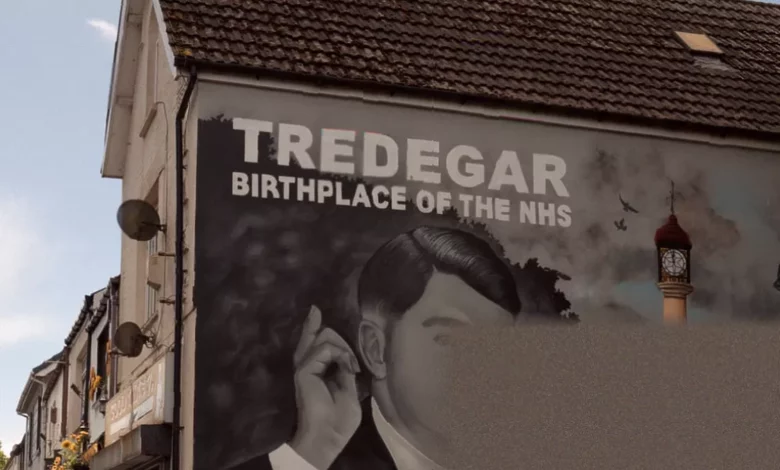
Nowhere was the shock more visceral than in Blaenau Gwent Caerffili Rhymni, a constituency built around the post-industrial valleys town of Tredegar — a place whose streets are still lined with murals of Labour giants Aneurin Bevan and Neil Kinnock, both born here. For decades, Blaenau Gwent was a steadfast Labour seat, at times holding the single safest majority in the UK. But in last week’s election the constituency didn’t elect a single Labour MS: three of the six seats went to Plaid Cymru and three to Reform UK. “It’s unbelievable, really,” said Woody Woods, 61, who runs a charity supporting armed forces veterans above the heritage centre that now occupies the site of the Tredegar Medical Aid Society — the mutual organisation Bevan used as a model for the NHS. Since the pandemic, the space has also hosted a food bank. “It was always the way to vote Labour here, I don’t think people ever thought about not doing it … I think the party just doesn’t represent working people any more,” he said.
The outgoing Labour MS for the area, Tredegar-born Alun Davies, said he had watched the ballot verification on election night in disbelief. “I couldn’t see any Labour boxes in places we normally pick up votes. We started the campaign thinking we’d get the third seat, and as the weeks went by, we revised it down to four, to five … but right up until the returning officer gave us the results, I thought we still had enough support for one seat,” he said. Labour asked for a recount for the sixth and final seat, but while the Labour vote tally increased, Reform’s rose further and the gap widened. Davies conceded. The seat he had hoped would preserve a Labour presence in the constituency went to Reform’s Joshua Kim, a teacher and South Korean immigrant who became the first person of Korean descent elected to the Senedd. Kim told the BBC he was “shellshocked” and “did not think for one minute” he would be elected, adding that he had not been at the count because he did not want to miss a day’s pay doing a supply work shift. He arrived 45 minutes after the result was declared, as the sports hall was being cleared for a football match.
The three Plaid Cymru MSs elected in the constituency are Delyth Jewell, formerly the party’s deputy leader; Lindsay Whittle, the veteran campaigner who ended over a century of Labour control in the Caerphilly by-election last autumn; and Niamh Salkeld, a first-time MS. Reflecting on the scale of the loss, Davies added: “There is no chance of Labour winning first-past-the-post anywhere in the south Wales valleys at the moment, and we’re not going to come second in many places.” He has since called for the resignation of Prime Minister Keir Starmer, attributing the Welsh result to decisions made in Downing Street.
Why voters abandoned Labour in its traditional heartlands
Polls had pointed to Labour finishing third behind Plaid Cymru and Reform for some time, but several party insiders said they had not been prepared for such a total collapse — a result that also bodes ill for the next general election. The most common explanation heard in Tredegar was that the party had simply lost touch with the working people it was built to represent. “The people of Wales have looked at Labour and say: ‘We don’t recognise what we have seen’,” Davies said. For Woody Woods, the shift felt inevitable: “It was always the way to vote Labour here, I don’t think people ever thought about not doing it … I think the party just doesn’t represent working people any more.”
In a town where the Workmen’s Hall Library — one of the first such institutions in the industrial valleys, built in 1861 by miners and steelworkers — is now a car park, the tangible symbols of Labour’s heritage are fading. The Cambrian Inn, which hosted early trade unions and Chartist groups, still stands, but the economic transformation that has hollowed out the coal and steel industries has eroded the old loyalties. Many people spoken to in Tredegar this week said they were not interested in politics and did not vote. Turnout in the constituency was 47.7% — well below the record Senedd average of 51.7%.
Some voters explicitly rejected Labour because they feared Reform UK. Helen, a 63-year-old shopper who voted for the first time for Plaid Cymru, explained: “I didn’t think Labour was the safe bet to stop Reform, so I voted Plaid Cymru. The [Reform] social media stuff you see is so divisive and full of hatred. We have to hope that Plaid can do what they say they will, but there’s no way they will be worse than the alternative.” Her sentiment was echoed by Niamh Salkeld, the newly elected Plaid MS, who said: “I was surprised Labour didn’t get that last seat, in the end it was very tight. But you can never take any vote for granted. A lot of people said they hadn’t spoken to a Labour politician in years … I think [Labour] thought the support would always be there.”
Salkeld acknowledged that Plaid Cymru “has a lot to prove to people”, but added: “I think it sent a clear signal to the Labour party that things desperately need to change. People have put their faith and trust in us to do that.”