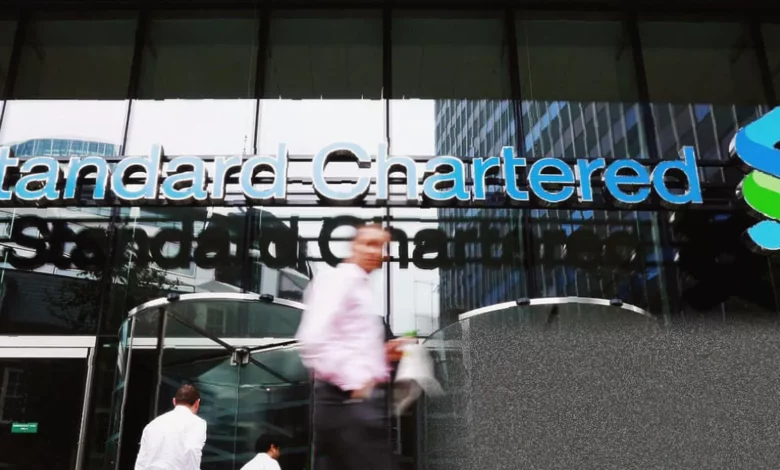
Standard Chartered has announced plans to cut more than 7,000 jobs over the next four years, as the London-headquartered lender accelerates its use of artificial intelligence to streamline operations and boost profitability.
Job cuts in detail
The bank said on Tuesday it would reduce 15% of its back-office roles by 2030, resulting in approximately 7,800 redundancies out of its roughly 52,000 corporate function and back-office staff. Standard Chartered’s total global workforce stands at nearly 82,000 employees, though independent data from Revelio Labs recorded 69,891 staff as of December 2025, reflecting a 3.8% year-on-year growth rate. The most affected roles are expected to be in the bank’s back-office centres in Chennai, Bengaluru, Kuala Lumpur and Warsaw, according to chief executive Bill Winters.
Winters stressed that the move is not about cutting costs. “It’s replacing in some cases lower-value human capital with the financial capital and the investment capital we’re putting in,” he said. Some staff will be reskilled as part of the transition.
AI’s role and reskilling
The job reductions are being driven by automation and the adoption of artificial intelligence, making Standard Chartered one of the first major global banks to explicitly tie thousands of redundancies to AI. Winters said the technology will be a “huge facilitator and enabler” as the bank automates more of its core banking system. Back-office and repetitive roles are most vulnerable, but the bank is also planning to redeploy workers into customer-facing positions and new roles created by the shift.
Standard Chartered expects these changes to deliver significant productivity gains. The bank aims to increase income per employee by approximately 20% by 2028. It also targets a reduction in its cost-to-income ratio from 63% in 2025 to around 57% by 2028. On profitability, the lender is targeting a return on tangible equity (ROTE) of over 15% by 2028, rising to roughly 18% by 2030 — up from its previous 2025 target. The financial services industry more broadly is heavily investing in AI, with adoption accelerating across functions such as risk management, client service and trade processing, raising wider concerns about job displacement in the sector.
Transformation and strategic context
The cuts and updated financial targets come as Standard Chartered nears the end of a decade-long effort to transform itself from a potential takeover target into a consistently profitable institution. Winters, who has been chief executive for 11 years, is expected to remain in post for the next few years to oversee the implementation of the new strategy, addressing market speculation about succession planning. In February, Manus Costello was appointed permanent chief financial officer, succeeding Diego De Giorgi, who resigned.
Geopolitical uncertainty clouds the outlook for some of the bank’s key markets in Asia-Pacific and Africa. Standard Chartered set aside $190m (£142m) in precautionary provisions in the first three months of the year linked to the Middle East conflict, and analysts have warned that Asia-Pacific banks may need to raise loan-loss provisions further if the Iran conflict drags on, as higher energy costs and weaker growth strain borrowers. Winters insisted the bank is “extremely resilient” in the face of these risks. Markets reacted positively to the announcement, with Standard Chartered’s shares rising about 2.5% in Hong Kong, outperforming the benchmark Hang Seng Index.
Beyond the job cuts, the bank is positioning Hong Kong as a central pillar of its growth strategy, describing it as its largest and fastest-growing market. Standard Chartered is accelerating its wealth and retail banking business, targeting $200bn in net new money by 2028. The lender achieved its 2026 medium-term financial targets a year ahead of schedule and, on sustainability, ranks 37th in the Financial Sector Benchmark, with strong performance in environmental footprints but room for improvement in disclosure and transition planning. In other recent developments, Federal Bank announced in April 2026 that it would acquire select credit card portfolios from Standard Chartered, and in February 2026 the bank adopted LSEG Multi-Asset Data across its Corporate and Investment Bank.