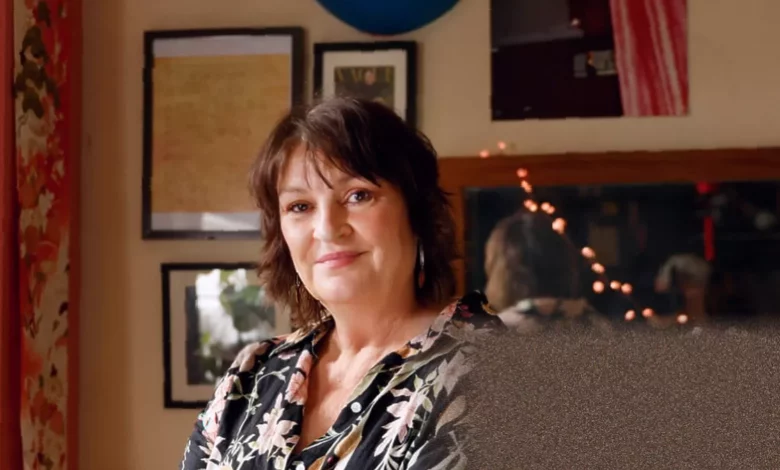
Daniela Nardini, once the prototype for Fleabag, now helps others navigate life’s challenges as a therapist. Three decades after she first swaggered into the nation’s living rooms as Anna Forbes — the profane, sexually confident lawyer in BBC Two’s This Life — Nardini has swapped the set for a consulting room in Glasgow’s West End. The transformation is not a simple career pivot but a profound reclamation shaped by grief, illness and a determination to process the darkness she once only performed.
The Anna Forbes effect
Nardini’s breakthrough came in 1996 when she was cast as Anna Forbes, a role that would earn her the BAFTA TV Award for Best Actress in 1998 and a Scottish BAFTA for the same performance. The series, which followed a group of junior lawyers sharing a house in south London, became an era-defining drama, drawing 3.5 million viewers at its peak. Critics have since credited Anna as a prototype for Phoebe Waller-Bridge’s character in Fleabag, a comparison Nardini said had never occurred to her. “Really? I’ve never watched Fleabag,” she said.
Acting had been Nardini’s ambition since school. She trained at the Royal Scottish Academy of Music and Drama in Glasgow, graduating in 1989, and cut her teeth on Scottish television in Take the High Road, Your Cheatin’ Heart and Taggart, alongside fringe theatre productions including the title role in Liz Lochhead’s Mary Queen of Scots Got Her Head Chopped Off. When she heard a rumour that This Life needed a Scottish actor, she did not think she stood a chance. Lochhead was asked for a recommendation and Nardini was called to audition.
The show’s success was immediate — and overwhelming. “I had moved down from Scotland and found it all quite overwhelming,” she recalled. “I’m a family girl and I missed everyone back home.” When the series was cancelled after two seasons, Nardini struggled to shake Anna. “Casting directors kept asking: ‘Can you do her again, but in a different way?’” She turned to theatre — Camille, Top Girls, A Streetcar Named Desire — to break the typecast. Later roles included a ruthless estate agent in Annie Griffin’s New Town, for which she won a second Scottish BAFTA in 2009, as well as appearances in Vera, Waterloo Road, The Fades and more recently the BBC legal drama Counsels, filmed in Glasgow in 2025.
A decade of loss and survival
Seven years ago Nardini made the decision to retrain as a therapist — but the path was anything but linear. She described her fifties as a decade of cascading crises. Her father, Aldo, co-founder of the famous Nardini’s ice‑cream palace in Largs, Ayrshire, died in 2015 when she was 49. Her marriage to the restaurateur Ivan Stein, with whom she had moved back to Glasgow in 2009 with their daughter Claudia, came to an end. “A chef and an actress … perhaps it’s just not a good idea,” she said, before adding that they remain on good terms.
Then, after her first NHS mammogram at 50, she was diagnosed with breast cancer that had spread to one lymph node. She underwent a mastectomy and breast reconstruction. “I felt that it had happened because my heart was broken,” Nardini said. “I felt it came from an emotional place.” The cancer was caught early and she did not need chemotherapy. “I knew quite quickly that it wasn’t going to kill me … but once it was done, I felt it had been dealt with physically, but not emotionally.”
Losing a breast was a profound reordering of identity. “The way I’d previously been recognised by the public, it was very sexualised,” she said. “Then suddenly to lose that part of yourself is very challenging. It changes your relationship with yourself, and not in a negative way.” During lockdown she painted a series of colourful portraits of women, one of which shows a figure with a mastectomy scar adorned with red roses.
Nardini began seeing a therapist herself and then started formal training. But further loss struck: her mother died in 2022, followed by a beloved aunt. “Because I’d been hit with a further emotional onslaught, training took me a while,” she said. She completed an HNC in counselling during lockdown, qualified as a Cognitive Behavioural Therapist, and became a member of the British Association for Counselling and Psychotherapy. She finally gained her qualification in 2024. She now works from a consulting room filled with plants and zen art in Glasgow’s West End, where she draws on her own lived experience of grief, fear and recovery. “If you’ve been through stuff yourself, you are going to have more empathy for people going through similar things,” she said.
Her understanding of emotional suppression is deeply personal. When she was 16 her elder brother, Pietro, died in a car accident. “I think I was just numb for several years,” she said. At 21 she suffered panic attacks outside her drama school — “my heart was beating really fast and the sky went really big” — which she now believes were the unprocessed grief finally surfacing. “Clients will come to me and say: ‘I just block that out.’ I tell them: ‘No, you have got to bring it into the light because that’s the stuff that’s stopping you from living a happy and healthy life.’”
Life after the spotlight
Nardini is open about the discomfort of fame. “I’d be out with my mum and someone would come barging up and ignore her, just focusing on me,” she said. “I found that disconcerting.” The public’s sense of entitlement to private information has made dating difficult. In the past decade she has been on two online dates: one with a psychiatrist where there was no chemistry, and another with a man who had “Googled the hell out of me” and brought up family details. “After that, I was like: I don’t know about this,” she said. She is not opposed to meeting someone new, “but he’d have to be quite some guy. Because right now I am really happy. I don’t want any problems coming into my life. I don’t want anyone coming in and telling me what to do, what to eat, what to watch on the telly.”
She recently asked a client whether they would give up their job if they won the lottery. The client said yes. “See, that’s the thing. I wouldn’t stop working. I would want to keep doing what I’m doing now. Being a therapist. My acting life is quieter now, but people still come to me with small parts. So I’d like to keep doing that too. Doing it all is what makes me tick.”
This Life is available now on BBC iPlayer for its 30th anniversary.