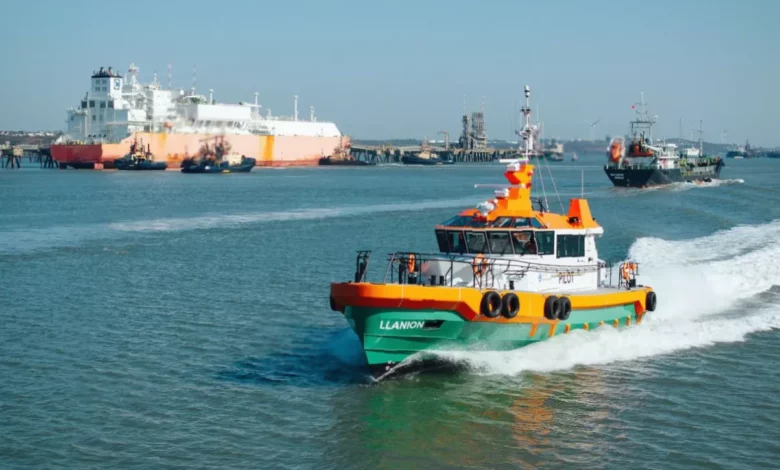
The Port of Milford Haven recorded an 11% increase in gross tonnage during 2025, according to its annual financial report, as the trust port continued to invest in infrastructure and expand its workforce.
Growth and financial performance
Total cargo movements rose 17% to 38.3 million tonnes, helping the port reclaim its position as the third largest in the UK by tonnage. Turnover climbed to £45.2m from £43.2m the previous year, while operating profit fell to £5.2m (2024: £6.8m). Profit before interest and tax improved to £6.9m (2024: £6.1m), supported by a £1.7m gain on the revaluation of investment properties. However, the underlying profit measure, which excludes certain accounting costs, dropped from £11m to £9.2m, suggesting tighter margins despite higher shipping activity.
The port’s total borrowings rose sharply from £17.5m to £25.2m, with net debt increasing from £15.3m to £20.7m. Service performance remained industry-leading, with pilotage services delivering greater than 98% availability for customers.
Investment in marine infrastructure
Capital expenditure reached £18m in 2025, following £27.4m the year before. Key projects included the construction of a new pilot jetty, a refurbished vessel traffic services (VTS) command centre, and sea trials for the port’s new pilot boat, Llanion. Further investment was directed towards Milford Docks and Milford Waterfront. At Pembroke Port, preparations are under way for future floating offshore wind opportunities linked to the Celtic Freeport.
The port also completed Pembroke Dock Marine, creating a base for marine renewable technology developers. Exploratory discussions are under way regarding the potential use of the port’s 180-metre dry dock for a £480m superyacht construction and refit yard, which could create up to 3,000 skilled jobs, the port confirmed.
Workforce expansion and recognition
The port added 25 employees in 2025, alongside four new apprentices — a record intake. Its marine team has grown by 35% over the past five years. At year-end, the port employed 231 staff, with 129 in operational roles and 102 in office positions.
The Port of Milford Haven was named one of the UK’s Best Workplaces for Women in 2025, achieving a spot in the top 100. It also retained its “Great Place to Work” certification for the third consecutive year, with high scores in wellbeing and safety culture. Over 30% of employees are women, with significant representation in mid and senior management, though the port acknowledged that many roles remain male-dominated. It partners with the SPARC initiative to promote gender diversity, having engaged more than 170 female learners aged 12–13 in maritime careers.
Economic and community impact
Described as the UK’s biggest energy port and Wales’ busiest, Milford Haven handles around 20% of Britain’s seaborne trade in oil and gas. The port and the cluster of energy-related businesses along the waterway are a key driver of economic activity in Pembrokeshire, supporting more than 4,000 jobs. The wider waterway supports over 5,000 jobs in Wales, with the port injecting £324m in gross value added (GVA) into the Pembrokeshire economy and £88.5m into the Welsh economy.
In 2025, the port invested nearly half a million pounds into community initiatives, including £80,000 through its Community Fund, focusing on safety, skills development and environmental stewardship. Chief executive Tom Sawyer described 2025 as “another year of solid performance” and noted the fourth consecutive year of revenue growth. Chair Dr Siân George said the port’s continued growth “reflects our long-term perspective — one that prioritises our customers and our many stakeholders”.
The UK’s premier energy port
Milford Haven is widely regarded as the “energy capital of the UK”. In a significant strategic shift, income from hospitality and tourism businesses in 2024 surpassed that of its single largest energy customer, a diversification the port sees as crucial for stability in a volatile global energy market. During the first quarter of 2025, Milford Haven recorded a 31% increase in liquid bulk tonnage, driven largely by a surge in LNG imports, making it the largest contributor to this growth among UK ports.
The port is actively positioning itself as a hub for marine renewable energy, with plans for floating offshore wind in the Celtic Sea. The Milford Haven: Energy Kingdom project is exploring the transition to hydrogen and renewables, aiming to create a decarbonised smart local energy system. A Green Energy Fund has been launched to support community groups in reducing their carbon footprint.
Environmental challenges and ambitions
The port has committed to achieving the UK Government’s net zero carbon footprint target by 2050. Renewable energy generation on site reached nearly 5 GWh in 2025, avoiding 900 tonnes of CO₂ equivalent. However, direct emissions (Scope 1) rose from 1,340.39 tonnes in 2024 to 1,578.15 tonnes in 2025, largely due to diesel use, and carbon intensity also increased. Environmental monitoring continues through the Milford Haven Waterway Environmental Surveillance Group.
Chair Dr Siân George emphasised the port’s trust port mandate: “We are committed to our mandate to ensure we hand on the Port in a better condition to future generations. We do this by placing responsible growth, environmental stewardship and prosperity for the communities who depend on the waterway at the forefront of our decision-making process.” The report also disclosed that senior remuneration for the highest-paid director rose from £271,000 in 2024 to £494,000 in 2025, attributed to a one-off compensatory award.