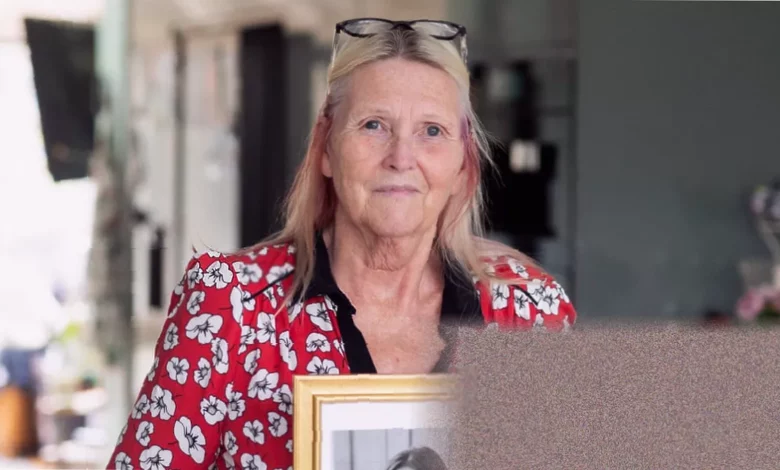
A mother is campaigning for what would become known as Holly’s Law, after her daughter’s killer subjected her to years of animal cruelty before murdering her. Annette Bramley wants to stop prolific animal abusers from acquiring more pets and to force the authorities to treat the abuse of animals as the flashing warning sign it so often is for domestic violence — a link she believes cost Holly her life.
Holly Bramley, 26, was stabbed to death by her husband, Nicholas Metson, in March 2023. In what prosecutors described as a “twisted and barbaric” attack, Metson cut her body into at least 224 pieces. Some remains, including parts of her heart, were never recovered. A member of the public found them in the River Witham, near Lincoln, more than a week after she was last seen. Metson, who had attempted to cover up the crime by buying cleaning products, redecorating and enlisting a friend for £50 to help dispose of the body parts, was jailed for life with a minimum term of 19 years and 316 days. He had also searched online for phrases such as “How to get rid of a dead body” and “What benefits can I get if my wife dies”, and had used Holly’s bank account to transfer money to himself.
For Annette Bramley, the murder was a horror she had long feared. “I didn’t think he would stop at animals. I knew the connection between animal abuse and domestic abuse,” she said. “When the police came to the door, we knew nothing else could possibly have happened to her. We didn’t suspect a car accident or anything like that; we just said: ‘What has he done to her?’”
That knowledge came from Metson’s own history. He had a long record of animal cruelty stretching back to the age of eight, and openly admitted strangling animals. During his seven-year relationship with Holly, the abuse escalated. He bought her a puppy and tried to kill it by putting it in a washing machine. When Holly rescued it, he drowned it in a bath. Holly later confided that Metson had killed her hamsters by placing them in a food blender and a microwave oven. He also killed and abused numerous rabbits and guinea pigs. At one point Holly fled to a police station with her pet rabbits to escape him. Metson was known to the RSPCA but was never prosecuted. Annette said the charity’s awareness of his history was one of the reasons the family disapproved of the relationship. “With his history, why was he allowed to go on to have more pets?” she asked.
The campaign for Holly’s Law
Annette Bramley is now pushing for Holly’s Law, which would create a nationwide animal cruelty register. Under the proposed Animal Protection Disclosure Scheme (APDS) — modelled on Clare’s Law, which allows police to disclose information about a partner’s history of domestic violence — police would be able to tell safeguarding organisations and, on a case-by-case basis, individuals at risk about a person’s record of animal abuse. The register would not be public but would act as a safeguarding tool, providing a “red flag” for potential partners, law enforcement and welfare institutions. It would also aim to prevent prolific abusers from acquiring more pets, and raise awareness of the strong overlap between cruelty to animals and cruelty to people.
The campaign has gathered more than 53,000 signatures on petitions. Annette has written to the Prime Minister and to Queen Camilla, who is patron of the “Save Lives” charity. The Naturewatch Foundation is backing the effort, and amendments to the Crime and Policing Act 2026 were shaped in part by the campaign. The UK Government’s “Freedom from Violence and Abuse: A Cross-Government Strategy” and “Animal Welfare Strategy for England” now formally recognise the overlap between animal welfare and human safety, particularly in domestic abuse cases.
The link between animal abuse and domestic violence
The evidence behind the campaign is extensive and damning. Criminologists and law enforcement have long recognised that animal abuse is an early indicator of escalating violence — a pattern sometimes called the “Progression Thesis”. The so-called MacDonald triad — animal cruelty, fire-starting and persistent bedwetting — has been linked to sociopathic behaviour and future violent offending. Experts now see animal abuse and domestic abuse as part of a continuum of harm directed at the most vulnerable members of a household.
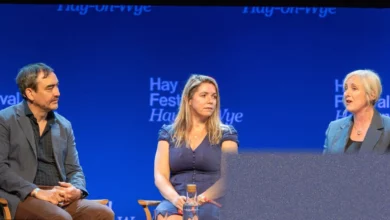
Statistics underline the point. Approximately 70% of people who commit domestic violence are also found to be animal abusers. Up to 71% of pet-owning women in domestic violence shelters report that their partner had threatened, harmed or killed a family pet. Analysis by the UK’s National Wildlife Crime Unit found a link to domestic violence and abuse for 27% of all wildlife crime offenders. Mark Randell, a former senior detective and campaigns manager at Naturewatch Foundation, said this is a significantly overlooked risk factor. “The whole concept of Holly’s Law is to be able to at least advise those safeguarding organisations where there is animal cruelty within a domestic abuse environment,” he said. “Bearing in mind how many domestic abuse cases involve animal abuse, and the fact that 50%-60% of households in the country have a pet, it will make a real difference.”
Perpetrators frequently use the threat of harming or killing a pet as a tactic for coercive control, intimidation and silencing victims. This can prevent victims from leaving abusive relationships because they fear for their pets’ safety. In Holly’s case, Annette believes Metson used the threat of animal abuse to force Holly to do what he wanted. “He’d been harming animals for all these years,” she said. “Every single day my thoughts were consumed with what happened and how we failed to save her.”
The Government has commissioned a research project to explore the connection between animal abuse and domestic violence further, with the aim of reducing domestic abuse-related homicides and suicides where animals are involved. It is also working with the veterinary profession to help staff recognise potential signs of domestic abuse through non-accidental animal injuries. Annette Bramley said: “I think vets need to be educated on this. If you have an animal that’s regularly being brought in with a broken leg or dislocated shoulder, they should be able to spot the signs and raise concerns.”
Randell argued that animal abuse must be taken more seriously in the conversation around misogyny and tackling violence against women and girls. “There’s an increasing number of young men, predominantly, who are using catapults and slingshots to harm wildlife. We’ve got to shift that culture. It’s about respect for women, but also respect for all living beings and the environment,” he said. “And if we’re talking about what’s being done in relation to online abuse of people, we’ve got to make sure it includes animals too.”
The Greater London Authority has noted the importance of protocols for cross-reporting between police, child and animal protection agencies. While the Metropolitan Police Service’s risk assessment template includes a question about the treatment of animals, there is not yet a default linkage with animal protection agencies. Holly’s Law would change that by making the connection automatic.
For Annette Bramley, the drive to make change keeps her going. “Every single day my thoughts were consumed with what happened and how we failed to save her. And with his history, why was he allowed to go on to have more pets?” she said. “What can we do to stop that?”