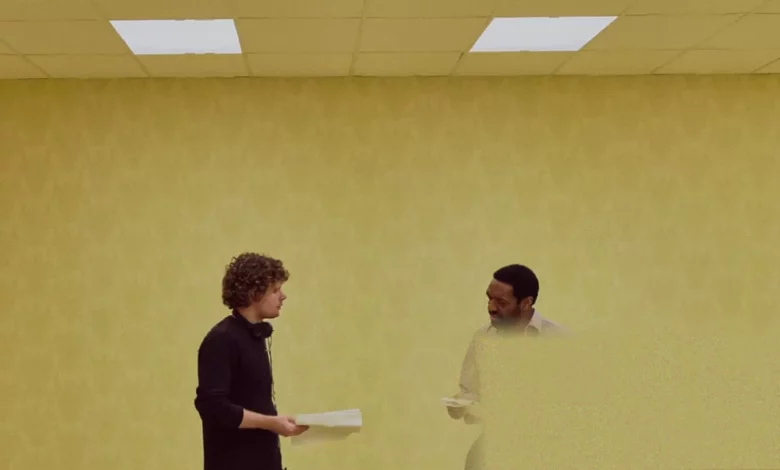
Three YouTubers have directed this year’s biggest box office hits. In a remarkable shift for the film industry, the three highest-grossing or most surprising releases of 2026 have come from creators who built their audiences on the platform: Markiplier, Curry Barker and Kane Parsons. Their films — Iron Lung, Obsession and Backrooms — have collectively outperformed major studio titles, rewriting assumptions about where the next generation of filmmakers comes from.
Box office breakthrough
Markiplier’s Iron Lung, self-released through his own studio on 30 January 2026, has earned $51.2 million worldwide against a budget of $3 million, with domestic takings of $41.1 million and international receipts of $10.1 million. The film received mixed reviews. Markiplier announced at the Cannes International Film Festival that Iron Lung would be available for purchase or rent on YouTube Movies & TV from 29 May 2026.
Curry Barker’s directorial debut Obsession, released on 15 May 2026, has become the box office phenomenon of the summer. Made for less than $1 million, it has grossed $148 million worldwide. Its third weekend outgrossed both its first and second weekends — a virtually unheard-of feat — and its domestic total now stands at over $104.7 million, with $13.8 million from international markets. Industry projections expect it to cross $100 million domestically. Barker is also set to direct a reboot of The Texas Chain Saw Massacre for A24.
Kane Parsons’ Backrooms, released by A24, opened to $81.5 million in the United States and Canada — a record for the distributor and the biggest R-rated debut of 2026. With a worldwide total of $118 million on a $10 million budget, it became the top movie at the North American box office in its opening weekend. At 20 years old, Parsons is the youngest director ever to have a number one film at the box office. The audience was overwhelmingly young: 86 per cent were under 35, and 66 per cent were under 25. Backrooms also set a record for the biggest opening weekend for a first-time feature director of an original film. It has already outperformed several starrier or bigger-brand titles from 2026, including Wuthering Heights (which grossed $242 million worldwide), The Devil Wears Prada 2 (which opened to $233.6 million and became the year’s fourth highest-grossing film with $666.1 million) and the most recent Pixar release.
These three directors are not alone. Earlier, Michael and Danny Philippou — who operate under the YouTube handle RackaRacka — directed Talk to Me, which became A24’s highest-grossing horror release in North America with $44.6 million, on a $4.5 million budget. The film earned $59.5 million worldwide and a sequel is in development. Meanwhile, longtime YouTube film critic Chris Stuckmann’s directorial debut Shelby Oaks, released in late 2025, was met with negative reviews, described as a “clumsy found-footage pastiche” that failed to translate its festival buzz into lasting appeal.
From YouTube to the big screen
The paths these creators took to feature filmmaking are strikingly different. Kane Parsons has a background in visual effects and built his reputation with the original Backrooms web series — a spooky internet meme brought to life in a series of YouTube shorts. Curry Barker was part of a sketch-comedy duo before turning to horror shorts. Markiplier became famous for his play-through videos, making him perhaps the most stereotypical YouTuber of the group. The Philippou brothers specialised in outsized special effects demos and goony comedy — their “Marvel vs. DC” video, for example, is something no studio would ever adapt. Chris Stuckmann is best known for his film reviews.
Yet for all this diversity of experience, nearly every YouTube creator who has made the leap to features has done so through the horror genre — even if they never specialised in horror on the platform. Barker’s Obsession, for instance, feels closely related to the work of Zach Cregger, a sketch comedian from linear television who pivoted to unpredictable, ambitious horror with Barbarian and Weapons. Barker’s film shares an affinity for a hooky premise with thorny, often darkly funny complications. The progression from sketch comedy to horror is more natural, the original article noted, than the journey from making gross sex jokes about Wonder Woman (as the Philippou brothers did) to exploring dead-serious traumas in Talk to Me.
Why horror dominates
Several factors explain why horror has become the default genre for YouTube-trained filmmakers. Post-pandemic, horror has been far more marketable than comedy, which was already contracting in the late 2010s. For a time, whimsical or irreverent superhero movies served as a comedy substitute; now horror and comedy — natural bedfellows in their desire to produce a visceral reaction — are sharing that space. Horror also thrives with up-and-coming voices from outside the Hollywood system because its budgets are typically lower and therefore less risky. The genre is overwhelmingly youth-driven at the box office, and younger filmmakers appear to have a sharper sense of what resonates with their peers than many older directors do.
Research into horror audiences confirms this. The genre generally attracts a younger demographic, with a significant portion under 25 and a slight male skew. Gen Z viewers are more likely to watch horror on streaming services than older generations, but horror remains popular for weekend theatre attendance among 13- to 17-year-olds. Gen Z is increasingly turning up to films from opening weekend, driven by a fear of spoilers and a desire for shared experiences — a trend that benefits horror, which trades on communal shock and tension. Social media platforms have enabled these creators to leverage their built-in fanbases effectively, creating viral momentum that traditional studios struggle to replicate.
This intense focus on audience engagement, however, can produce films that feel calculated rather than intensely personal. The original article noted that Bring Her Back, the Philippou brothers’ follow-up to Talk to Me, felt like a “hooky but vaguely algorithmic geek show.” Backrooms depicts a dreamlike atmosphere with unsettling accuracy, but struggles to draw convincing characters outside its meticulously designed liminal spaces. It feels like the work of someone who has spent a lot of time contemplating industrial architecture, video games and liminality, but has accumulated fewer life experiences to bring those ideas to more electrifying life. Even Obsession, the most lived-in of the bunch, has a somewhat baffling depiction of the socioeconomics of twentysomethings — multiple characters apparently paying rent from shifts at a music retailer.
Implications for cinema
Are these filmmakers learning their insights or their limitations from YouTube in particular? The original article argued that YouTube is not really a training system; it is a platform with endless passages and backrooms of its own. It might be more analogous to MTV, which gave music-video directors their first wide exposure in the 1980s and 1990s. Just as a true student of YouTube is mainly learning what attracts clicks — not the fundamentals of filmmaking — MTV itself was not teaching anyone how to make music videos or feature films; it showcased what played particularly well on the channel. The filmmakers who emerged from music videos, such as Spike Jonze and Michel Gondry, came from less traditional backgrounds (a skateboarding photographer and a rock-band drummer, respectively).
Interestingly, the recent filmmaker who feels most in line with those boundary-pushing sensibilities is Boots Riley, whose I Love Boosters — which premiered at SXSW on 12 March 2026 and was released theatrically on 22 May 2026 to a 91 per cent Rotten Tomatoes score — is a far loopier, more visually minded work than anything from the YouTube cohort. Riley is decades older than the newcomers, and his status as a Black man brings up another notable point of comparison: with the exception of Markiplier, who has some Asian heritage, all of these wunderkinds are white men. YouTube has certainly opened doors for much younger and scrappier filmmakers to brand themselves to a wider audience earlier in their careers. At the same time, it is not exactly revolutionary to see more ambitious twentysomething white men hurrying through that door. Starting a YouTube channel may not cost as much as attending film school, but it can favour the kind of pseudo-bootstrapping that inevitably skews toward those already gifted the time and means to work on their videos, undermining the vision of underdogs triumphing in a digital meritocracy.
Yet a more heartening form of traditionalism lurks beneath this trend. The success of Backrooms and Obsession is demonstrating that younger generations have not lost the patience for full-length movies — contrary to the narrative that phone-addicted eyeballs cannot sit through a film without a second screen present. Backrooms, a film one might assume could be replaced by its online shorts, has drawn audiences in droves. The fact that Curry Barker, Kane Parsons and Markiplier all wanted to make movies, rather than grind through daily micro-doses of content, is a testament to the strange, beautiful resilience of cinema. If YouTube is any kind of new film school, that means for some people, films are still worth learning about.