Arsenal’s maximum extraction from their assets leaves the question of whether this is their ceiling

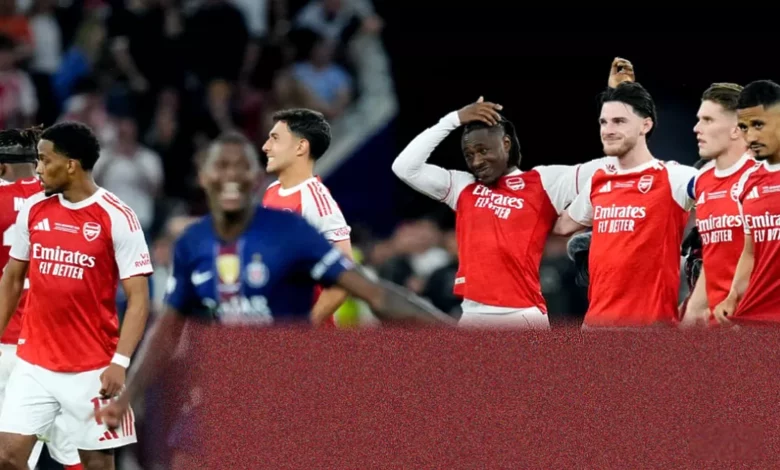
Penalty shootouts are not a lottery, but a recognisable and trainable footballing skill — one that Arsenal failed to execute when it mattered most in Budapest. Eberechi Eze’s miss wide and Gabriel Magalhães’s wayward effort towards the Danube were not acts of misfortune; they were failures of technique, psychology and preparation under the most brutal pressure. Yet to insist fortune plays no part would be the second greatest lie. Any contest decided by ten kicks of a ball remains at the mercy of random factors: a divot, a bad contact, a goalkeeper’s guesswork. For a sport that already thrives on narrow margins to settle its biggest prizes on such small morsels is one of its cruellest traits. But for Arsenal, the defeat was not simply bad luck — it was the logical outcome of choices made long before the shootout.
Arsenal’s tactical gamble and its limits
Mikel Arteta’s side adopted a highly defensive strategy, often described as a low block or policy of containment, designed to frustrate Paris Saint-Germain and strike on the counter. They defended in a compact 4-4-2 formation, with minimal players venturing beyond the halfway line. The result was their lowest recorded possession in a Champions League final — 24.7% — and just 196 completed passes against PSG’s 806. For long periods, Arsenal’s defensive masterclass nullified the attacking threats of Luis Enrique’s team, and an early lead through Kai Havertz gave them a foothold. But a strategy calibrated to earn and defend a 1-0 lead stands or falls by those same fine margins. Against the best team in the world — as Arteta described PSG after the match — that approach eventually ran out of road.
Arteta acknowledged the immense pain of the loss but also expressed pride in his squad’s journey. He told reporters the team needed to “digest” the pain and “turn it into fuel” for future improvement. Crucially, he also admitted that Arsenal were not at the same level as PSG in terms of possession and dominance. “We need to improve and find different margins,” he said. He pointed to PSG’s ability to “warp the gravity of the game” and force opponents to play in their least favourite areas of the field. The subtext was clear: even with a disciplined defensive structure, Arsenal lacked the individual brilliance to seize control of the biggest stage.
Controversy added to the frustration. Arsenal believed they should have been awarded a penalty in extra time when Noni Madueke went down under a challenge from Nuno Mendes. The referee waved away the appeals, and VAR did not intervene. Arteta expressed his view that it could easily have been a penalty, especially given other decisions made in the competition. But the broader issue was not a single call. It was the gulf in resources and priorities that had brought Arsenal to this precarious position.
Recruitment strategy: depth over stardom
Arsenal’s transfer strategy in recent windows has put a premium on bolstering the back line, adding squad depth and raising the overall level of the squad rather than signing electrifying X-factor players capable of winning a big game with a moment of brilliance. That approach has delivered a Premier League title — the club’s first in 22 years — and a run to the Champions League final. But in Budapest, it met its match. Bukayo Saka, Leandro Trossard, Gabriel Martinelli, Noni Madueke and Viktor Gyökeres — fine players all — were handed the biggest stage and found themselves unable to fill it. The absence of Michael Olise, Harry Kane or Luis Díaz — players who define games on instinct — was felt acutely.
The club has invested heavily in recent years, spending £105m on Declan Rice and £65m on Kai Havertz, among others. Yet the priority has been balance and financial prudence rather than chasing game-changing superstars. Reports suggest Arsenal are now interested in strengthening further, with potential targets including Morgan Rogers of Aston Villa, admired for his tactical flexibility, as well as Martin Zubimendi, Mikel Merino, Riccardo Calafiori and, speculatively, Enzo Fernandez from Chelsea. These players would continue the pattern of reinforcing midfield and defence, not adding a mercurial match-winner. The strategy is sustainable, but it also raises a question: can a team built on depth and organisation ever bridge the gap with state-backed clubs that can absorb expensive missteps?
The financial disparity is stark. Clubs like PSG and Manchester City operate with much fatter margins for error. City, for example, can spend £59m on Omar Marmoush, £50m on Nico González, £46m on Tijjani Reijnders and £27m on James Trafford without any real urgency for any of them to work out. Arsenal cannot afford that luxury. The Premier League’s immense financial power — driven by lucrative broadcast deals — does give English clubs an advantage over most European leagues, but within that league, the gap between Arsenal and the state-owned behemoths remains significant. An expensive misstep on the scale of the Neymar–Messi–Mbappé experiment at PSG would derail most clubs for a decade. Paris, by contrast, simply shrugged it off and went again.
The “as good as it gets?” paradox
There is a prevailing assumption that with Arsenal’s Premier League drought broken and a squad approaching peak age, the final step to European glory is inevitable. Arteta’s golden age, the narrative goes, is just beginning. But buried within the eulogies is a paradox. We are told this is a team that has made the very most of its resources through good coaching, good culture and sound process, allowing it to compete with the continent’s finest megaclubs. Yet we are also told there is ample capacity for improvement. Can both things be true? If Arteta has squeezed every last drop of potential out of this squad, how likely is it that there are still levels to find? What if this club is already operating at 105% of its capacity?
The thirst for renewal is strong, but the cautionary tale of Liverpool last summer is a reminder that transition is rarely straightforward. World-class players necessitate an enhanced wage structure, new tactical shades and a subtly different dressing-room dynamic. A club as well run as Arsenal can count on signing more hits than misses, but the bigger the stakes, the bigger the risks. Meanwhile, other sleeping giants are stirring. Bayern Munich and Barcelona are clearly close. Manchester United, Chelsea, Liverpool and Real Madrid are all capable of waking from their slumber. Future generations may marvel at Arsenal’s fortune in reaching a Champions League final by beating Bayer Leverkusen, Sporting Lisbon and Atlético Madrid — but will the circumstances be any more favourable next time?
This was Arsenal’s second appearance in a Champions League final, the first coming in 2006 against Barcelona. They now hold the unwanted record of having played more European Cup/Champions League matches than any club without ever winning the trophy. The window of opportunity at the very highest level is vanishingly small, contingent on luck as well as skill, and carries no guarantees of coming again. For Arsenal, the long summer months will be spent weighing whether their strategy has reached its natural ceiling — and whether the margins they chase can ever be made wide enough to secure the glory that so narrowly eluded them.