Serena Williams has announced she will return to competitive tennis next week at Queen’s Club, marking her first appearance on court since her retirement from the sport. The 23-time Grand Slam singles champion is set to play doubles at the prestigious London grass-court event, a development that has electrified the tennis world and raised immediate questions about her long-term intentions.
The announcement came during the women’s singles fourth-round match at Roland Garros between top seed Aryna Sabalenka and 16th seed Naomi Osaka, the showpiece fixture of the evening session. Williams’ decision to compete at Queen’s represents her first competitive action since stepping away from the sport, and while no further details about her future schedule have been confirmed, the move has inevitably sparked speculation about a potential return to singles competition.
The significance of Williams’ comeback cannot be overstated. As arguably the most dominant force in women’s tennis history, her presence on the doubles court at Queen’s will draw intense scrutiny. The grass-court season provides a natural platform for a player of her calibre to test her form ahead of Wimbledon, though whether she intends to compete at the All England Club remains unknown. What is clear is that the 42-year-old American retains the competitive instinct that defined her career, and her return — however limited in scope — will reshape the narrative around the women’s game heading into the summer.
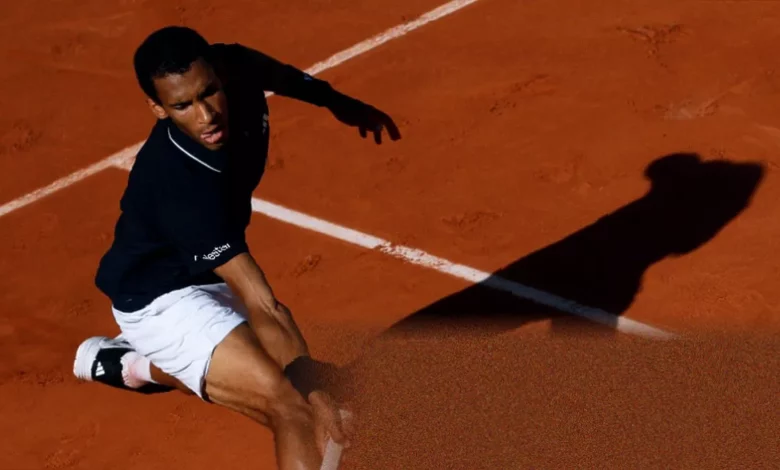
At Roland Garros, meanwhile, the men’s draw continued to take shape with a series of compelling fourth-round matches. Felix Auger-Aliassime, the fourth seed, powered past Alejandro Tabilo 6-3, 7-5, 6-1 to reach the quarter-finals at Roland Garros for the first time. The Canadian, who had never previously advanced beyond the fourth round in Paris, spoke afterwards of how he had dreamed of this moment since childhood. His performance was commanding throughout, with his elite-level power and athleticism proving too much for the Chilean, who had benefited from a walkover in the previous round after his opponent Vacherot withdrew.
Auger-Aliassime’s path to the quarter-finals has not been straightforward — he spent six hours longer on court than Tabilo coming into the match — but he looked increasingly assured as the contest progressed. He will now face Flavio Cobolli, the Italian 10th seed, for a place in the semi-finals. Auger-Aliassime has been given a genuine opportunity to claim a major title following the early exits of several top contenders, and his calm demeanour under the pressure of expectation will be tested against Cobolli, a known football enthusiast who was visibly nervous during his on-court interview.
Berrettini battles through
Matteo Berrettini also secured his place in the quarter-finals with a hard-fought 6-3, 7-6 (2), 7-6 (8) victory over Francisco Cerundolo. The Italian, who had not played at Roland Garros since 2021 when he also reached the last eight, had to dig deep against an opponent who had earned his place in the fourth round the hard way. Cerundolo’s run included a gruelling five-set, five-hour-and-58-minute marathon against Martin Landaluce in the previous round — the third-longest match in tournament history — and he showed considerable resilience in recovering from two sets down to push Berrettini close.
Berrettini’s game was built around his fearsome forehand and powerful serve, weapons that proved decisive on the clay despite the surface typically blunting the effectiveness of his slice. His ability to run around his weaker backhand on the slower surface allowed him to dictate rallies, and he demonstrated excellent composure in the decisive tie-breaks. The Italian has won five of his 10 career titles on clay, and his form here suggests he could be a genuine threat to the remaining contenders. He will face either Frances Tiafoe, the 19th seed, or unseeded Matteo Arnaldi in the quarter-finals.
Cerundolo, who had previously admitted to feeling like an impostor after beating Jannik Sinner — a match in which the world number one’s body let him down when leading 6-3, 6-2, 5-1 — proved his credentials by overcoming Landaluce in that epic five-setter. His performance against Berrettini was characterised by increasingly assured net play, but he could not sustain the level required to overhaul the Italian’s two-set lead.
Quarter-final lineup confirmed
The men’s quarter-finals at Roland Garros are now set. Alexander Zverev will face Jodar, while Fonseca takes on Mensik. Auger-Aliassime meets Cobolli, and Berrettini awaits the winner of Tiafoe against Arnaldi. The draw has opened up significantly following the absence of the two biggest names in the men’s game, and the remaining contenders will sense a rare opportunity to claim a Grand Slam title.
Of all the players left in the draw, Berrettini may be considered the next best after Zverev, though concerns remain about his physical durability. His build — described as having “outrageously skinny legs” relative to his upper body — has contributed to a history of injuries that have prevented him from playing a full season in approximately six years. Nevertheless, his serve and forehand are belting shots on any surface, and if his body holds up, he has the game to go deep.
Auger-Aliassime, for his part, has never been beyond the fourth round at Roland Garros, and questions remain about whether his backhand and second serve can hold up under the pressure of a quarter-final on clay. His athleticism and power are elite, but he will need to be at his best to overcome Cobolli, who possesses considerable talent and a game suited to the surface.