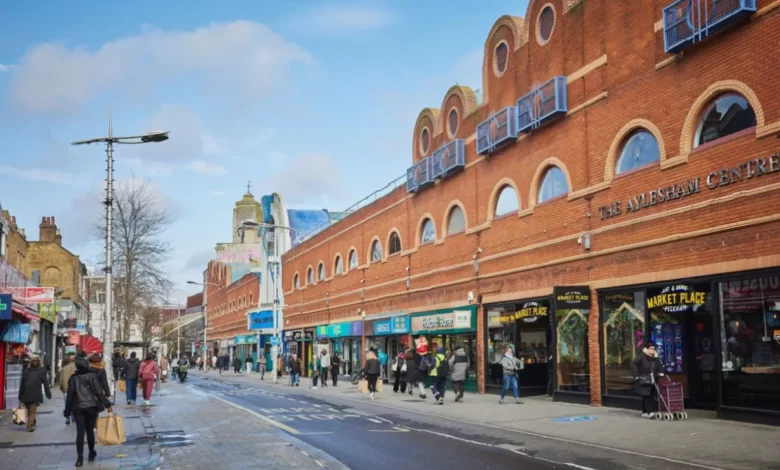
A developer is mounting a formal appeal after four years of negotiations with the local council and community ended in deadlock. Berkeley Homes, which wants to demolish the Aylesham Centre in Peckham, south London, and build 867 homes, said it had “no other option but to appeal for non-determination”.
Appeal for non-determination: what it means
The appeal to the Planning Inspectorate was lodged after Southwark Council failed to issue a decision within the statutory timeframe, a process known as an appeal for non-determination. Although the council subsequently refused the plans outright, the appeal continued. At the resulting public inquiry, Planning Inspector Matthew Shrigley dismissed the challenge, rejecting the scheme on heritage grounds. He described several proposed tower blocks as “out of scale” and “visually intrusive”, concluding they would cause harm to nearby heritage assets and the local townscape. Crucially, Shrigley noted that even if Berkeley had stuck to its original pledge of 35% affordable housing, that harm would still have outweighed the benefits.
Four years of talks and a controversial u-turn on affordable homes
For four years, Berkeley said it had worked with Southwark Council, local residents and businesses, trying to accommodate as many wishes as possible while keeping the project viable. The original plans had promised 35% affordable housing — 185 social rented and 85 intermediate homes within a development of 877 dwellings. But as negotiations dragged on, Berkeley submitted amended proposals that slashed the affordable element to just 12% — only 77 affordable homes out of 867. The developer blamed uncertainty around Greater London Authority (GLA) funding, rising construction costs and regulatory changes for the reduction.
Community opposition was fierce. A total of 2,505 responses were received during the consultation, of which 2,427 were objections. The local campaign group Aylesham Community Action (ACA) raised more than £55,000 to hire a barrister for the inquiry. Campaigners labelled the scheme “gentrification on steroids”, warning it would displace traders and residents.
Developer’s frustration and the housing crisis debate
Berkeley Group’s executive chair, Rob Perrins, expressed frustration at the outcome, arguing that developers can “no longer invest” in new London sites because of such decisions, deepening the housing crisis. In its appeal statement, Berkeley said it had spent years of effort, time and money trying to reach a compromise, but was left with no choice.
Southwark Council’s leader, Councillor Sarah King, welcomed the inspector’s decision, calling it “a great day for Peckham”. The council had argued at the inquiry that the design was poor. However, the refusal has drawn criticism from some housing campaigners and economists. Think tanks including the Centre for Policy Studies (CPS) and Britain Remade described the council’s celebration as “downright offensive” given the scale of London’s housing shortage.
Broader pattern of contested redevelopments
The Aylesham Centre decision is part of a wider trend across south London, where shopping centre redevelopments have repeatedly run into conflicts over affordability, scale and community impact. In Lewisham, Landsec’s plan for nearly 1,750 homes on the shopping centre site — with 19% affordable housing — has drawn accusations of “social cleansing” and objections from Greenwich Council over tall buildings. At Elephant and Castle, Delancey’s £2 billion scheme for 979 build-to-rent homes (330 classed as affordable) faced legal challenges and trader protests. In Bromley, Areli withdrew plans for 19-storey towers on the Walnuts Shopping Centre after more than 3,000 objections. Croydon’s town centre regeneration, including the Centrale and Whitgift centres, has also sparked criticism over becoming a “dormitory town”. Smaller schemes such as the Leegate Shopping Centre in Lewisham and the redevelopment of Southside Wandsworth have similarly wrestled with density and affordability.
Planning Inspector Shrigley’s ruling leaves Berkeley with no immediate avenue for building on the Aylesham site. His conclusion that even the original higher level of affordable housing could not redeem the harm caused by the towers underscores the planning system’s increasing willingness to prioritise heritage and townscape over housing numbers.