Strangeways, the Manchester neighbourhood that once hummed day and night with the illicit trade in counterfeit designer goods, now finds itself confronting an unexpected consequence of its own clean-up: a steep downturn in legitimate business. The area of Cheetham Hill, lying in the shadow of the Victorian prison tower, was for decades the go-to destination for shoppers seeking fake Apple AirPods, Ugg slippers, Manchester United shirts and Canada Goose coats at a fraction of the retail price. Even during lockdown, customers crawled under almost-closed shutters to bag a bargain. But the shutters that once remained open round the clock are now permanently down along Bury New Road and the grid of backstreets behind it, leaving the area quieter than it has been in years.
The crackdown that changed a neighbourhood
The transformation is the direct result of Operation Vulcan, a large-scale police initiative launched by Greater Manchester Police in autumn 2022 that was designed to dismantle what had become known as the “counterfeit capital of Europe”. The operation, which has received national and international awards including the Tilley Awards and the Herman Goldstein Award, was funded entirely through seized criminal cash and assets via the government’s Asset Recovery Incentivisation Scheme, meaning it cost taxpayers nothing directly. Its leader, Detective Superintendent Neil Blackwood, has emphasised that “counterfeit crime is not victimless, and the money made from this lucrative business funds an array of sinister criminal activity.”
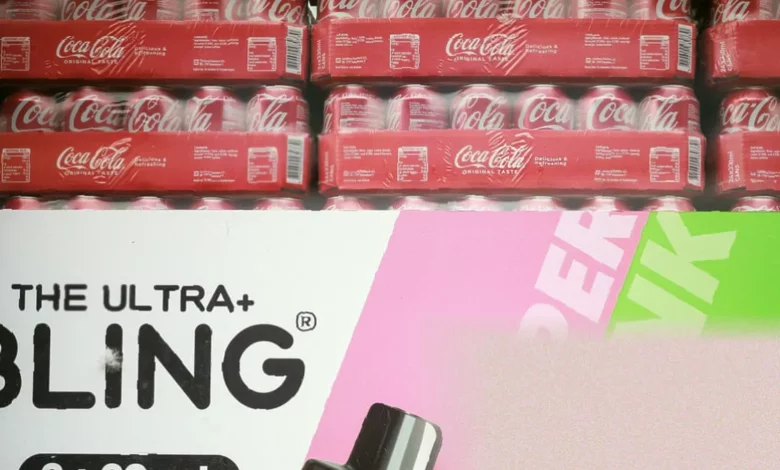
The statistics are striking. More than 200 counterfeit shops have been shut down – one report puts the figure at 216 – and around 1,050 tonnes of fake items have been seized, including a single haul of 580 tonnes believed to be among the largest ever recovered worldwide. During one operation in April 2023 alone, 18 shops were closed and over £6 million worth of counterfeit clothing confiscated. Over 238 arrests have been made, and more than £520,000 in cash seized. Beyond the fake goods, the operation netted 2.4 million Class C drugs and almost 400,000 illicit vapes. The impact on street crime has been dramatic: violent crime and public order offences have fallen by 50%, with additional reductions of 62% in violent crime, 50% in theft, 63% in criminal damage and arson, 58% in burglary, and a 69% drop in vehicle crime.
The crackdown, however, did not only target counterfeit merchandise. Behind the shelves of fake trainers and phoney sunglasses lay a darker shadow world. Organised criminals used the area to sell and manufacture drugs, including counterfeit prescription pharmaceuticals; distribute firearms; and force vulnerable people into modern slavery, including sex work. A 2017 raid in Cheetham Hill, part of earlier Operation Challenger, seized £2 million in counterfeit goods and rescued potential victims of modern slavery. “Suffice to say it should never have been allowed to get to this place,” Greater Manchester Police chief constable Stephen Watson said four years ago, vowing it “cannot be allowed to continue.”
From bustling high street to empty units
The area’s reputation as a destination for cut-price replicas was built over decades. At its peak, Strangeways and Cheetham Hill were linked to nearly 50% of the entire UK trade in counterfeit goods, with shoppers travelling from across the city and even across the country. Dodgy designer shops operated flagrantly in the open, and the constant footfall sustained a network of cafes, restaurants and other legitimate businesses that fed off the counterfeit economy. Now that the police have cleared the illegal trade, many of those legitimate businesses are struggling to survive.
Maiwand Safi has worked at Mughul Grill and Coffee since 2012. He recalls a time when there was “always trouble” and “people fighting” in the streets, as well as many people working illegally “without visas”. A building that once housed ten counterfeit shops has been turned into a dance school, and the area feels safer. But the knock-on effect is stark: “Before, our takeaway shop was very busy, but now … we are a little bit quiet,” he says. “Now it’s all mobile shops, vape shops.” His takings are down by 30%. Similarly, at Desi Point, manager Mohammad Iqbal, who has worked there for 15 years, reports a 33% drop in customers. “Shops are closed – many shops are closed – nobody is buying, selling,” he says. “It’s clean now, and peaceful and everything; no police sirens around here, nothing else. Everything’s OK … but business-wise it’s very slow now.”
The hundreds of shops shut down by police remain empty, and the few that have moved in are predominantly vape or phone stores. For the cafes and restaurants that once relied on counterfeit shoppers, the loss of footfall has been devastating. The economic impact of counterfeiting on the UK as a whole is well-documented: estimates suggest forgone sales by UK businesses due to counterfeiting could be around £9.2 billion annually, and the OECD reports that trade in goods infringing UK intellectual property rights has resulted in around 20,000 job losses. Counterfeiting is the second-largest source of criminal income worldwide, after drugs. But for the traders on the ground in Cheetham Hill, the statistics translate into empty tills.
Signs of recovery – and deeper struggle
There are some green shoots. Cheaper rents – the result of a glut of vacant units far outstripping demand – have attracted new businesses. Iman Ismael Zadeh lives in Cheetham Hill and opened supplement shop SuppCity a year ago. He says the area is now “much better”, noting that drug dealers who used to approach people on the street asking “What do you need, do you want some stuff?” have disappeared. “Now you can’t see [that] anywhere around the area.” While physical footfall remains low, his business relies on a strong online presence via Instagram and TikTok, and rents are far cheaper than three years ago. “It’s close to the city centre – it’s probably good for new businesses.”
Mohammad, who opened Al Maidah restaurant and banqueting hall six months ago, believes the police have been “doing their job”. “There was open criminality taking place before, but now it’s all gone,” he says. Despite describing the area as “always dead” in terms of footfall, customers from across the UK call to ask about renting the space for weddings and events. Ammanuel Kahsay, owner of Momona Bar and Cafe, moved from Portsmouth earlier this year drawn by the large Habesha community. “I’m trying something new,” he says, serving Ethiopian and Eritrean food and jebena coffee. But he admits: “Things are a bit slow and people don’t want to spend money because of rising costs, which I understand.”
But for many established traders, the post-crackdown reality feels unsustainable. Surbir Arora runs Real Super Grocery, which he opened two years ago in a space vacated by a counterfeit goods store. “What the police did, they closed everything,” he says. “After that, you can see, all the shops are shut down now.” People still wander in asking where they can buy replica products – “Some people are coming from Scotland, Ireland, and Liverpool” – but they are not interested in his legitimate wares. He is already making plans to leave: “It is not very good. I am looking for another place, because this place is totally dead.”
Even as the government pours tens of millions of pounds into a new national crackdown – with a £20 million National Crime Agency unit dedicated to tackling “dodgy” shops suspected of laundering up to £1 billion a year for criminal gangs, and 75 new officers recruited in Greater Manchester, the West Midlands, Kent and Essex – the unintended consequences of cleaning up one of Britain’s most notorious counterfeit hubs are now plain to see. Operation Vulcan’s model, following the “clear, hold, build” strategy, has been extended to other areas such as Piccadilly Gardens and Brinnington. And in Cheetham Hill, the seized goods themselves have been recycled – cardboard turned into horse bedding, clothing fibres repurposed into household items. But for the legitimate businesses left behind after the clearance, the quiet streets offer little comfort.