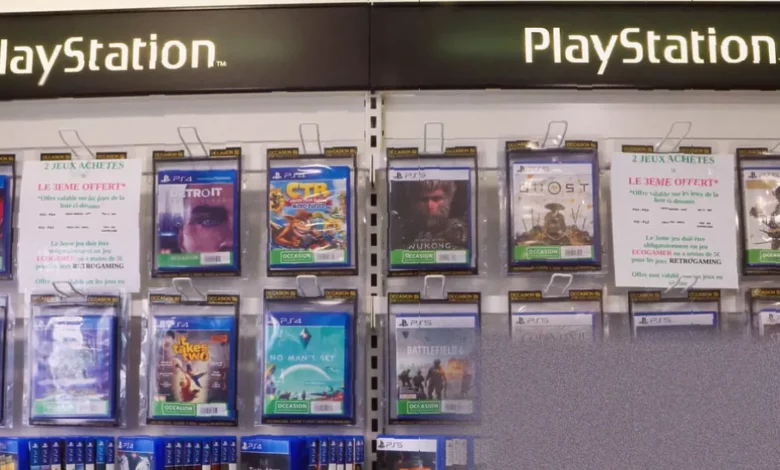
Sony will cease releasing new PlayStation games on disc in January 2028, the company confirmed on Wednesday, marking a definitive break with the physical media that has defined console gaming for three decades. Following that date, all new titles will be available only through the PlayStation Store or as digital download codes sold at retailers, Sony said on its official PlayStation blog.
Timeline and rationale for the shift
The cut-off takes effect from January 2028, Sony stated, and applies to all new games released for its PlayStation platforms. The company emphasised that the change “has no impact on games that already released, or will be releasing, prior to January 2028 in disc format”. In practice, this means that from that point onwards, gamers will be unable to buy a physical disc for a newly launched title; instead they must download the software directly or redeem a code purchased from a shop.
Sony attributed the decision to “shifting trends in consumer preference” and noted that “the general preference for digital media significantly outpaces physical discs”. The company said the move was intended to “align more closely with how most of our community prefers to access and play games today”. Piers Harding-Rolls at Ampere Analysis observed that “the purchasing trends of gamers are clear”. In 2013, when the PS4 launched, only 13% of game sales were digital; by 2025 that figure had risen to nearly 80%, he noted. Sony’s own data for fiscal year 2025 showed that digital sales accounted for 78% of full game downloads on PS4 and PS5, rising to 85% in the fourth quarter. Industry-wide, approximately 83% of console games worldwide were sold digitally by 2023, with physical discs making up just 17%. In the UK, nearly 90% of game sales were digital as of 2022, and data from the Entertainment Retailers Association (ERA) indicated a 35% drop in boxed game sales in 2024.
Sony’s pivot toward digital is not sudden. The company introduced a disc-less version of the PlayStation 5 at its launch in 2020, and the PS5 Pro, released in 2024, also omitted a disc drive. Xbox has been moving in the same direction, while Nintendo continues to support physical media but is increasingly nudging consumers toward digital options. Capcom, another major publisher, reported that 93% of its game sales were digital in early 2026.
Gamer reactions and industry concerns
The announcement has provoked considerable unease among players. Some expressed “consternation” and “grumbling” on social media, particularly regarding the upcoming digital-only release of Grand Theft Auto VI, which is predicted to become one of the best-selling cultural products of all time. The lack of a physical disc, critics noted, would eliminate any secondhand market for that title. Gamer and content creator Conkerax described the news on YouTube as “a catastrophe”.
Specialist game retailers are expected to be hit hard. Some, including Video Games Plus and Loot Box Gaming, have already stated they will not stock Grand Theft Auto VI because of its lack of a disc. Analysts warn that the shift will also damage the secondhand market, a cornerstone of high-street retailers such as Game, CeX, and GameStop. Game has released a statement expressing its concerns. The “code in a box” model — where a physical box contains only a digital download code — has drawn criticism from both consumers and retailers, and was already adopted for Grand Theft Auto VI.
Harding-Rolls said: “Inevitably there will be concerns from PlayStation gamers around various aspects of this announcement including choice, accessing older physical games on new consoles, the ability to collect physical games and game preservation.” He noted that the move would have a “negative impact on specialist games retailers” and the secondhand market.
Implications for secondhand trade and game preservation
The most far-reaching consequences of Sony’s decision lie in two areas: the secondhand market and the long-term preservation of video games. The discontinuation of physical discs for new releases will effectively eliminate the ability to resell, trade, or lend PlayStation games after January 2028. Players will no longer be able to buy a used copy from a store like CeX or from another gamer, nor borrow a title from a friend. This represents a fundamental shift from a model where ownership of a plastic disc means ownership of the software inside it, to a model where ownership is limited to a digital licence that may be revoked.
Concerns over digital ownership have been heightened by Sony’s own past actions. The company previously removed purchased movies from users’ libraries, and has closed digital storefronts for the PS3 and PS Vita, making many older titles inaccessible. Game preservation is a particular worry: even if a game remains available for download, storefront closures, delisting, or changes in rights can render it unplayable. The ability to preserve games for future generations — already a challenge in the digital era — will be further undermined, according to critics.
Analyst Daniel Ahmad at Niko Partners said the announcement “pretty much confirms PS6 will be digital only”. That speculation has intensified: industry observers widely believe the next-generation PlayStation 6 will launch without a disc drive, potentially simplifying manufacturing and reducing costs. This raises immediate questions about backward compatibility: whether players who own physical discs for PS4 and PS5 games will be able to use them on a digital-only PS6, or whether they will need to repurchase digital versions.
The shift also disproportionately affects regions with unreliable or expensive internet access, such as parts of Latin America, Southeast Asia, and Africa, where downloading large game files is impractical. In the UK, the average cost of a refurbished PlayStation console can be significantly lower than a new one — available from retailers like Back Market and Own4Less — but that market too relies on physical discs being traded. Sony’s announcement does not affect games released before January 2028, but the long-term trajectory is clear: the disc is being phased out, and with it the secondary economy and archival practices that depend on it.