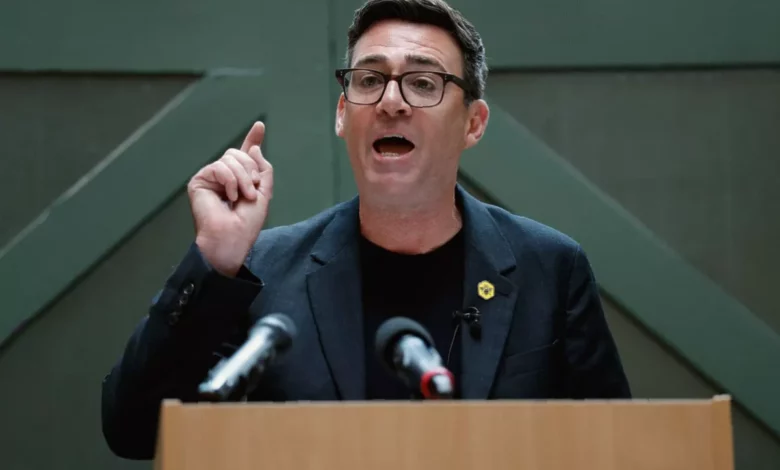
Greater Manchester’s bus network transformation is a model for UK public control, Andy Burnham has declared as he called for similar powers to be extended across the country. Writing in The Standard, the Mayor of Greater Manchester argued that “all parts of the UK should be able to take greater public control of essential services such as water, housing, energy, and transport, learning from the model that has transformed our bus networks in Greater Manchester.”
The Bee Network: How public control reshaped the buses
The centrepiece of Burnham’s mayoral record is the Bee Network, an integrated public transport system that began with the franchising of bus services. Greater Manchester completed the process of bringing buses back under local control in January 2025, with the local authority now setting routes, frequencies and fares while awarding contracts to private operators to run the services. This marks the first time in decades that a metropolitan area outside London has had the power to determine its bus network.
Under the new model, a £2 fare cap was introduced for single bus journeys, with the ticket valid for up to an hour and allowing multiple bus changes. Burnham has presented the cap as a direct benefit to residents and a practical tool to ease the cost of living crisis, which began to affect the UK significantly in late 2021. Transport costs, including rising fuel and public transport fares, have been a major factor driving household financial pressure.
The Bee Network also expanded night bus services, increased frequencies on key routes, and improved connections to employment and visitor destinations. Integration across different modes of transport is a central goal: the network aims to link buses, trams and trains into a single system, with plans for contactless payment across all modes by 2028. Bus franchising itself began rolling out in September 2024, reaching full integration by January 2025.
‘Manchesterism’ and the call for public control
Burnham’s vision, which he terms “Manchesterism,” goes beyond transport. He advocates for greater public control of water, housing and energy, alongside transport, arguing that the UK is one of the most centralised countries in the world and that this concentration of power in Westminster hinders economic growth and local problem-solving. He has proposed establishing a “No. 10 North” in Manchester as a nerve centre for redistributing power and resources across the UK.
However, the proposals have faced criticism. Some observers have pointed to a lack of specific detail in Burnham’s plans for public control of utilities, questioning whether they would involve outright nationalisation or other forms of oversight. Questions have also been raised about the economic viability of significant fare reductions, particularly given Transport for London’s ongoing funding challenges. Political opponents have described the agenda as a return to 1970s economic policies. At the same time, even within Greater Manchester, concerns persist about persistent inequalities in transport access and journey times, especially for those living in outer towns.
London fares in the crosshairs
Burnham’s immediate proposal in The Standard was to cut transport fares in London as a means to lower the cost of living for millions. The call draws a direct comparison with the Bee Network’s £2 single fare cap. London’s transport landscape has seen significant fare increases over the years: a Zone 1 peak single fare has risen by 82% in nominal terms since 2005, though real terms adjustments show a more complex picture depending on the zone. Sadiq Khan, the Mayor of London, froze Transport for London fares for five years between 2016 and 2020, and again in 2024, and introduced the “Hopper” fare allowing unlimited bus and tram journeys within an hour. He has also pursued policies on accessibility and decarbonisation. Yet recent years have also seen fare increases, and affordability remains a concern for many Londoners.
Burnham’s proposed cuts would bring London fares closer to the levels seen under his Bee Network, highlighting a potential contrast between the capital’s current fare structure and his vision for more affordable public transport. The argument is framed squarely within the ongoing cost of living crisis, with transport costs a significant factor affecting millions of people across the UK. No specific funding mechanism for London fare reductions has been detailed, and it remains unclear how such cuts would be financed within the constraints of TfL’s budget. Burnham’s article did not address those questions, focusing instead on the broader principle of learning from the Manchester model.