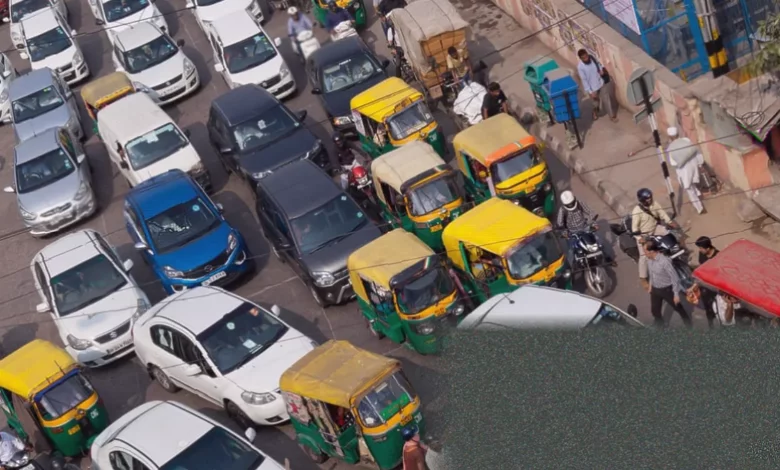
Delhi plans to ban the registration of new petrol scooters and rickshaws by 2028, the state government announced on Monday, marking the capital’s most ambitious attempt yet to tame a toxic air crisis that kills tens of thousands of people each year.
Phase-out plan
Under the new policy, no new petrol or compressed fossil gas scooters, motorcycles, autorickshaws, trucks or buses will be licensed in Delhi after a two-year phase-out period. From 2027, only electric small trucks and three-wheelers — known as e-rickshaws — will receive new number plates. From 2028, the same rule will apply to e-scooters and electric motorbikes. The Delhi government said it hoped the move would electrify at least 30% of the capital’s vehicle fleet by 2030.
“The policy focuses on pure EVs, which offer superior environmental benefits as zero-emission vehicles,” the Delhi government said in a statement. Scooters and rickshaws, which largely run on petrol and compressed gas, account for more than two-thirds of the tens of millions of vehicles on Delhi’s roads. The government has also introduced significant road and vehicle tax exemptions for people buying new electric cars, intended to encourage drivers to switch voluntarily.
Amit Bhatt, managing director of the International Council on Clean Transportation, said the proposed phase-out “could be a gamechanger in Delhi’s fight against air pollution”. He added that accelerating the transition of two- and three-wheelers to zero-emission vehicles “can significantly reduce vehicular emissions, improve public health, and pave the way for a broader transition to zero-emission transport across all vehicle segments”.
Toxic toll of traffic
In recent years, transport has been one of the highest contributors to Delhi’s air pollution, which consistently registers levels dangerous to human health and is linked to tens of thousands of premature deaths annually. According to the government’s own figures, vehicle emissions account for an average of 23% of pollutants in the air — the highest single source — particularly during the toxic winter months when thick smog routinely cloaks the city.
The Delhi state government, run by the Bharatiya Janata Party, has faced significant criticism and numerous protests during recent winters after it was accused of failing to tackle dangerously high pollution levels that can last for months. Environmentalists have broadly welcomed the new policy, though some question whether the timeline is realistic. Vikas Nimesh, an assistant professor at the School of Public Policy at IIT Delhi, also called the plan a “gamechanger”. He noted that the availability of affordable Indian electric vehicles is rapidly expanding, and that Delhi is already the country’s largest EV market. He expressed optimism that the policy would push manufacturers to invest in new green technology and “come up with more EV models” to increase consumer choice and competition.
However, some critics argued that two years is too short a window to phase out new petrol scooters and rickshaws while ensuring enough consumer choice. Others, like prominent environmentalist Bhavreen Kandhari, said the policy should have a wider focus. “More cars on the road is not a solution,” she warned. While Delhi has a substantial metro system, it is often criticised for lack of connectivity across the vast city, forcing residents to rely on flagging down rickshaws and driving their own scooters between homes and metro or bus stops. “To reduce traffic jams and dust in the city, the government should work on improving public transport and last-mile connectivity with green solutions. This EV policy falls short on that aspect,” Kandhari added.
Drivers’ fears over transition
News of the policy had yet to reach most of the city’s millions of auto-rickshaw drivers. Rajesh Gopi, 37, sat in the shade of his rickshaw cab in Delhi’s busy Connaught Place and voiced deep scepticism that any real transition could happen in only two years. Like many drivers, he worried that electric vehicles would not provide the same earnings as his current petrol-gas model.
“I have heard that the e-rickshaws need charging a lot and can’t travel as far as we can on gas,” he said. “If I have to wait one or two hours every day for charging, that’s lost income for me that I can’t afford. I also don’t know how to maintain an e-rickshaw or stop the batteries getting stolen.”
E-rickshaws have become an increasingly familiar sight on Delhi’s roads over the past two years, but the lack of charging points has made many drivers reluctant to make the switch. Under the new policy, the government has pledged to establish more than 30,000 public charging points across the capital — a promise that will be crucial if the transition is to succeed.
Gopi acknowledged that the city’s pollution was unbearable for rickshaw drivers forced to breathe in deadly fumes every day. “I am not against change and making the air clean, but I hope we are not the ones to pay the price,” he said. For now, his concerns reflect those of a workforce that will bear the immediate consequences of Delhi’s ambitious environmental reset — even as the government insists the plan will ultimately save lives.