Silicon Valley donations push Colorado Democratic primary near top of state cost rankings

Political groups financed by some of the most prominent figures in Silicon Valley have funnelled millions of dollars into a single congressional primary in Colorado, underscoring a deepening fracture within the tech industry over the future of artificial intelligence regulation. The contest in the state’s competitive eighth congressional district, where Democrats vote on Tuesday, has become a proving ground for rival visions of how — or whether — to tame the technology’s rapid advance.
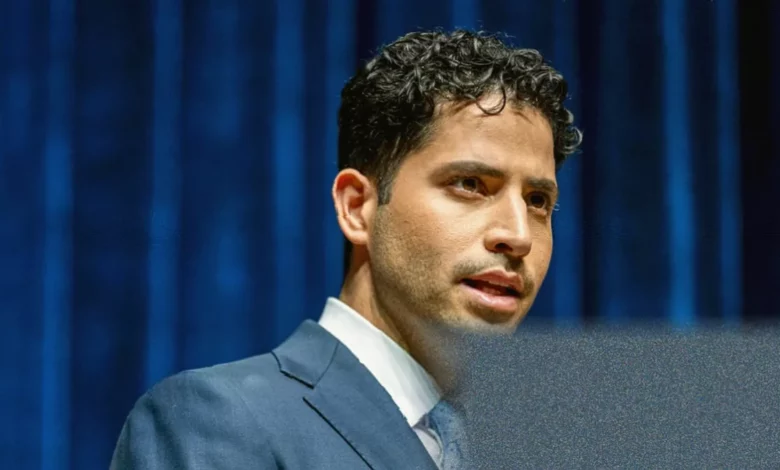
At the centre of the money trail is Manny Rutinel, a progressive Democrat who has amassed at least $2m in donations from committees backed by former Google chief executive Eric Schmidt and crypto billionaire Chris Larsen. Schmidt and his wife, Wendy, gave $2m to Somos PAC, a group focused on Latino voter engagement, which then channelled $1.3m to Rutinel’s campaign. Separately, Larsen single-handedly funded You Can Push Back PAC, which donated nearly $1m to the Colorado lawmaker. A campaign finance tracker compiled by the publication Transformer also shows that Rutinel has received more than $265,000 from individual employees of leading AI and tech firms including Anthropic, OpenAI, Google and Meta. Anthropic workers were the most generous group, with 57 staff members contributing nearly $162,000 in total.
Rutinel has also drawn millions from Super PACs dedicated to boosting Latino candidates, a demographic strategy that reflects the district’s significant Hispanic population. The race has become one of the most expensive in Colorado, outpacing other congressional and Senate contests in the state.
Two candidates, two approaches to AI
Rutinel faces Shannon Bird, a centrist Democrat and former state representative. While Rutinel has centred his campaign on his Latino heritage and platform of affordability and tighter regulation of Immigration and Customs Enforcement (ICE), technology and artificial intelligence have not been a prominent public theme of his candidacy. Yet his record in the state legislature reveals support for two bills aimed at putting guardrails on AI. Bird, by contrast, opposed one such bill, arguing that it would restrain innovation. The incumbent Republican in the district is Gabe Evans.
The divergence on AI policy lies at the heart of the funding battle. A growing rift among big tech donors has seen one faction pour money into candidates perceived as lenient on AI regulation, while another backs those who signal they will rein in the technology’s breakneck development. In this case, Rutinel’s support for AI guardrails has drawn funding from quarters that might be expected to favour a tougher regulatory stance — notably employees of Anthropic, a company that has itself advocated for stricter AI rules, sometimes clashing with the Pentagon and White House. Anthropic employees have formed their own political action committee, AnthroPAC, to support candidates engaged in AI policy.
Broader implications for tech’s political influence
The Colorado primary is far from an isolated example. Last week, in a New York congressional race, pro- and anti-AI groups spent a combined $24m either backing or opposing Democratic candidate Alex Bores, a state assembly member who sponsored the Responsible AI Safety and Education Act (RAISE Act), which requires transparency and frameworks for large AI developers. Similar spending battles have played out in primaries in North Carolina and California.
Beyond the AI divide, the Colorado race illustrates a broader influx of tech money into politics. Schmidt, who advised Barack Obama’s presidential campaign and chaired the U.S. National Security Commission on Artificial Intelligence, has a long history of political engagement through his philanthropic venture Schmidt Futures. Larsen, co-founder of Ripple Labs, has made substantial donations in California — including major contributions to Kamala Harris’s presidential campaign — and has advocated for financial privacy and backed ballot initiatives. Google employees, through the company’s NetPAC, have historically favoured Democratic candidates. OpenAI has publicly distanced itself from political donations made by its co-founder Greg Brockman, stating it does not donate to Super PACs and does not have an employee-funded PAC.
The influx of outside money in Colorado’s Democratic primary has also been shaped by “dark money” — untraceable funds that often support more moderate candidates. Groups such as One Main Street Colorado and Coloradans for Progress, whose funding originates from business interests, have been active in the state. Labour organisations have stepped in to counter that spending. Rutinel’s campaign did not respond to a request for comment.