Shetland councillors have backed plans for up to four subsea tunnels to connect the archipelago’s largest islands, voting on Tuesday to begin investigating how to finance the first two links.
The vote marks a major step forward for a project that, if fully realised, would transform travel across the northern isles. The initial tunnels would connect Shetland’s Mainland with the islands of Yell and Unst, with a later phase potentially linking Bressay and Whalsay. Engineering consultants estimate the first two tunnels alone will cost about £655 million to build and take at least eight years to complete, with an indicative timeline suggesting they could open by 2034. The total price tag for all four tunnels is nearly £1.5 billion.
Decades of ferry failures
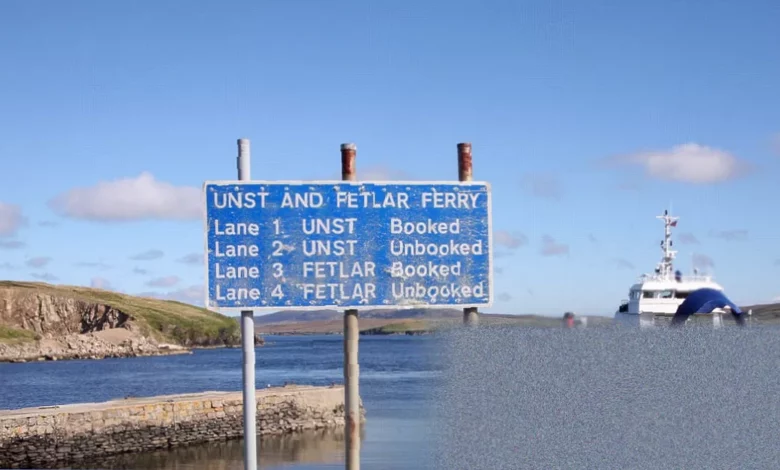
The council’s decision comes after years of campaigning by islanders on Yell and Unst, who have watched families leave, businesses close and parents forced to live away from home for work. Much of the frustration centres on the archipelago’s ageing roll‑on, roll‑off ferries, which are more than 32 years old on average. Their crews are struggling to recruit and retain staff – 50% are aged 46 or over – and the vessels stop operating overnight, have limited capacity and are routinely unable to sail because of bad weather. Repair and replacement costs are soaring.
For residents, that dependency deepens a sense of insecurity and isolation. Relatively short journeys can last hours. Official data shows Shetland’s population has fallen by 24% over the past 40 years, and more recent figures indicate a 1% decline between 2011 and 2022, driven by outward migration. The proportion of over‑65s is also increasing, pushing the islands further up the fragility index.
Shetland councillors frequently look enviously at the Faroe Islands, whose network of 23 tunnels – including the world’s only undersea roundabout – has been credited with reversing population decline and building one of the world’s highest‑income economies. Norwegian islands linked by tunnel to the mainland provide a similar model. “Islands with fixed links repopulate, enjoy economic growth and experience a reduction in their average age,” said Emma Macdonald, leader of Shetland Islands Council. “We have no ‘do nothing’ options here. Ferries and tunnels are both needed to unlock the potential of Shetland.”
Economic arguments for investment
Councillors hope to persuade ministers in both Edinburgh and Westminster to provide core funding by arguing that Shetland is an essential part of the wider UK economy. The islands host the UK’s only spaceport, SaxaVord, on the northern tip of Unst, which is due to host its first rocket launches later this year. Shetland produces 22% of Scotland’s farmed salmon and 88% of its farmed mussels; in 2024 its salmon harvest alone had a total economic impact of £174 million. The wider seafood industry is worth £320 million a year to the local economy, surpassing oil, gas, agriculture, tourism and creative industries combined. Shetland’s trawlers land seafood valued at £147 million.
Each tunnel, the council says, would generate tens of millions of pounds in growth and improve the islands’ social and economic resilience. Alice Mathewson, a spokesperson for the Yell and Unst tunnel action groups, called the tunnels financially viable and lower‑carbon than the existing ferries. “These links will not only bridge geographical divides but also enhance the prosperity and wellbeing of our island communities,” she said.
The cost challenge and potential funding routes
The biggest obstacle remains the price. Engineering consultants Stantec and COWI have calculated that the road tunnel between Mainland and Yell would cost between £352 million and £402 million to dig, with operating costs of £90 million over 60 years. The tunnel linking Yell with Unst would cost between £300 million and £303 million, with running costs of £72 million over the same period. Costs could partly be met by tolls and by private investors who would then operate the tunnels.
Macdonald said construction costs are unaffordable for Shetland on its own. The council will press the Scottish and UK governments for help, hoping to secure capital grants, local‑authority borrowing, or funding through the Scottish National Investment Bank or the UK national wealth fund. A 30‑year implementation “route map” is expected to be drawn up, followed by full business cases for individual projects.
The Scottish government has already given Shetland Islands Council £13 million over the past two years to investigate upgrading its transport links, and filled an almost £6 million revenue gap for Shetland’s inter‑island ferries. It has also committed to working with councils on new fixed links as part of its national islands plan. By contrast, Orkney Islands Council received £15 million from the UK government’s Zero Emission Vessels and Infrastructure fund for electric ferries, though Orkney argues its geography makes tunnels and bridges less significant because several islands are already connected by the Churchill barriers.
Andy Sloan of COWI, one of the consultancy firms involved, noted that while the tunnels are technically feasible, funding is the key constraint. He added that initial tunnels in Scotland would be more expensive but costs would fall as expertise grows, mirroring the experience of Nordic countries with a long history of fixed links.
If the Shetland tunnels secure funding, their construction is expected to reinvigorate calls for subsea tunnels or bridges in the Western Isles, which are also heavily dependent on ferries, with a proposed tunnel between North Uist and Skye already mooted. For now, councillors on Shetland have taken the first formal step – and made clear they see no viable alternative.
The Scottish government said it had given Shetland Islands council £13 million over the past two years to investigate upgrading its transport links and was committed to working with councils on new fixed links in its national islands plan.