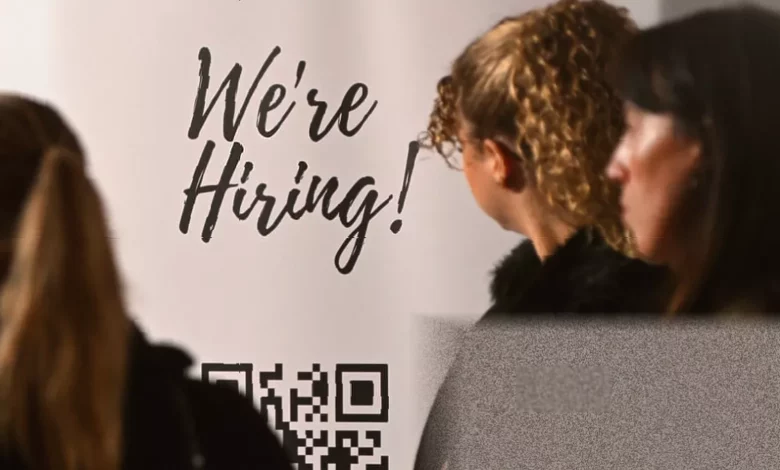
Britain’s youth unemployment crisis is worsening while Europe recovers, with more than a million young people now classified as NEET — not in education, employment or training — for the first time since 2013. New government figures show that between January and March 2026, 1.01 million 16- to 24-year-olds were NEET, representing 13.5 per cent of that age group, an increase of 89,000 from the previous year. Across the Channel, youth unemployment in the European Union stood at 15.5 per cent in early 2026, while the UK’s rate hit 16.2 per cent — one of the highest in Europe and a sharp rise from 14.3 per cent a year earlier. The UK is now the country with the third-highest rate of young people not in work or education among Europe’s richest nations.
The scale of the problem
The NEET figure for 16- to 24-year-olds reached 13.5 per cent for the period October 2024 to September 2025, up from 12.8 per cent in the final quarter of 2024. Among 18- to 24-year-olds, the rate was even higher at 16.2 per cent in 2024. Youth unemployment — counting those actively seeking work — stood at 735,000 in February to April 2026, a jump of 109,000 year-on-year. The overall UK unemployment rate across all ages was 4.9 per cent, meaning young people are bearing a disproportionate share of the economic pain.
Regional disparities are stark. London has the highest youth unemployment rate in the country at 24.6 per cent, followed by the North East of England at 23.5 per cent. In the North East, there are now six young people aged 16-to-24 who are NEET for every starter job vacancy, compared to a national average of three to one. The UK’s youth unemployment rate rose by 2.1 percentage points from 11.4 per cent in 2019 to 13.5 per cent in 2020, and has remained consistently higher than in Germany ever since, despite both countries seeing initial post-pandemic declines.
Personal stories of struggle
Hannah, a 24-year-old Oxford graduate who won a bursary to study and comes from a small rural town, told Guardian journalist Annie Kelly that finding a job has become almost impossible. The constant rejection has taken a heavy toll, she said, and she feels all her hard work at school, college and university has been for nothing. Her brother, aged 27, is in the same situation. Thomas, 24, has been unemployed for over a year after losing his job as a pub manager in October 2024. He has applied for roughly 2,000 jobs since then. He receives £311 a month in universal credit, leaving him with about £25 for the month after bills and pet food. He described the rejection process as “humiliating”, often receiving only “copy-and-paste” rejection emails or complete silence.
Guardian reporter Sammy Gecsoyler has been speaking to NEETs like Thomas and Hannah to understand what is going wrong. Many described a job market where AI and remote applications are fundamentally reshaping how candidates compete — and leaving them demoralised.
How AI and remote work are blocking entry-level opportunities
The impact of artificial intelligence on the youth labour market is twofold: AI is simultaneously reducing the number of available roles and altering how applicants are judged. Since the three months ending May 2022, online job advertisements have declined by 31 per cent overall. But the drop is far steeper for occupations most exposed to AI and large language models — 38 per cent — compared to a 21 per cent decline for roles with low AI exposure. While some research suggests AI is not yet replacing jobs at scale in the UK, wages in AI-exposed occupations have grown more slowly since 2019. Employers are increasingly investing in AI, sometimes by downsizing their workforce, leading directly to job and graduate opportunity losses.
This has created what researchers call a “graduate AI paradox”. AI reduces opportunities while reshaping competition, producing more homogenised candidates and making it harder to stand out. Graduates now face the expectation that they must demonstrate how they can use AI effectively, rather than simply being able to execute tasks. Judgement, critical thinking and originality are becoming the key differentiators — skills that are hard to signal on a standardised application form.
At the same time, remote work opportunities for entry-level roles are becoming far less common. Employers are shifting back to office-based or hybrid models, citing the need for in-person collaboration, training and supervision, particularly for junior positions. Fully remote vacancies now make up a shrinking share of total job postings. Where such roles do exist, they attract significantly higher application numbers, further intensifying the competition. A London School of Economics study found that entry-level hiring has fallen more than 14 per cent since 2019, with remote work cited as a potential reason: the reduced return on investment for employers when graduates cannot learn as effectively on the job.
The decline in remote opportunities also forces graduates to factor in relocation, commuting costs and workplace expectations that many cannot afford. For young people in rural areas — like Hannah — the barriers are even higher. Poor internet connectivity, lack of public transport, limited job openings and a scarcity of training opportunities are common. Rural employers are less likely to recruit graduates, more likely to find skills lacking in new recruits, and less likely to train staff compared to urban employers.
Expert analysis: the drought in starter jobs
Dr Divya Jyoti, a lecturer in Organisation, Work & Technology at Lancaster University Management School, has been researching where the starter jobs have gone. Her recent publication, “Starting Out: Boosting Youth Employment in Local Labour Markets”, co-authored with others from the Work Foundation and published in June 2026, analyses national data and case studies from Morecambe and Liverpool. It indicates a “youth employment drought”: average weekly starter job vacancies — those accessible to first-time entrants — have fallen by almost half, 49 per cent, from 2016-17 to 2025-26. In the last 12 months alone, the decline in starter jobs has been 1.6 times faster than for other roles. Associate professional occupations such as HR, sales executives and marketing have seen the largest contribution to this fall.
Dr Jyoti’s research highlights that young people feel alienated from the labour market, receiving little feedback or encouragement despite trying to find work in an intensely competitive environment. Systemic barriers remain, and the constant rejections without explanation leave many demoralised. She argues that the jobs market needs fundamental change to support young people.
Rising ill-health among young people is also a significant driver of the high NEET rate, with mental health problems being the most common cause of economic inactivity. Some 26 per cent of NEET young people report poor mental health as a key reason for not working or studying. The proportion of young people reporting health conditions has increased, largely due to a rise in mental health conditions, and the Covid-19 lockdowns are cited as creating an epidemic of mental health problems among this age group.
The government launched a Youth Guarantee in response to the rising NEET numbers, aimed at ensuring young people have access to further learning, jobs or apprenticeships. It includes a “Jobs Guarantee” for eligible 18- to 21-year-olds, later extended to 18- to 24-year-olds, and a “Youth Jobs Grant” of £3,000 to employers for hiring eligible young people. £820 million has been allocated over three years from 2026-27 to 2028-29 for various components, with a further £1 billion of funding announced to tackle the crisis. Trailblazer areas are trialling new initiatives with a £45 million investment for 2025-26. However, critics argue the government must go further, as the majority of existing NEETs may not be eligible for the new measures, and funding streams like the UK Shared Prosperity Fund are ending. The Institute for Fiscal Studies notes that even with proposed measures, the NEET rate might remain above pre-pandemic levels. A significant portion of young benefit claimants not expected to search for work due to health reasons has grown rapidly, suggesting a need for measures that directly address the mental health dimension of the crisis.