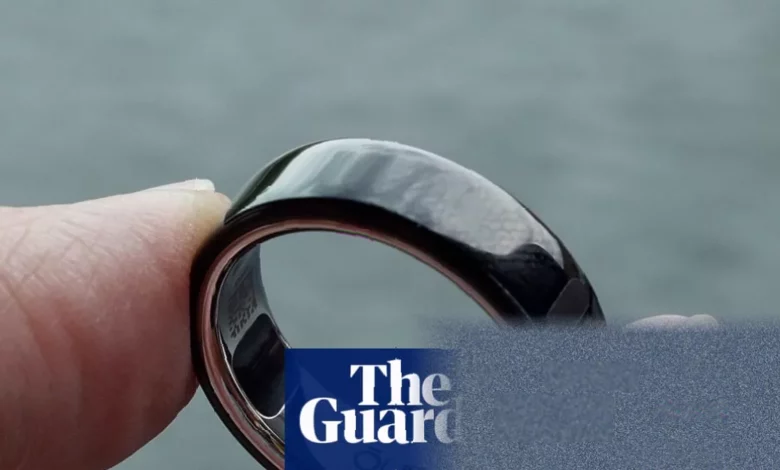
The Oura Ring 5 is 40% smaller and lighter than its predecessor, a reduction that brings the smart ring into line with standard wedding bands and other everyday jewellery. Oura has cut the width to just over 6mm, the thickness to 2.23mm, and the weight to roughly 2g. The company says the Ring 5 is the world’s smallest smart ring, designed so that wearers can genuinely forget they have it on.
A ring you can forget
The new model is a straight replacement for the popular Ring 4, which was already one of the most compact smart rings on the market. In the flesh, the Ring 5 looks and feels far smaller than its predecessors or any competitor, the company claims. It is much easier to live with: it does not catch on pockets, dig in when fingers are pressed together, or cause discomfort when carrying shopping bags or lifting weights. The titanium build is available in six colours and finishes, all with a harder, more scratch-resistant coating than previous models to help it stay looking new for longer. The black model, tested over several weeks, remained pristine even though it is not as tough as the ceramic Ring 4.
Oura provides a free sizing kit with plastic replicas, which the company recommends wearing for at least a few days to find the best fit. The Ring 5 comes in eight sizes – 6 to 13 – with no half sizes. Oura stresses that the sizing for the Ring 5 differs from standard ring sizes and from previous Oura generations, so using the specific kit for this model is essential. A snug fit is needed for optimal data accuracy, but the ring must be loose enough to slide over the knuckle when it needs to be removed for charging – about once a week.
Battery life has improved despite the smaller chassis. The smallest Ring 5 should last about six days between charges, increasing to nine days for the largest. A size 8, the third smallest available, lasted just shy of eight days in testing, roughly two days longer than the equivalent Ring 4 – a notable achievement. The ring charges in about 80 minutes. An optional charging case, priced at £99, can hold up to a month’s worth of battery life. The Ring 5 also includes a locate feature that lets users track a misplaced ring via the Oura app.
Inside the Oura app: data analysis and actionable insights
The ring collects your data, but the rest of Oura’s functions are served by the company’s app for Android and iPhone, which syncs via Bluetooth Low Energy. The app is free to download, but a subscription costing £5.99 a month (or £69.99 annually) is required for anything beyond basic, at-the-moment metrics. Oura says it works hard for that money, offering what it describes as some of the best data analysis available, including helpful explanations, actionable insights, and personalised advice. The company continually adds to and refines the app experience in a way few competitors manage.
The main “Today” page highlights a key attribute of your health – for example, your sleep when you wake up, or changes to your heart rate or stress that help you decide a plan for the day. If the ring detects an elevated resting heart rate, it will suggest taking it easier, indicating signs of physiological stress, illness, or limited recovery from exercise. These highlights come with easy-to-understand explanations of what is happening and what to do about it. Scrolling further down reveals widgets for sleep, daytime stress, heart rate, and activity, as well as a full timeline of the day for logging when you woke up, any activity, meals, or tags you have manually added, plus any exercise imported from other apps such as Strava.
The “Vitals” page shows seven key health categories: readiness, sleep, activity, stress, heart health, metabolic health, and core metrics. Each category presents a chart showing your normal range and today’s score for a quick overview. Tapping into any category provides a comprehensive breakdown of your data. The “My Health” tab displays a long-term view across the key health pillars of sleep, cumulative stress, and heart health, ranking them between “needs care” and “thriving” so you can see how you are doing at a glance. Again, plenty of data is available to interrogate, with explanations of what is happening available on tap.
My Health includes some interesting metrics, such as cumulative stress – the build-up of physiological stress when your recovery is not adequate to offset the daily stress of exercise and life over the past 31 days. This page also lists your habits and routines that affect your health, such as activity, steps, and sleep regularity, your chronotype, and weekly, monthly, quarterly, annual, and anniversary reports. Oura says the longer you use the ring, the more useful the analysis becomes.
Proactive health, women’s health, and the AI Advisor
The Ring 5 tracks more than 50 different metrics, including heart rate, blood oxygen (SpO2), temperature, and motion. It monitors sleep, activity, readiness, stress, resilience, heart health, and metabolic health. The sensors include PPG (for heart rate and SpO2), temperature sensors, and an accelerometer. Oura says the Ring 5 features upgraded sensors with more powerful LEDs for improved accuracy and better skin contact, despite having fewer signal pathways (12) than the Ring 4 (18).
Proactive health monitoring features look for changes in baseline metrics to provide advice on potential causes. Symptom Radar looks for signs of illness such as a cold or flu, which works well when the wearer is not under other strain, but Oura acknowledges it can struggle when external stressors such as young children are present. Health Radar, which launched in the US in June, adds overnight blood pressure and breathing disturbance monitoring, mirroring similar wellness features on rivals such as the Apple Watch.
Women’s health tracking is extensive. The ring includes cycle, period, and ovulation tracking, fertile window prediction, pregnancy tracking, hormonal birth control insights, and menopause insights, all using body temperature changes combined with heart and respiration rates. The data can also be used with services such as Natural Cycles for birth control and other applications. Oura says this comprehensive set of women’s health features sets it apart from most wearables.
The Oura app includes an AI Advisor chatbot that can analyse and discuss health stats, explain concepts, and give advice on how to improve things. Unlike Gemini or ChatGPT, Advisor is not a general-purpose AI and is built around the user’s data. It cannot answer general questions such as the weather or how to make a cocktail, but Oura says it offers surprisingly useful advice on sleep, recovery, activity, and general health, while also being able to quickly pick out trends in your data over the long term. Oura recently added a new model to give dedicated advice and analysis for the full spectrum of women’s reproductive health, drawn from the user’s data combined with vetted research and knowledge sources.
Activity tracking and everyday use
The Ring 5 automatically detects more than 40 different activities lasting more than ten minutes. Users can also manually start an exercise with the Live Activity feature, which gives real-time heart rate and other metrics on their phone. However, the ring relies on the phone for tracking distance, pace, and route, and is not as capable as a Garmin or similar running watch. For swimmers and watersports enthusiasts, the ring has a water resistance rating of 100 metres – suitable for swimming and water sports but not for diving.
Price, value, and sustainability
The Oura Ring 5 starts at £399 for silver and black finishes. Premium finishes – Gold, Stealth, Brushed Silver, and Deep Rose – cost £499. The purchase includes one free month of the membership subscription, after which the monthly fee of £5.99 (or £69.99 annually) is essential for anything beyond basic daily metrics. For comparison, the Oura Ring 4 costs £349, the Ring 4 Ceramic costs £399, the Ultrahuman Ring Air costs £329 (and does not require a subscription), and the Samsung Galaxy Ring costs £399. The Oura Ring 5 is slimmer, lighter, and has better battery life and faster charging than the Ultrahuman Ring Air, but the Ultrahuman platform allows more customisation through optional feature packs and no mandatory subscription.
On sustainability, Oura says the Ring 5 is not repairable and the battery is not replaceable. The ring does not include any recycled materials, but the company offers free recycling.
Pros: slim, light, comfortable and looks like jewellery, comprehensive sleep and health tracking, market-leading women’s health tracking, best-in-class analysis and helpful advice, long seven-day-plus battery life, 100-metre water resistance, effective alternative for health to a smartwatch.
Cons: expensive, monthly subscription, running and workout tracking is weak without phone, doesn’t do as much as a similarly priced smartwatch, cannot be repaired.