The Health Secretary has vowed to continue working “constructively” with resident doctors, NHS staff and the unions that represent them, insisting that the end of a three-year pay dispute is “the beginning, not the end of the journey” to improve working lives across the health service.
“I know there is much more to do, and I am determined to keep working constructively with resident doctors, all NHS staff, and the unions who represent them to improve their working lives and together build a health service that is fit for the future,” the Health Secretary said.
End of a bitter dispute
The comments follow a vote by resident doctors – the term now used for junior doctors – to accept a pay offer that includes an average 6.6% pay uplift, to be fully implemented by April 2027. The offer incorporates the 3.5% increase for the current year recommended by the independent Review Body on Doctors’ and Dentists’ Remuneration (DDRB).
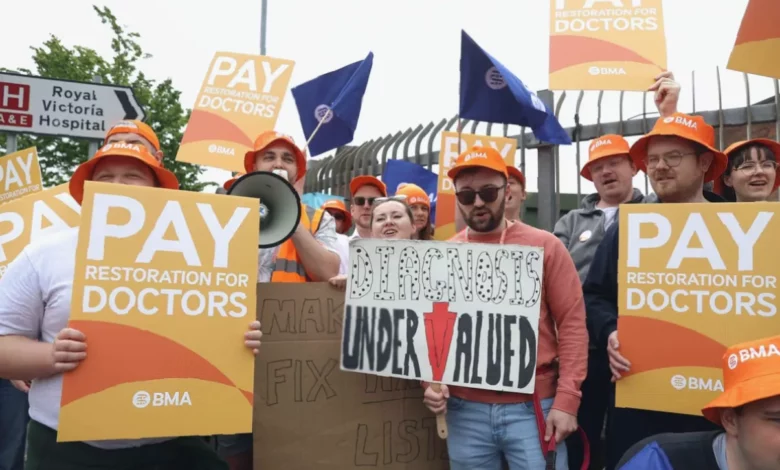
Acceptance of the deal brings an end to a three-year dispute between the British Medical Association (BMA) and the government that saw 15 separate strikes. The industrial action forced the cancellation of hundreds of thousands of planned procedures; over 1.5 million appointments were lost across the period. The strikes have been estimated to have cost the NHS approximately £1 billion since the summer of 2025, with daily costs running at around £50 million in the last 12 months alone. In the 2023-24 financial year, NHS strikes cost the taxpayer almost £1.7 billion.
The core of the dispute has been the erosion of real-terms pay for resident doctors since 2008. The BMA’s Resident Doctors Committee (formerly the Junior Doctors Committee) has campaigned for pay restoration, arguing that even with the recent progress, doctors’ pay is still nearly a fifth behind 2008 levels. Some estimates put the cumulative decline at approximately 26% over that period.
The first strike by resident doctors took place on 13 March 2023, and negotiations have been fraught. In July 2024, then‑health secretary Wes Streeting made a 22% pay rise offer, which the Resident Doctors Committee did not accept, demanding further increases over several years. A significant deal was eventually agreed on 16 September 2024, following extensive talks.
The accepted package includes more than the headline pay uplift. The government has committed to creating 4,500 additional specialty training places over three years to tackle what the BMA describes as a “jobs bottleneck” that has caused under‑ and unemployment among doctors. All locally employed doctors will be offered the terms and conditions of the standard 2016 resident doctor contract. In addition, the government will cover postgraduate examination fees, portfolio costs and mandatory medical royal college membership fees for doctors. Annual career progression is guaranteed for doctors working less than full time who meet competencies, and there is an increased pay premium for medical academics.
The deal aims for faster nodal point reform and pay uplifts twice a year, contingent on career progression. Under the new terms, a full‑time doctor starting foundation training can expect a base salary of over £36,600 – up from around £32,400 before the deal. A full‑time doctor entering specialty training will see basic pay rise to over £49,900, compared with roughly £43,900 previously. It is important to note that base pay represents only a portion of total earnings: on average, resident doctors earn approximately one‑third more through overtime and out‑of‑hours payments. Illustrative 2026/27 base salaries for other grades are: Foundation Year 1 about £40,190; Foundation Year 2 about £45,994; core training ST1‑2 about £54,499; core training ST3‑5 about £65,048; and ST6‑ST8 about £73,992.
‘Hard work of implementation’ ahead
The Health Secretary’s determination to keep working constructively reflects the recognition that the deal is only one step. Dr. Jack Fletcher, chair of the BMA Resident Doctors Committee, said resident doctors had decided the offer was “sufficient to continue on the road to pay restoration, and sufficient to address the absurd lack of jobs in the NHS.” He stressed that this is “by no means the end of the road for pay restoration” and that the government needs to keep the “journey going.” The BMA has put the pay review process “on notice,” warning of future disputes if continued improvements are not delivered.
Dean Royles, interim chief executive of NHS Employers, expressed relief that a resolution had been found, ending further disruption. He emphasised that the “hard work of implementation will now begin” and that the timescales are ambitious.
Sarah Woolnough, chief executive of the King’s Fund, acknowledged the agreement as a “welcome step” but stressed that “pay is only part of the story.” She highlighted the need to address burnout, workload, staff wellbeing, workplace culture and trust in government for workforce retention. These issues remain critical challenges beyond the immediate pay settlement, alongside long‑term workforce reform as outlined in the NHS’s 10‑Year Workforce Plan.
While this agreement applies to England, disputes in other parts of the UK – such as Northern Ireland – were still ongoing at the time of the vote, underscoring that the wider picture remains unresolved. The Health Secretary’s pledge of continued constructive work with doctors and unions will be tested as the implementation of the deal begins and as the BMA keeps pressure on for further progress toward pay restoration to 2008 levels.