There was an air of melancholy as the defence investment plan (DIP) was announced at Malloy Aeronautics in Maidenhead. A sense that the main figures were fading out of history even as the legacy was being written, as if the event were sepia-tinted. The plan, first expected almost a year ago and repeatedly delayed amid ministerial disagreements, was finally unveiled on June 30, 2026, by Prime Minister Keir Starmer. Framed as his “lasting bequest to the country,” the nearly £300 billion investment over four years – the largest sustained increase in defence spending since the 1980s – was supposed to be a crowning achievement. Instead, it managed not to satisfy any of the major players involved: the military, Britain’s allies, and probably not even the prime minister himself.
The Announcement and Its Atmosphere
Hosted at Malloy Aeronautics, a Berkshire firm specialising in heavy-lift drones and VTOL systems that was acquired by BAE Systems in February 2024, the launch carried an unmistakable tone of finality. Starmer, widely expected to leave office shortly, urged his successor, Andy Burnham, to see the defence commitments through. The plan commits an extra £15 billion – secured through reprioritising spending across government departments, including cuts to capital budgets for road and energy projects – bringing the total to nearly £300 billion. Some departments were asked to contribute 1p in every £1 of their capital budgets. Of the £15 billion, £10.3 billion has been identified from reallocations, with a further £4.7 billion to be confirmed at Budget 2026. Critics, including allies of former Defence Secretary John Healey, have claimed that some of the offered funding was not genuinely new money.
Key Figures and Their Statements
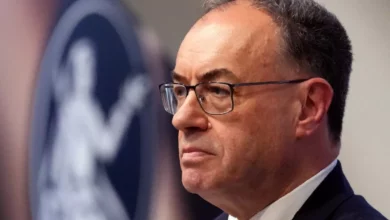
First to speak was Dan Jarvis, the defence secretary appointed on June 11, 2026, after Healey resigned over the perceived inadequacy of the funding. A former officer in the Parachute Regiment, Jarvis had served as Minister of State for Security. In his remarks, he conveniently omitted that the extra £1.5 billion he had extracted from the Treasury – a figure that forms part of the broader £15 billion uplift – fell well short of the bare minimum his predecessor had said was required to fulfil the UK’s commitments to Nato at the speed the military wanted. Jarvis had reportedly been asked to cut the part of his speech noting the chief of staff’s backing for the DIP; it is understood the chief of staff does not support the plan. Instead, Jarvis focused on the shininess of new kit, excitement over drone capacity, and readiness for modern warfare – “except for one that involved warfare,” as observers noted. “I will seek to do everything I can for the military,” he concluded, though his future remains uncertain. He is reportedly desperate to stay on as defence secretary in a Burnham government, but Burnham may have other ideas.
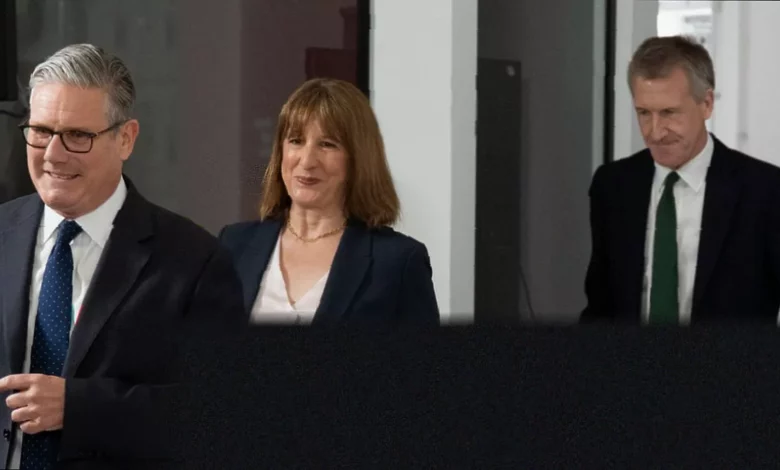
Chancellor Rachel Reeves appeared more sanguine about her own future. “In my two years as chancellor …” she began, an acknowledgment that she has come to accept there will not be a third. By reprioritising spending, she had found the £15 billion defence uplift, and she paid tribute to Jarvis for his part in the negotiations – mostly, it seemed, for not causing further embarrassment by becoming the second defence secretary to resign when she did not give him the money he wanted. Reeves ended by thanking Starmer – “my friend, our prime minister” – for his moral clarity. After appearing to have fallen out last week, they now seemed reconciled to going down with the same ship.
Starmer himself made little mention of the repeated delays that had plagued the DIP until the arrival of the more amiable Jarvis. Instead, he focused on the changing nature of warfare, declaring that the peace dividend was over and that to avoid war, you had to prepare for war. But there were limits. “The hard truth,” he said, “is that there are no easy answers. The settlement was the right settlement within the fiscal rules.” The spending budgets of other departments had been cut. “We will have to live with potholes to secure our safety.” He blamed the Conservatives for hollowing out defence during their 14 years in office and for signing “brain-dead contracts” with defence manufacturers to maintain equipment that was long since obsolete.
Shortfalls Compared to Military and NATO Requirements
The most significant criticism of the DIP centres on the gap between what the government has pledged and what the military and Nato have demanded. Defence spending is set to rise from 2.3% of GDP in 2024 to 2.7% by 2027/28, with a trajectory to reach 3% in the next parliament. The UK has also committed to reaching 3.5% of GDP on defence by 2035, in line with Nato targets. Yet the £15 billion uplift is considerably less than the £28 billion defence officials had reportedly requested. That shortfall was the direct cause of John Healey’s resignation in June 2026, with the former defence secretary criticising Starmer and Reeves for not committing sufficient resources. The DIP’s funding is also reliant on cuts to road and energy infrastructure projects – a reprioritisation that raises questions about the impact on public services and economic growth.
The plan includes headline investments: £5 billion in drone technology and autonomous systems, including a shift towards a “hybrid” fleet for the Royal Navy; £8.6 billion for the Global Combat Air Programme with Italy and Japan to build sixth-generation fighter jets; 12 Lockheed Martin F-35A dual-capable fighters; £64 billion for modernising the nuclear deterrent via new Dreadnought submarines, SSN-Aukus vessels, and a sovereign warhead; long-range missiles, armoured vehicles, counter-drone systems, and £115 million to bolster defences against AI threats. It is expected to create nearly 60,000 direct and indirect jobs by the end of the decade, bringing total defence industry jobs to over half a million, with a £50 billion defence export facility also established. But critics point out that the scale of investment remains insufficient to meet Nato’s 3.5% target by 2035 in a credible timeframe. The UK, currently the third-largest cash spender in Nato behind the US and Germany, has no chance of meeting that promise, according to defence analysts. Meanwhile, the military’s own equipment requirements are understood to be far greater than the plan delivers, with the risk that new kit will arrive years after any potential conflict.
Media Questions and Parliamentary Reactions
When questions from the media began, an odd moment occurred: Starmer addressed Beth Rigby as being from “Sky Sports.” The mix-up was taken as a sign that the prime minister is now “demob happy” – distracted by his upcoming departure, having been known to watch World Cup games and Test matches on Sky. Rigby, in fact Sky News’ political editor, resisted asking about Andy Burnham’s future or the England football team and instead asked whether Burnham was signed up to the DIP and would increase funding in the next spending review. The answer was not forthcoming, and the question appeared to land as a poisoned chalice for the likely next prime minister. “This was the end of his journey,” the mood suggested. “He was leaving the country in a better place than he found it. It was all someone else’s problem from now on.”
Several hours later, Jarvis was in the Commons to make a statement. He began by saying he had promised to get the armed forces all the kit when he became defence minister, and now he was making good on his word – an implication that Healey had been asking for too much. From the opposition benches, and from some Labour MPs, came the cry of “too little, too late.” Shadow Defence Secretary James Cartlidge, a former Minister of State for Defence Procurement, argued that the money was insufficient and that equipment would arrive five years after a war had been lost. His criticism carried some irony, given that his own party had presided over a 22% real-terms cut in defence spending between 2009/10 and 2016/17, but opposition brings the luxury of not having to pay for anything. Healey himself resisted the temptation to criticise directly, making observations more in sorrow than in anger, wishing everyone well and hoping more money could be found in future settlements – biting his lip not to say “I told you so.”