Nearly 8 million native trees have been grown by volunteers in Scotland in what backers describe as the largest citizen-based reforestation programme of its kind, after a dedicated team of about 100 people spent tens of thousands of hours collecting more than 11 million seeds by hand.
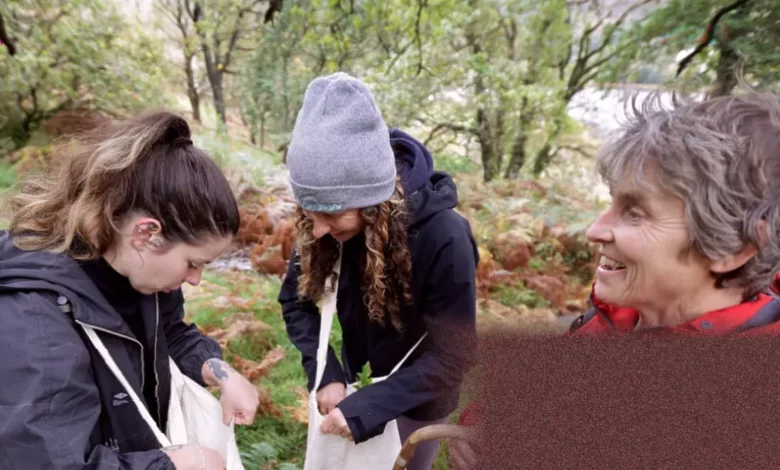
The volunteers — a diverse group that includes retired teachers and doctors, office workers and young families — have ventured into remote woods across the western Highlands and islands to search for seed-bearing trees in locations that commercial collectors consider too costly or inaccessible. Using detailed maps compiled by NatureScot and Scottish Forestry, they identify pockets of ancient woodland, often in exposed, challenging terrain, scrambling up hillsides to find the right specimens.
The seeds they collect come from a select range of trees known to have colonised Scotland after the last ice age: hazel, sessile oak, dwarf birch, willow, juniper, birch, wild cherry, wych elm, yew and elder. Ecologists involved say these species possess an inherited genetic resilience that allows them to survive in the specific microclimates and soil types of Scotland’s Atlantic coast — an advantage non-native trees would lack, particularly as the climate changes.
Sheena Macauley, a biology graduate and former IT manager at Scottish Power’s Cruachan hydro station who lives near Oban, is one of those volunteers. She combines seed-hunting with butterfly conservation, crouching to spot larvae of marsh fritillaries and burnet moths during collection outings. “We need to regenerate for the generations coming behind us,” she said. “I mentioned it to my neighbours and one actually joined up as well. Another friend down in Glasgow, she joined a group down there. So, rather than moaning about climate change, actually do something.”
Each volunteer team is supervised by Roz Birch, the volunteer coordinator for Trees for Life, who uses the outings to deliver impromptu biology lessons — pulling down branches, splaying leaves, or sifting through seeds and nuts offered on open palms. She has become expert at distinguishing between Scottish native sessile oak and common, or English, oak, showing volunteers how far the acorns and leaves sit from the twig. A moss-laden tree provides a living lesson on temperate rainforest ecology, its bark home to a compact forest of mosses and lichens that thrive in the moist climate.
“You do have really extreme high winds and storms that will pass through. Again, the trees are pretty well adapted to that environment,” Birch explains, pointing at liverwort that has colonised an old, partly severed oak branch. “The uniqueness of the rainforest zone is there will be bryophytes, lichens, whole ecosystems on these trees and within these woodlands, that you can’t really find anywhere else apart from the west coast of Scotland and Wales and the south-west of England.”
Laura Corbe, 47, a marine biologist, values the slower, more focused pace of seed-hunting. “You’re literally growing the future. And that’s a beautiful thing, isn’t it? I don’t think people really understand the significance of the rainforest, even people who’ve lived here their whole lives,” she said.
The project is underpinned by rigorous ecology and close observation of seasonal weather patterns, drawing on the ancient woodland and Caledonian pine inventories. Sites are often surveyed again, and Birch said climate heating means seed ripening now happens earlier. A dry spring can stress rowan but turbocharge hawthorn, forcing seed collection dates to shift or be cancelled altogether.
The seeds are collected, graded and checked at Trees for Life’s tree nursery at Dundreggan near Inverness, a centre of excellence that specialises in growing rare or hard-to-propagate native trees such as woolly willow and dwarf birch. The nursery is also researching consistent seed supply for aspen, a forest tree that rarely flowers or sets seed in Scotland. Finished saplings are then sent back to the correct geographic seed zones, meticulously mapped by forestry experts to ensure they are planted in conditions that match the local genetics of their parent trees.
Scotland’s Atlantic rainforest: a rare and threatened habitat
The latest surveys suggest only about 30,000 hectares of original Atlantic rainforest survive in Scotland — roughly the size of Edinburgh. This rare temperate habitat, adapted to the UK’s moist coastal environment, is internationally significant and now the focus of multimillion-pound restoration projects. Its rich diversity of species includes rare mosses, liverworts and lichens that thrive in the mild, damp climate, as well as the rare chequered skipper butterfly. Ecologists emphasise that these rainforests also play a crucial role in capturing carbon dioxide, with estimates suggesting they can absorb up to one million tonnes annually, while helping to prevent flooding and soil erosion.
The Woodland Trust has taken saplings from the volunteer programme for reforesting projects including Glenn Shieldaig and Assynt in Wester Ross, and Beò Airceig, a 30,000-hectare restoration around Loch Arkaig in Lochaber. Saplings have also been sold to scores of crofters planting small woods on former grazing land. At Loch Arkaig Pine Forest, a 2,700-acre restoration of ancient Caledonian pinewood, non-native species such as Sitka spruce and Lodgepole pine have been removed, and deer grazing is carefully managed.
The project fills a significant gap left by commercial or state-sponsored forestry organisations, which often consider these remote locations too costly to visit. Its backers say it is the largest citizen-based reforestation programme of its kind. Originally conceived as a one-year project, it has now received funding for a fourth year from a coalition of donors including the Postcode Lottery via Woodland Trust Scotland, Trees for Life appeals, the BrITE Foundation and the Clean Planet Foundation.
Broader efforts to restore Scotland’s rainforest are also backed by substantial public investment. The Rainforest Restoration Fund, managed by NatureScot, has allocated more than £1.76 million to ten projects across the west of Scotland. Since 2023, almost £5 million has been invested in rainforest restoration, with a further £5 million allocated for 2025-26. In October 2025, over £3 million was announced for projects to protect biodiversity and build ecosystem resilience to climate change. The Alliance for Scotland’s Rainforest, a coalition of organisations, aims to restore all of Scotland’s rainforest by 2045, linking existing fragments and doubling its size.
Threats to the remaining rainforest include invasive non-native species such as rhododendron ponticum, which crowds out native plants, as well as high levels of deer grazing that damage young trees and ground vegetation. Climate change poses a further challenge, although ecologists note that the native tree species being propagated through the volunteer programme have inherited genetic adaptations that may help them withstand changing conditions. Growing trees from locally collected seed is seen as vital for maintaining area-specific genetics that bolster resilience against disease and a shifting climate.
These volunteers, backed by rigorous science and sustained funding, are restoring a habitat that ecologists describe as irreplaceable — one where whole ecosystems of bryophytes and lichens exist on individual branches, and where the old trees have weathered the Atlantic’s storms for centuries. As Roz Birch put it, pointing at a liverwort-covered oak: “The trees are pretty well adapted to that environment.”