German press calls Nagelsmann’s World Cup side disgrace, manager past saving after Paraguay penalty defeat

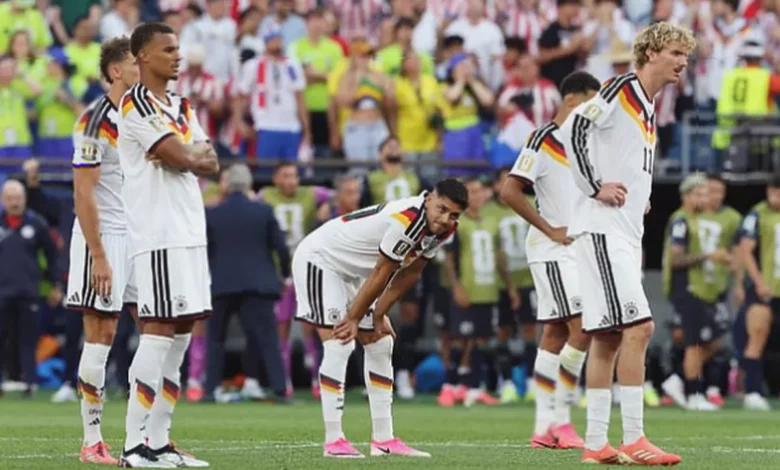
‘Colossal disgrace’: German media turns on Nagelsmann after World Cup exit
German media have branded their World Cup elimination a “colossal disgrace”, with the national team’s first ever penalty shoot‑out defeat at the tournament drawing stinging criticism of head coach Julian Nagelsmann. The 4‑3 shoot‑out loss to Paraguay in the last 32 – after a 1‑1 draw in which Kai Havertz’s 54th‑minute equaliser cancelled out a first‑half strike from Julio Enciso and Jonathan Tah sent the decisive spot‑kick over the bar – has triggered a wave of fury across the country.
BILD declared the performance “truly awful” and said the side had “embarrassed itself to the bone”, awarding Nagelsmann their lowest possible rating. “In the first half, the DFB eleven presented itself completely without ideas,” the newspaper wrote. “A dramatically weak performance by our national team, for which Nagelsmann is responsible.” Kicker described the elimination as “an indictment of German football and Nagelsmann”, adding that the coach “has not managed to bundle and promote the strengths of his team”. Spiegel called it “the decline of a once great football nation”, while the Suddeutsche Zeitung concluded it was “the next embarrassment”, with one of its writers adding: “Someone should tell Julian Nagelsmann: it can’t go on.” A poll on Sky Sport Germany’s website showed 93 per cent of respondents wanted the 38‑year‑old to leave.
Nagelsmann under fire: ‘He barely watches games’
The overwhelming weight of criticism has fallen on Nagelsmann, whose tactics and man‑management have been savaged. Former Germany international Dietmar Hamann, part of the 2002 World Cup final side, accused the head coach of “rarely watching games” and failing to scout players or opponents. “He wasn’t even in Milan to see Bisseck, a player he should have taken to the World Cup,” Hamann told RTE. “In two and a half years, he never went to Brentford to watch Schade, a player who scored ten goals last season. He probably watches one or two Bundesliga games a month.” Hamann also questioned the unity within the squad. “I believe heart comes from team spirit, from being together, from trusting that your teammates will be there when you need them. I feel that was never the case under this coach. Obviously it’s the coach’s job to get the lads together.”
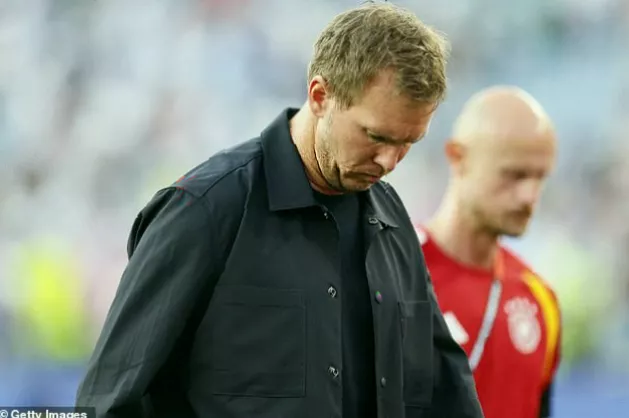
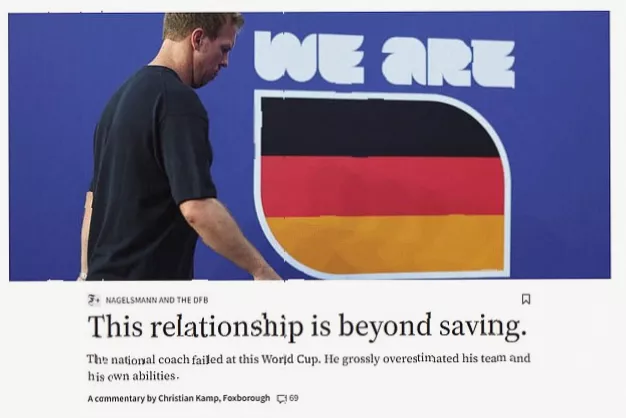
Nagelsmann’s handling of individual players has come under particular scrutiny. The decision to recall Manuel Neuer over Oliver Baumann has been questioned, as has the early call‑up of Said El Mala, which Hamann described as “experimental and impulsive”. The coach himself admitted after the defeat that the national team is “no longer first‑class”. Despite the backlash, Nagelsmann insisted he would not resign, stating he was ready to continue if the German Football Association (DFB) wanted him to. But the Frankfurter Allgemeine Zeitung concluded that “this relationship is beyond saving”.
The VAR controversy surrounding Tah’s disallowed extra‑time goal – ruled out because Waldemar Anton was judged to have fouled Paraguay goalkeeper Orlando Gill – added to the sense of injustice. Nagelsmann called the decision “a joke”. Pundits were divided: Alan Shearer thought the goal should have stood, calling the call “terrible” and suggesting the goalkeeper “conned the referee”; Peter Schmeichel agreed it was not a foul, while John Obi Mikel argued Anton had indeed impeded the goalkeeper. Tah, who saw his penalty saved and later suffered vile racist abuse on social media, was one of several players to miss from the spot – Havertz and Nick Woltemade also failed to convert. Havertz apologised to fans after his miss.
Calls for change and the Klopp question
The defeat has reignited demands for deep‑seated reform within German football. World Cup winner Mats Hummels insisted that players must take their share of the blame after a decade of underperformance. “We’ve had the home European Championship, the home Nations League, and this tournament. The other two tournaments were both disappointing,” he said. “It’s not a coincidence that Germany hasn’t had a single strong tournament since Euro 2016. I expect some experienced players to announce their international retirements, and I also expect the current, or potentially new, national coach to make tough decisions about those who are perhaps only in their early 30s now but have already missed the chance to play a good tournament for Germany in four, five, six tournaments.”
A BILD columnist went further, linking the team’s collapse to the state of the country. “At best, we are second‑class: our economy is experiencing a downward spiral, bankruptcies and deindustrialisation every day – and football in Germany lives only on the reputation of the past,” they wrote, mocking German chancellor Friedrich Merz for saying the team had “inspired our country”. The columnist added: “Friedrich Merz, like Julian Nagelsmann, who does not even have the decency to resign now, apparently lives in a parallel world. Both are incapable of seeing their mistakes.”
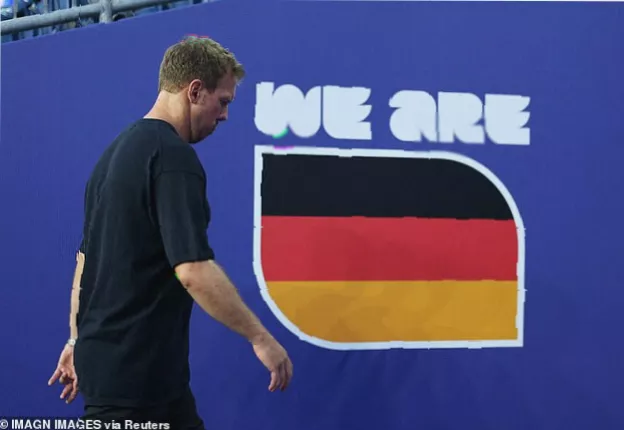
Attention has immediately turned to Jürgen Klopp as a potential successor. The former Liverpool and Borussia Dortmund manager was pitchside as a pundit for Magenta TV and pushed back when asked about the role. “I have a job that I really enjoy and as far as I know, it’s not a part‑time job,” Klopp said. “The fact is, Germany was eliminated today, and this is not the moment for me to think about Jurgen Klopp’s future.” He did, however, echo Hummels’ call for tough decisions and systemic change, suggesting reforms were needed “from the U‑10s”. The DFB has also come under fire from Jürgen Klinsmann, who branded the exit a “disgrace” and demanded a “top‑to‑bottom” investigation of the federation.