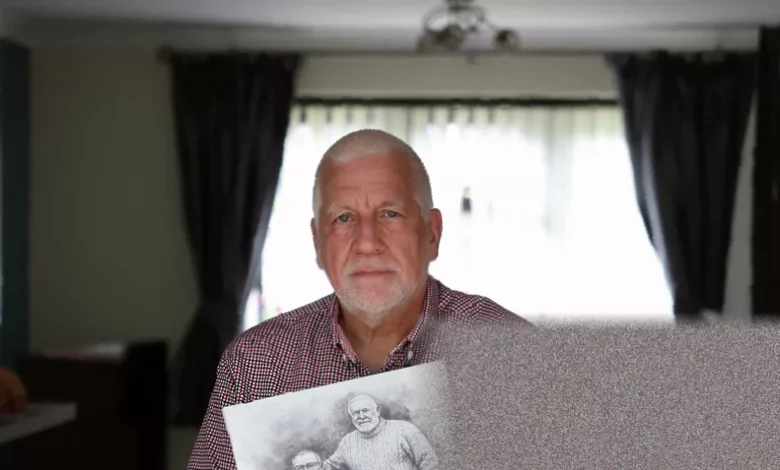
The Department for Work and Pensions continued to pay a former unpaid carer his £86.45 weekly allowance for six months after the death of his husband, leaving him with a potential debt of more than £1,300 and causing severe distress – before finally writing off the overpayment only after a newspaper intervened.
‘A constant reminder of my life stopping’
Chris Farrell, 65, a podiatrist from Gloucestershire, claimed Carer’s Allowance for four years while providing full-time care for his late husband. Following his husband’s death in December, he phoned the DWP’s bereavement line and was assured that the carer’s allowance unit would be told to stop the payments. By March, however, the payments had continued beyond the statutory eight-week grace period that applies after a care recipient dies. Mr Farrell then contacted the DWP three further times – through an online form, by phone and by registered letter – but the payments kept arriving.
“The death of my husband was a hard enough blow to deal with,” he said. “This was made so much worse by having to repeatedly tell DWP to stop the allowance – it was a constant reminder of my life ‘stopping’ for four years while I was a full-time unpaid carer for him.” Mr Farrell said the growing payments in his bank account, and the uncertainty about whether he would be punished despite following the rules, left him distressed and unable to move on. He has said he will donate the money to a food bank.
The DWP said it would write off the overpayment as official error after the Guardian approached it with details of his case. A spokesperson said: “We are very sorry to hear about Mr Farrell’s situation. Once a carer’s allowance claimant has correctly reported a change in circumstances, their responsibilities are discharged – with any overpayments made by DWP written off as official error.”
Systemic failures leave carers in limbo
Mr Farrell’s case is not isolated. The charity Carers UK has identified multiple instances in which unpaid carers have been unable to stop benefit payments despite repeatedly notifying the DWP of changes in their circumstances. One carer has accumulated more than £2,000 of unwanted Carer’s Allowance since their mother entered a care home ten months ago, despite contacting the DWP five times by phone and online form. Another, who took on a new work contract more than a year ago, has been overpaid more than £2,650 because the DWP has not acted on her reported change. A third, a man trying to balance work and care for his father, has been unable to cancel the allowance after finding a new job.
Helen Walker, chief executive of Carers UK, said: “Despite doing everything expected of them, carers continue to receive payments they know they are not entitled to, with no clear information about when, or if, recovery action will begin or how much they will ultimately owe. Carers tell us that receiving money they know is not theirs to keep creates confusion and makes it difficult to budget or plan for the future. They are left with an ever-growing worry of potential debt hanging over them.”
The DWP’s record-keeping and system flaws have been laid bare by an independent review of Carer’s Allowance overpayments led by the disability rights expert Liz Sayce, published last year. The review found that DWP backlogs, deleted or lost records, and “impenetrable” systems were largely responsible for what it described as a “tsunami of overpayments” totalling hundreds of millions of pounds over five years. Conflicting policy drivers, a lack of integrated leadership, and operational guidance that was often inconsistent with regulations all contributed to the crisis.
The review also rejected the DWP’s previous claims that the spike in overpayments was primarily due to carers failing to report changes. Instead, it blamed confusing and inefficient DWP processes. One key issue identified was the “cliff edge” nature of the earnings limit: earning a single penny above the threshold means losing the entire allowance, a design that discourages carers from attempting paid work and creates a severe financial shock when they do.
Mounting debt and rising penalties
Internal DWP statistics show the scale of the problem. In the first half of the 2024-25 financial year, 15,134 overpayments to unpaid carers were being recovered, 50 of which exceeded £10,000. Total outstanding Carer’s Allowance overpayment debt rose to £251.7 million in 2023-24, up from £150.2 million in 2018-19, and the number of people with outstanding debt increased by 71 per cent over the same period to 136,730.
Exceeding the earnings limit is the single biggest cause of overpayments, accounting for 57.6 per cent of cases in 2023-24. Ceasing to provide care is another significant contributor. The DWP also has a notably high rate of issuing civil penalties –£50 fines for non-fraudulent overpayments – with 46 per cent of all civil penalties issued by the department in the year ending March 2025 going to Carer’s Allowance claimants. A carer served with an overpayment demand may be required to repay the money along with a penalty and, in extreme cases, faces fraud charges.
In response to the Sayce review, the government has accepted most of its recommendations and launched a reassessment of approximately 200,000 historical Carer’s Allowance cases from April 2015 to September 2025. It is estimated that between 25,000 and 26,000 carers will have their debts cancelled, reduced or receive refunds, at a cost of £75 million to the DWP. The department has also agreed to write off overpayments resulting from official error – as in Mr Farrell’s case – but has yet to set out detailed plans for how it will refund other carers penalised by record-keeping failures, or estimate the total cost.
The government is exploring options for further reform, including automating earnings calculations and introducing a tapered system to replace the cliff-edge earnings limit. The weekly earnings threshold has already increased: it stood at £151 per week, rose to £196 in April 2025, and is due to reach £204 for 2026-27.
DWP response and ongoing concerns
The DWP spokesperson said the department “remains determined to make carer’s allowance fairer and simpler, so that it works for carers like Mr Farrell, who do so much for our society.” Yet campaigners warn that the DWP is not fully embracing the spirit of the Sayce review. Internal communications suggest a continued focus on claimant error rather than systemic failings, and the DWP is continuing its “business as usual” overpayment recovery policies while the overhaul is under way. This means penalties may still be imposed on some carers even as the department reviews historical cases. There are also unresolved questions over how thousands more carers who were unlawfully issued overpayment demands because of problems linking Universal Credit and Carer’s Allowance will be compensated.
Mr Farrell, now facing the prospect of having to explain the DWP’s error to his bank and move on with his life, was blunt about the department’s performance. “The DWP needs to get its act together to ensure when a claimant advises them of a change in circumstances they action the information efficiently so overpayments and potential penalties are not left hanging over someone who tries to do the right thing.”