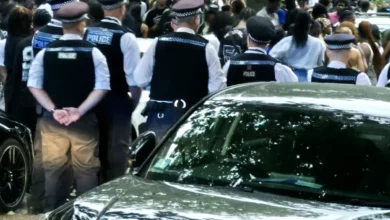
The police officer who led the hunt for the so-called “black-cab rapist” John Worboys has warned that crimes of a similar nature are almost certainly being committed today, as the criminal justice system in England and Wales teeters on the brink of collapse. Tim Grattan-Kane, now retired, said the system was “close to exploding with a frightening bang”, pointing to chronic underfunding, court closures, and a lack of support workers that leave officers and prosecutors unable to keep pace with the scale of offending.
Grattan-Kane’s warning comes ahead of the broadcast of a new ITV drama, Believe Me, which tells the story of the women whose testimony secured Worboys’ conviction. But his concerns are not about the past. He said he believed there remained a “real problem” with men administering drugs to facilitate sexual assault, and that drink spiking had become “far more common”. He offered two possible explanations: either more people are aware of the practice and trying it, or more men have “a bad approach to women”. He also acknowledged that higher reported rates could be the result of more women coming forward.
Recent data from Drinkaware and Anglia Ruskin University, published in a 2025 monitor, found that approximately 1.8 per cent of UK adults — nearly one million people — believe they have been victims of drink spiking in the past year. Among younger adults aged 18 to 34, that figure rises to 3 per cent. Women are disproportionately affected, making up 74 per cent of reported victims, with an average age of 26. Official figures show that between April 2022 and April 2023, police received 6,732 reports of spiking, including 957 needle spiking incidents. Bars are the most common location, accounting for 41 per cent of incidents, followed by social events (26 per cent) and nightclubs (25 per cent). A significant majority — 87 per cent — believe the purpose of spiking is to commit sexual assault or rape.
Grattan-Kane pointed to the high-profile case of Gisèle Pelicot in France, where a woman was repeatedly drugged and raped by her husband and more than 70 other men over a decade, and to that of Vikas Nath, a Knightsbridge restaurateur who faces trial on allegations that he raped and sexually assaulted a woman after drugging her — allegations he denies. In February 2026, Nath was convicted of attempting to administer a substance with intent and possessing a class B drug after attempting to spike a woman’s drink at a Mayfair club with GBL, with the intent to sexually assault her.
The Worboys case: a landmark investigation
John Worboys, a licensed black-cab driver in London, operated between 2002 and 2008. He would offer female passengers discounted rides home, often after they had been drinking, then spike their drinks with sedatives such as Rohypnol before assaulting them in his vehicle or their homes. He was convicted in 2009 of 19 offences, including rape, indecent assault, and administering a substance with intent to stupefy or overpower, committed against 12 victims. Police believe he may have had more than 100 victims. In 2019, he was convicted of further offences against four more women and handed two whole-life orders, ensuring he will never be released.
Grattan-Kane was the senior investigating officer of the team that arrested Worboys in 2008. His officers identified links between the crimes by reviewing previous blood tests and CCTV footage. They also consulted a person training to become a black-cab driver to predict which routes the attacker might have taken. Grattan-Kane said the team had asked victims to come forward, telling them: “You will be trusted, you will be listened to, you will be believed — which is why the drama is called Believe Me. That is when the phone started to go red hot.”
The case changed how the police deal with rape investigations. Grattan-Kane said the process should start from the point of believing women who say they have been assaulted. He stressed, however, that the system needed “continued, constant monitoring” to ensure the approach was followed properly. He also said police must “think the unthinkable” about people in positions of trust — a mindset he said was vital in solving the Worboys case. Because Worboys was a black-cab driver who dropped women home after attacking them, officers had not initially suspected him. “When the police are investigating these things [they need] to try and keep an open mind. But I’m aware not everyone had the same attitude,” Grattan-Kane said.
He cited the murder of Sarah Everard by the off-duty Metropolitan Police constable Wayne Couzens as another example of someone using their profession to gain a woman’s trust. An inquiry later found that Couzens had a history of alleged sexual offending and that vetting failures allowed him to become a police officer.
Systemic failures and a system ‘close to exploding’
Grattan-Kane was explicit about the pressures now facing the criminal justice system. He said he knew of young police officers who were frustrated by delays and “waiting to get results from the Crown Prosecution Service, who are underfunded and taking so long to make decisions”. He pointed to a lack of support workers “because of financial cuts” and said getting trials for cases was difficult because so many courts had been closed. According to the Law Society, more than half of the courts in England and Wales were closed between 2010 and 2019. The impact has been stark: the backlog in Crown Courts has grown significantly, with a record 81,923 people awaiting trial as of June 2024. The situation has been made worse by a shortage of judges and interpreters.
The Crown Prosecution Service has faced budget reductions of 25 per cent since 2010, leading to fewer staff. However, it has recently received an additional £96 million over the Spending Review period from 2026 to 2029, intended to increase prosecutor numbers and improve efficiency. Grattan-Kane warned that the overall system was “close to exploding with a frightening bang”.
Although Grattan-Kane acknowledged that the police should not be excused for their earlier mistakes in the Worboys case, he said their response was now “far more centred” on survivors. He noted that the Metropolitan Police were under pressure at the time after Tony Blair’s government adopted New York’s target-driven system of holding police officials to account. “If that is how you measure performance — by numbers rather than quality — you end up with a problem. There’s always a balance to be struck in a process where you want something that is victim-focused,” he said.
The Supreme Court ruled in 2018 that police failings in the Worboys investigation breached women’s human rights, establishing a duty for police to investigate serious violence adequately. Despite the changes that followed, concerns remain widespread. The police response to rape and sexual violence has been described as a “postcode lottery”. While police-recorded rapes have increased significantly, the charge rate has at times fallen to an all-time low. The government has set an ambition to more than double the number of adult rape cases reaching court by the end of the current Parliament, involving increased police referrals and CPS charges. New training for officers and an anonymous reporting route for sexual violence victims are among the efforts under way. The College of Policing provides resources and training for investigators on consent and related myths in rape cases.
The ITV drama Believe Me, a four-part series on ITVX, focuses on the legal battle by survivors to hold the police accountable for their failures in the Worboys investigation. It tells the story of survivors Sarah and Laila and how the Metropolitan Police allegedly failed to thoroughly investigate their allegations. Grattan-Kane advised the producers. The programme aims to highlight the difficulties survivors face when reporting rape and the institutional failures that can occur.