The forensic evidence that convicted Jeremy Bamber of one of Britain’s most notorious familicides is facing its most direct challenge in decades, with a new medical analysis concluding that a key component of the prosecution’s case – a rifle silencer – was not used in the killing of his sister.
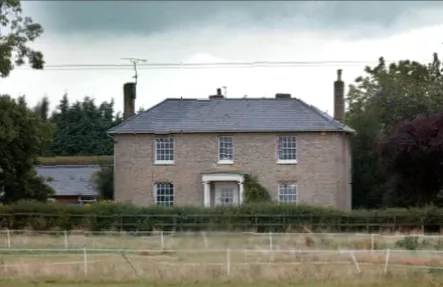
On 7 August 1985, police discovered five bodies at White House Farm in Essex: Nevill and June Bamber, both 61; their adopted daughter, 28-year-old Sheila Caffell; and her six-year-old twin sons, Daniel and Nicholas. All had been shot. Caffell, who had a history of schizophrenia, was found with the family’s .22 Anschütz 525 rifle on her chest, a Bible by her side, and two gunshot wounds to her neck and chin.
The scene initially pointed to a murder-suicide. That theory collapsed a month later when Bamber, then 24, was arrested, largely on the changing testimony of his former girlfriend, Julie Mugford. He was convicted the following year at Essex Crown Court and has now served over 41 years, maintaining his innocence throughout.
Central to his conviction was a Parker Hale sound moderator, or silencer. The prosecution argued it proved Sheila Caffell could not have been the killer. If attached to the rifle, they said, it would have been too long for her to reach the trigger to shoot herself. Crucially, they claimed it contained her blood as “backsplatter” from a close-range shot, proving it was used in her murder. As the trial judge, the late Justice Maurice Drake, instructed the jury, if they believed the silencer was on the rifle, then Jeremy Bamber was guilty of all five murders.
A Silencer’s Contested Journey
The silencer’s history is mired in dispute. It was not found by police during their initial search. Three days after the murders, it was discovered in a downstairs cupboard by Bamber’s relatives: his uncle Robert Boutflour and cousins David Boutflour and Ann Eaton.
This discovery itself has been questioned. If Bamber was a calculated killer who framed his sister, why would he hide the silencer in a cupboard where it was bound to be found? Barbara Wilson, the farm’s secretary who was summoned by the relatives just before the find, later told the New Yorker she believed the discovery was staged for her benefit, a claim David Boutflour has denied.
Once found, the silencer’s evidential value was presented to the jury as unequivocal. Justice Drake told them the blood inside was a match for Sheila Caffell alone. This was misleading. While a blood flake matched Caffell’s blood group, that group is shared by 8% of the population, including Robert Boutflour. A second blood group found in the silencer did not match any victim or Bamber, but was a potential match for David Boutflour. The jury heard none of this.
Subsequent DNA testing before Bamber’s 2002 appeal revealed three mixed DNA profiles. While the Court of Appeal acknowledged the original blood evidence was less certain, it upheld the conviction, citing the “vast” amount of other evidence, including Mugford’s testimony. The judges suggested all of Caffell’s blood could have been swabbed away in earlier tests and that the other DNA resulted from handling.
Forensic Experts Dispute the Core Claim
Now, a new forensic assessment directly contests the prosecution’s foundational premise. Professor Jason Payne-James, a distinguished forensic physician and president of the European Council of Legal & Forensic Medicine, has examined digitised crime-scene photographs. He concludes the bullet wounds on Sheila Caffell are not consistent with a contact or close-range injury from a rifle fitted with the silencer.
“The pattern imprint on the skin is not large enough to suggest that a silencer was used,” Professor Payne-James told the Guardian. “These are close-range bullet holes, and the nature of the moderator or silencer is such that you’d expect some form of pattern imprint equivalent to the diameter of the silencer if it was used in contact or at very close range.”
His findings align with a 2012 report by Dr David Fowler, the former chief medical examiner for the state of Maryland, which was peer-reviewed by two other eminent American pathologists. Dr Fowler also concluded the rifle was fired without a silencer. That same year, a ballistics experiment by expert Philip Boyce on pig skin showed wounds from the rifle alone were clean, resembling Caffell’s, while wounds with the silencer attached created a larger “halo” effect.
In total, five forensic experts have now stated they do not believe a silencer was used. “I’m in agreement with Dr Fowler,” Professor Payne-James concluded.
Institutional Hurdles and Emerging Mysteries
This body of expert opinion has so far failed to move the Criminal Cases Review Commission (CCRC), the body responsible for investigating potential miscarriages of justice. Bamber’s team submitted the evidence as part of a wider application. Last year, after four years of review, the CCRC stated it would not refer the case on the first four points, including the silencer evidence, though it continues to examine six others.
It gave Dr Fowler’s report “short shrift,” partly rejecting it because it did not align with the trial testimony of a prosecution firearms witness. Bamber argues this ignores the trial pathology evidence and asks why the CCRC did not commission its own expert. The commission’s provisional reasoning also cited “the fact that blood matching that of Sheila Caffell was found in the moderator,” a claim its own 2002 findings contradicted.
The CCRC itself is in a state of flux. Its former chair and CEO resigned after an independent review criticised poor management and weak decision-making. The interim chair, Dame Vera Baird, acknowledged on BBC Radio 4’s Today programme that the commission had been seen to “look for reasons not to refer rather than to refer.”
Further doubts about the silencer evidence have been fuelled by documents suggesting Essex police may have examined more than one silencer. Despite police denials over 40 years, David Boutflour recently told the New Yorker’s Heidi Blake that police had taken his silencer for “months and months” before the trial. This supports claims that evidence from different moderators may have been conflated.
The Case Without the Silencer
Without the silencer, the case against Jeremy Bamber rests heavily on circumstantial evidence and the testimony of Julie Mugford. She initially told police Bamber had spoken of hiring a hitman, then changed her story to say he planned to do it himself after the alleged hitman had an alibi. It later emerged she had agreed to sell her story to the News of the World for £25,000 if Bamber was convicted, and that charges against her for burglary, fraud, and drug offences were dropped to secure her as a witness.
Other potential evidence continues to surface. The New Yorker’s 2024 investigation, and subsequent podcast “Blood Relatives,” highlighted a potential 999 call from inside the farmhouse at 6:09am, which could provide an alibi for Bamber who was outside with police. The investigation also alleged crime scene interference, including an officer handling the Bible.
For Bamber, writing from Wakefield Prison, the new forensic analysis is definitive. “It completely removes the central plank of the prosecution’s case,” he said. The narrative that the silencer’s alleged blood evidence cemented his guilt now, he believes, contains the key to his freedom. “Without the silencer,” he insists, “the whole case collapses.”
The CCRC, when approached for comment, stated: “It would be inappropriate for us to discuss the case or make any further comment while the application is being reviewed.” Essex police reiterated that Bamber’s conviction has been upheld through multiple reviews.
As the White House Farm murders approach their 40th anniversary, the seven-inch steel tube at the heart of the case remains both a symbol of a brutal crime and the focal point of an unresolved legal battle, its true role in the events of that night more disputed than ever.