Bosnia and Herzegovina need a significant win to advance. Entering the final round of Group B fixtures on Wednesday, both sides had collected a single point from their opening two matches – a draw against Canada for the Europeans, a draw with Switzerland for the Asians – and defeat would all but extinguish any hope of reaching the knockout stage. The expanded 48-team World Cup format, in which the top two from each group plus the eight best third‑placed teams progress to a Round of 32, meant that victory was imperative for Bosnia and Herzegovina if they were to claim one of those wildcard slots. Coach Sergej Barbarez had acknowledged as much before kick-off, telling reporters that a draw would almost certainly be insufficient and predicting an open, attacking contest. “For us, it’s never our goal to defend for 90 minutes,” he said. “It will be two teams that will have to fight to win.”
Match context: high stakes under a Seattle sun
Lumen Field in Seattle was the setting for what many described as the battle for third place in Group B, with the temperature reaching the mid-80s Fahrenheit (around 28–30°C) under a heat advisory that sent players and fans scrambling for shade and hydration. Bosnia and Herzegovina had begun their campaign with a creditable draw against Canada but then suffered a 4-1 defeat to Switzerland, leaving them with a goal difference of −3. Qatar, meanwhile, had been thrashed 6-0 by Canada after their stalemate with Switzerland, leaving them on −6. Barbarez, who took charge in April 2024, noted that a victory for his side would most likely set up a last-32 clash against co‑hosts the United States, but he warned that “form can beat quality sometimes” and pointed to Fifa’s ranking – in which Qatar sit above Bosnia – as a reason to stay vigilant.
Key moments: own goal, a teenager’s strike, and a post
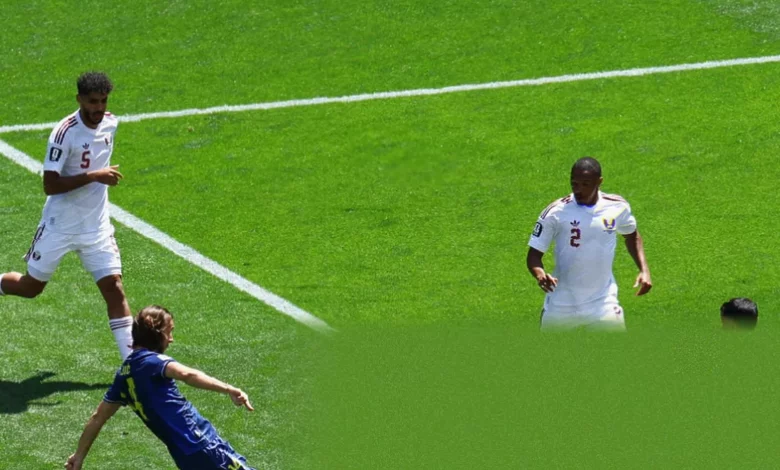
The pattern of the match quickly tilted in Bosnia’s favour. Inside two minutes, Ermedin Demirović tested Qatar goalkeeper Yousof Abunada from the edge of the area, signalling intent. The pressure mounted as the half wore on, and the breakthrough arrived in the 32nd minute. A whipped cross from the left found Edin Džeko at the back post; his volley back across goal was inadvertently turned into his own net by Qatar defender Tarek Albrake. The own goal put Bosnia and Herzegovina ahead and, with a goal difference now at −2, briefly elevated them to a position that would likely be enough to progress as one of the best third‑placed teams.
If the first goal was a stroke of fortune, the second was pure inspiration. Four minutes later, a teenager – one of the emerging talents in Bosnia’s squad – collected the ball roughly 30 yards from goal, beat a couple of defenders and rifled an unstoppable shot into the top corner. A stunned Qatar team now faced an uphill climb of improbable proportions. Džeko thought he had added a third in the 38th minute when he went one-on-one with the goalkeeper and struck the ball beyond him, only to see it ping back off the post. Bosnia and Herzegovina were dominant, with midfielder Benjamin Šeško? Actually the article mentions Basic and Katic: in the 33rd minute a cross was cleared to Basic, whose shot was deflected over, and from the resulting corner Katić headed over. The game also featured a hydration break, taken in the 23rd minute, as the extreme heat in Seattle became a recurring theme of the broadcast.
Player information: milestones, bans, and squad notes
For Edin Džeko, the match marked his 150th international appearance – 35 more than any other Bosnian player, underlining his enduring importance to the national team even at the age of 40. His presence was critical to the victory that kept his country’s World Cup hopes alive. On the opposite side, Qatar were forced to rearrange their lineup after two red cards in the 6-0 loss to Canada. Homam Ahmed and Assim Madibo were unavailable; the latter had been given a five‑match ban by Fifa’s Disciplinary Committee for serious foul play after a tackle that broke the leg of Canada’s Ismaël Koné. The Qatar Football Association confirmed that Madibo and the country’s sports minister had visited Koné in hospital following surgery. Coach Julen Lopetegui made four changes to the side that lost heavily to Canada, but the disruption proved costly. Bosnia, meanwhile, were without defender Tarik Muharemović, suspended after his red card against Switzerland. Sead Kolašinac, one of the few remaining players from the 2014 World Cup campaign, started at left‑back. The squad also featured promising names such as Kerim Alajbegović and Esmir Bajraktarević, and it was one of them – described only as “the teenager” in live coverage – who produced the goal of the tournament so far.
The result leaves Bosnia and Herzegovina on four points with a goal difference that may well be sufficient to claim one of the eight best third‑placed berths. For Qatar, the defeat effectively ends their involvement, a sobering outcome for a side that had hoped to build on their 2022 appearance. As the final whistle approached in Seattle, the flags that had been a visible presence throughout the week – both the official blue-and-yellow national flag and the older golden lily standard that has seen a resurgence as a symbol of Bosnian identity – were waved with renewed fervour by a travelling support that had made the most of the city’s unseasonable heatwave.