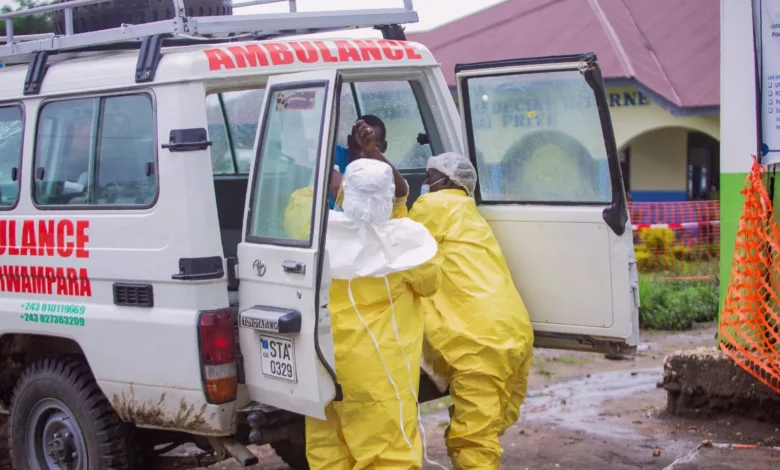
France has recorded its first case of Ebola during the current outbreak after a doctor returning from a humanitarian mission in the Democratic Republic of the Congo tested positive for the virus. The patient is being isolated and health authorities have begun contact tracing, the French health ministry said, adding that the risk to the general European population remains low.
The doctor, who travelled from the eastern DRC where the outbreak is concentrated, is believed to have been infected with the Bundibugyo strain of the virus — a less common variant for which no licensed vaccine or specific treatment exists. The health ministry did not disclose the doctor’s condition or location, but confirmed that standard protocols for managing viral haemorrhagic fevers have been activated.
Congo outbreak spreads at unprecedented speed
The current outbreak in the DRC has already infected more than 1,000 people and killed 267, according to the World Health Organisation. It has recorded the largest number of confirmed cases within the first month of any Ebola outbreak in Africa, reflecting what Abdirahman Mahamud, a senior WHO official, described as a situation where “the outbreak is moving faster than us”. He told reporters the scale was partly due to the disease’s initial presence in built-up urban areas, whereas historically cases were first identified in rural settings and contained quickly.
The outbreak is primarily centred in Ituri Province, which accounts for approximately 90 per cent of confirmed cases, with additional cases reported in North Kivu and South Kivu provinces. Uganda has also reported a linked cluster of cases due to cross-border travel from the DRC. The response is being complicated by a complex humanitarian and conflict-affected environment, with highly mobile and displaced populations, insecurity, and challenges in accessing remote areas. Contact tracing has been severely hampered: health workers in the DRC have only been able to follow up with 58 per cent of case contacts.
This is the DRC’s 17th Ebola outbreak since the virus was first identified in 1976. The previous outbreak in the same eastern provinces, which ran from 2018 to 2020, was the country’s worst and longest on record, with nearly 3,500 confirmed cases and more than 2,200 deaths. The two largest Ebola outbreaks globally remain the 2014–2016 West Africa epidemic, which killed more than 11,000 people, and the 2018 DRC outbreak.
The US Centers for Disease Control has warned that this could potentially be the worst Ebola outbreak yet. Washington is now making a modest contribution to relief efforts after slashing aid to the region at the start of Donald Trump’s second term. The US Health Department said this week it has provided doses of an experimental antibody drug — identified by officials as MBP134 — for use in a clinical trial to fight the widening outbreak. It was unclear how many doses would be provided. Separately, the United States has mobilised more than $200 million in direct foreign assistance and deployed a Disaster Assistance Response Team to the region.
Children disproportionately affected
Children have been hit particularly hard by the outbreak. According to the UN Children’s Fund, Unicef, children have made up 15 per cent of confirmed cases and more than 25 per cent of deaths since the outbreak began in April. They are almost twice as likely to die as adults. Beyond the physical toll, the outbreak has orphaned over 130 children in Ituri province alone, and children face stigma, psychosocial distress, and loss of access to essential services including healthcare, education, and nutrition.
Ebola typically causes symptoms within two to 21 days of exposure, beginning with fever, fatigue, headache and muscle pain before progressing to vomiting, diarrhoea, rash, abdominal pain and, in severe cases, bleeding and organ failure. The virus is spread through direct contact with the body fluids of an infected person or animal, or through contaminated objects, but is not airborne. The Bundibugyo strain has a case-fatality ratio estimated at around 24 per cent, although historically Ebola has been capable of killing up to 90 per cent of infected people, and the disease can remain hidden in recovered patients only to relapse months or years later. There is no specific medicine, though early treatment can improve survival odds.
European preparedness and UK response
Dr Daniela Manno, a clinical assistant professor at the London School of Hygiene and Tropical Medicine, said the detection of a case in Europe was “not entirely unexpected” given ongoing transmission in the eastern DRC and regular international travel between affected areas and Europe. “Case identification and contact tracing remain challenging in some outbreak-affected areas, meaning that infected individuals may seek healthcare before their exposure has been recognised,” she said.
Dr Manno noted that healthcare workers were particularly vulnerable because they may encounter patients in the early stages of the disease, when symptoms are often non-specific and can be mistaken for other common infections, delaying a response. However, she stressed that “the overall risk to the general population in Europe and the UK remains low. European countries have well-established protocols for identifying and managing suspected cases of viral haemorrhagic fever.” She added: “Healthcare facilities should remain vigilant, particularly when assessing travellers arriving from affected areas who present with symptoms compatible with Ebola disease. Rapid identification, isolation, diagnostic testing, contact tracing, and appropriate infection prevention and control measures remain the most effective tools for preventing onward transmission.”
The European Centre for Disease Prevention and Control assesses the risk to people in the EU as low. In the United Kingdom, the UK Health Security Agency has stated that the outbreak remains a low risk to the public. Dr Michael Reynolds, Incident Director at UKHSA, said: “We have robust procedures and specialist facilities in place to identify and manage any cases safely should they arise. We continue to monitor routes into the UK from affected countries, ensuring travellers have information on symptoms and how to seek care if unwell. UKHSA has also activated the Returning Workers Scheme to monitor and support those travelling to affected areas where they may be directly exposed to Ebola through their work.”
The UK has committed up to £21 million to support the Ebola response in the DRC. The UK Public Health Rapid Support Team, established after the 2014–2015 West Africa outbreak, has deployed specialists to the DRC to assist with epidemiology, risk communication, infection prevention and control, and data modelling. Public Health England (now part of UKHSA) previously developed training and exercise materials to prepare health and partner organisations for potential Ebola cases in the UK, including simulations of port-of-entry and hospital scenarios.
The WHO and the Africa Centres for Disease Control and Prevention have announced a joint plan to raise $518 million to strengthen response measures. The WHO declared the outbreak a Public Health Emergency of International Concern on May 17, 2026. Meanwhile, several experimental treatments and vaccines are in development, with ongoing clinical trials for therapies including mAb114, REGN-EB3, and remdesivir. For the Bundibugyo strain, the absence of any licensed treatments or vaccines increases the reliance on these experimental options.
Rumours and online misinformation are contributing to the challenges in controlling the outbreak, with some individuals questioning whether Ebola is real. Some experts have suggested that disinvestment in global health security, including the dismantling of USAID, may have contributed to the magnitude of the current outbreak. The US has already provided doses of the experimental antibody drug MBP134 for clinical trials in the DRC, though the precise number of doses remains unclear.