NHS facing patient safety crisis as overheating incidents surge by 53%
UK hospitals experienced a 53% surge in overheating incidents between 2016-17 and 2023-24, according to NHS England data, as the country braces for another record-breaking heatwave that has already prompted the UK Health Security Agency (UKHSA) to issue a rare red heat-health alert across parts of England. The figures, which show a near doubling from 2,980 overheating incidents in 2016-17 to 5,554 in 2021-22, peaked in 2022-23 — the year the UK recorded its first 40°C temperatures.
The scale of the crisis is underscored by the vulnerability of the NHS estate. More than 90% of NHS buildings in England are susceptible to overheating, the result of years of under-investment that has left facilities dilapidated, outdated and ill-equipped to maintain a safe clinical environment during extreme heat. Dr Mark Harber, special adviser on healthcare sustainability and climate change at the Royal College of Physicians, described the situation as a patient-safety crisis and a matter of national urgency. “Investing in building upgrades, workforce preparedness and proper resilience planning is no longer optional,” he wrote. “It is essential if the NHS is to continue functioning.”
The impact of overheating extends beyond infrastructure. During the July 2022 heatwave, IT systems at Guy’s and St Thomas’ NHS Foundation Trust failed due to extreme temperatures, triggering a critical incident that disrupted clinical services for weeks. There are also growing concerns about the safe management of heat-sensitive medicines. Official data analysed by the Liberal Democrats found nearly 1,000 excessive heat deaths in healthcare settings in 2024, with more than 470 occurring in hospitals alone. Between 2020 and 2024, England recorded 10,781 excess deaths linked to heatwaves. The 2022 heatwaves alone — five waves in total — caused an estimated 2,985 excess deaths in England.
For healthcare staff, the heat creates stifling conditions that exacerbate burnout, drive fatigue and increase the risk of errors as demand spikes, particularly among the very young, the elderly and those with chronic conditions. The Royal College of Physicians has warned that climate change is the biggest threat to human health, with 75% of physicians surveyed expressing concern about its impact on patients. The college is urging the government to provide adequate time, resources and training for clinicians to adapt care plans — including adjusting heat-sensitive medications and incorporating air-quality alerts — and to support the NHS’s net-zero targets by 2040 for direct emissions.
Yet the investment needed to bolster resilience is substantial. Experts estimate that £10 billion is required for climate adaptation across UK infrastructure, with the NHS a priority. The independent Climate Change Committee (CCC) has warned that the current National Adaptation Programme, covering 2023-2028, is not adequately preparing the UK for current or future climate change. Without urgent action, heat-related deaths are projected to rise significantly by 2050.
School closures highlight inadequate infrastructure and lost learning
As temperatures climb, hundreds of schools across England and Wales have been forced to close or shorten their hours. Many school buildings, particularly older primary schools, lack adequate ventilation or air conditioning, leaving classrooms dangerously hot. Research suggests that children lose up to 12 days of learning per year on average without adaptation measures. A study indicated that taking a test on a 32°C day reduces a pupil’s chance of passing by around 10% compared with a test taken at 22°C, while poor sleep in temperatures above 20°C leads to reduced concentration and irritability in the classroom.
Sarah James, a retired teacher from Monmouth, criticised the decision to send children home during heatwaves, arguing that many will be sent to cramped, overheated homes with no outdoor space. “By all means suspend normal activities, lessons, uniforms etc, and even allow parents who wish to – and are able to – take their children home on such days to do so. But simply sending children home is not a sensible or reasonable approach,” she wrote. James called for a national emergency to be declared to provide support to schools. The Department for Education’s guidance states that schools should generally remain open, with leaders taking steps to ensure children’s safety, but teaching unions are demanding urgent government funding for cooling solutions such as fans and cooling units.
Long-term denial persists despite decades of warnings and evidence
The current heatwave is only the second time a red alert has been issued by the UKHSA, the first being in July 2022. The Met Office has warned of exceptional, potentially record-breaking heat, with temperatures expected to reach the mid to high 30s in southern and eastern areas. Red alerts signal a severe threat to life, even for healthy populations, and can disrupt transport, food, water and energy supplies, as well as businesses. Hospitals are implementing additional measures, advising visitors to stay hydrated and plan for potential public transport disruptions.
Yet the sense of urgency has been decades in the making. Linda Rabben, a resident of Baltimore, Maryland, recalled attending a UN Preparatory Commission meeting more than 30 years ago, where climate scientists told delegates they had 20 years to solve what they described as “the biggest environmental problem of the past 10,000 years.” Months later, at the Earth Summit in Rio de Janeiro in 1992, Indigenous leader Davi Kopenawa Yanomami warned a gathering about the coming ecological catastrophe. “And here we are, all these years later, still denying and temporising, waiting for the world to die, not with a bang but with a whimper,” Rabben wrote. The UK’s warmest years on record have all occurred since 2002, and the UN Framework Convention on Climate Change has been the bedrock of international talks for three decades.
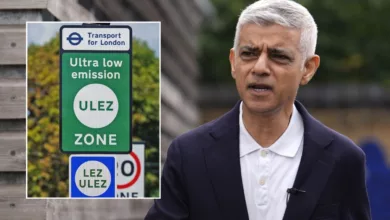
In London, the success of air-quality policies such as the Ultra Low Emission Zone (ULEZ) shows what decisive government action can achieve: deaths linked to air pollution fell by approximately 40% between 2019 and 2024, and the city met legal nitrogen dioxide limits for the first time in 2024. But Fernando Quintana Marrero of London argued that the same determination is missing when it comes to heat resilience. “If we can transform air quality in less than a decade, surely we can also invest in more resilient transport infrastructure, better urban cooling, more green spaces and stronger protections for workers during periods of extreme heat,” he wrote. “The lesson from London’s clean-air success is simple: political will matters. The question is whether our leaders will show the same urgency when it comes to preparing the capital for the climate challenges already arriving at our doorstep.”