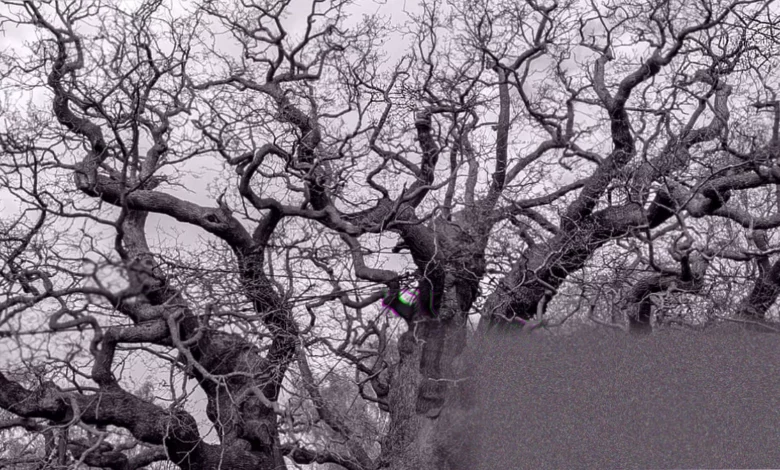
The Major Oak, a beloved Sherwood Forest landmark, will be remembered fondly after the Royal Society for the Protection of Birds (RSPB) announced its likely demise on June 18, 2026. The ancient tree, estimated to be between 800 and 1,200 years old, failed to produce leaves this spring, leading experts to conclude its life has ended. For generations, it sparked creativity and curiosity, and although it has died, the oak is destined to live on in people’s affections.
“I have loved this tree since I was a child,” wrote Pat Hutton from Stroud in Gloucestershire. “Visiting Granpop, who lived in Worksop, from our home in Cleethorpes, we would always find time to go to Sherwood Forest and visit the Major Oak. My imagination in full flow, I could see Robin Hood and his merry men hiding there … Sadly, I haven’t seen it for many years, but it lived in my memory, and will live on there.” That enduring personal attachment echoes the broader emotional connection felt by countless visitors drawn to the spot where, as the RSPB puts it, “history, nature and legend meet.”
Historical and imaginative significance
The Major Oak’s fame rests squarely on its deep entanglement with the legend of Robin Hood, who is said to have used its hollow trunk as a hideout. The name “Sherwood” itself dates back to 958 AD, meaning “the woodland belonging to the shire,” and the forest became a Royal hunting ground after the Norman Conquest in 1066. The Robin Hood legend has been synonymous with Sherwood Forest for more than 600 years, with early literary references appearing as far back as the 14th century. That powerful folklore has made the tree a magnet for tourists, with the Sherwood Forest National Nature Reserve now attracting roughly 350,000 visitors a year.
Physically, the Major Oak was a pedunculate oak with a trunk circumference of approximately 11 metres (33 feet), a crown spread of about 28 metres (92 feet), and an estimated weight of 23 tonnes. Its earliest recorded name was the “Cockpen Tree,” a reference to the cockfighting that once took place nearby. It was renamed in 1790 after Major Hayman Rooke, an archaeologist and former British Army officer who documented the ancient oaks of Sherwood Forest. Over the centuries it has also been known as the “Queen Oak” and the “Great Oak.”
The tree’s significance extends beyond folklore and dimensions. It sits within Sherwood Forest’s collection of ancient and veteran oaks, which is one of the largest in Western Europe. These oaks are described by conservationists as “biodiversity powerhouses,” supporting hundreds of species. The Woodland Trust has highlighted that ancient trees like the Major Oak are vital but often lack adequate legal protection and investment.
Conservation efforts and decline
Efforts to preserve the Major Oak have been ongoing for more than a century, with continuous interventions since 1908. These measures included metal bracing, props, concrete infilling, and fiberglass coverings – actions that were well-intentioned but likely hindered the tree’s natural aging processes and contributed to its decline. Millions of visitors over the years also compacted the soil around its roots, making it difficult for water, nutrients, and oxygen to reach the tree. Climate change, with associated heatwaves and droughts, further stressed the ancient oak.
Recent scientific investigations, including soil and root analysis, revealed that the soil was compacted and lacking in life, with a weakened root system. Although pioneering work to improve soil conditions around the tree began in 2021, these efforts ultimately came too late for the Major Oak itself.
Lasting legacy
Despite its death, the Major Oak’s story does not end. Acorns and cuttings have been used to grow saplings, with plans underway to ensure its genetic legacy continues globally. The knowledge gained from caring for the tree is considered invaluable and will inform best practices for the preservation of other ancient oaks. The tree itself will remain a significant natural monument, a habitat for wildlife, and a powerful symbol of Sherwood Forest and the Robin Hood legend.
For visitors wishing to pay their respects, the Major Oak is accessible via a 15-minute walk from the Visitor Centre within the Sherwood Forest National Nature Reserve, which is managed by the RSPB. Entry to the forest is free, though parking charges apply for non-RSPB members. The Visitor Centre offers a cafe, shop, and facilities, and mobility scooters are available for hire. Special events, such as the Robin Hood Festival, continue to be held throughout the year.
The decline of the Major Oak underscores the broader impact of climate change and overtourism on heritage sites. The Woodland Trust has emphasised that ancient trees like this one are vital but often lack sufficient legal protection and funding. While the Major Oak is the most famous of Sherwood’s oaks, other notable specimens exist elsewhere, such as Queen Elizabeth’s Oak at Hatfield House, which also carries historical associations. The Major Oak may have fallen silent, but its imprint on the landscape – and on the imaginations of those who cherished it – remains indelible.