
Public Health System in the UK Explained
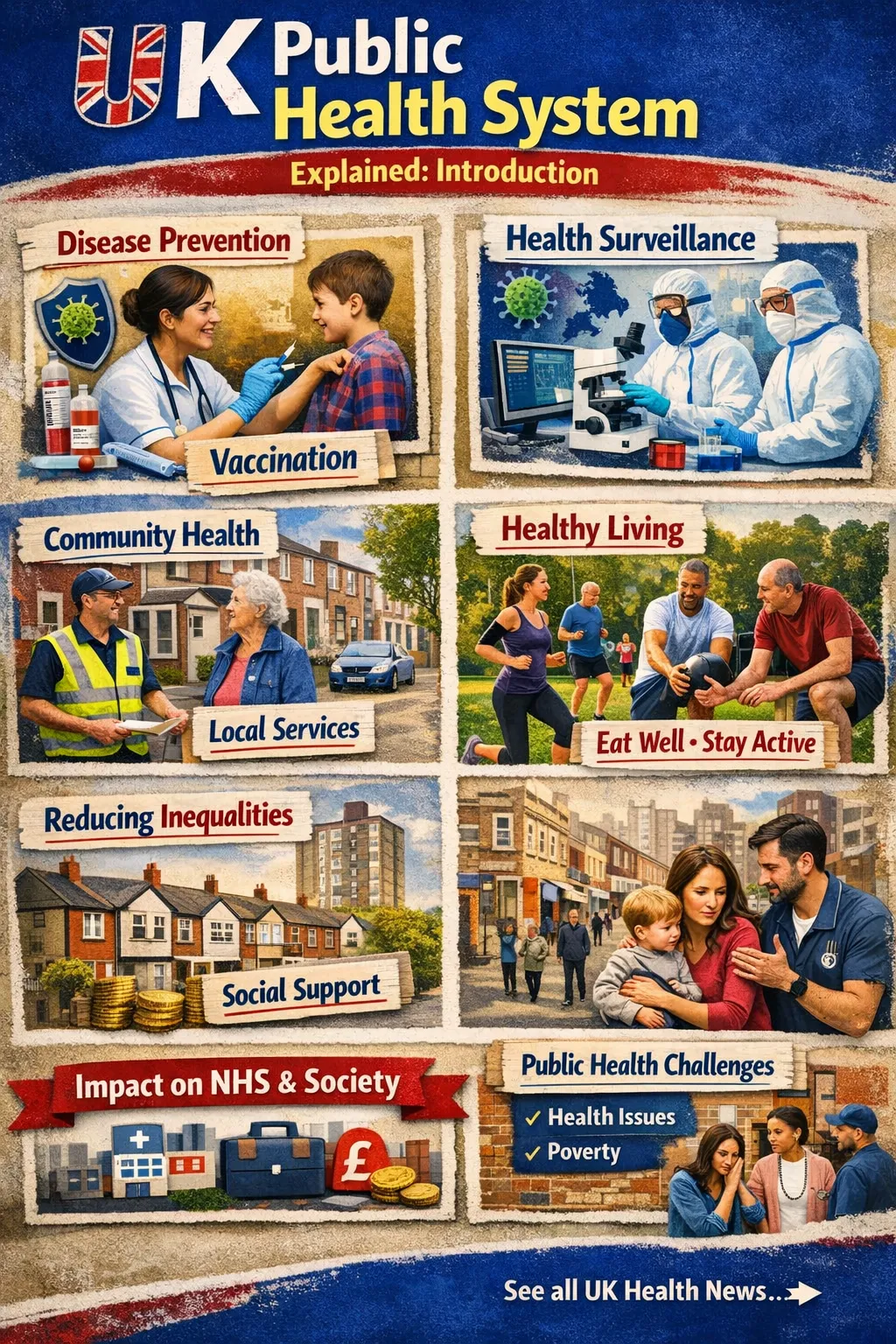
Public health encompasses the organised efforts of society to prevent disease, prolong life and promote health across the entire population. Unlike clinical healthcare, which treats individuals who are already ill, public health focuses on the wider determinants of health — the social, economic, environmental and behavioural factors that influence whether people stay healthy or become ill. The United Kingdom has a long and distinguished history in public health, from the sanitary reforms of the Victorian era to the modern challenges of obesity, antimicrobial resistance and pandemic preparedness.
This guide explains how the public health system works in the UK, who is responsible for delivering public health services, what the main priorities are and why public health investment matters.
How is the public health system organised?
In England, responsibility for public health is divided between several organisations. The UK Health Security Agency (UKHSA), established in 2021 following the COVID-19 pandemic, is responsible for protecting the population from infectious diseases, chemical, biological, radiological and nuclear (CBRN) threats, and other health emergencies. UKHSA took over many of the functions previously held by Public Health England (PHE), including surveillance, laboratory testing, outbreak investigation and emergency response.
The Office for Health Improvement and Disparities (OHID), part of the Department of Health and Social Care, leads on health improvement policy, including reducing health inequalities, tackling obesity, promoting physical activity, reducing smoking and alcohol harm, and improving mental health. Local authorities have statutory responsibility for improving the health of their populations, delivered through Directors of Public Health and local public health teams. This transfer of public health responsibilities to local government, implemented in 2013, was intended to enable a more holistic approach to health improvement by connecting public health with other council services such as housing, planning, transport and environmental health.
The NHS also delivers important public health functions, including the national vaccination programme, population screening programmes (for cancers, newborn conditions and other diseases), sexual health services and maternity services. NHS England commissions national screening and immunisation programmes, while Integrated Care Boards work with local authorities on place-based health improvement initiatives.
What are the main public health priorities?
The UK faces several major public health challenges. Obesity is one of the most significant — the UK has one of the highest rates of obesity in Europe, with approximately two-thirds of adults and over a third of children leaving primary school classified as overweight or obese. Obesity increases the risk of type 2 diabetes, heart disease, certain cancers, joint problems and mental health difficulties, and imposes significant costs on the NHS and the wider economy.
Smoking remains the single largest preventable cause of death in the UK, responsible for approximately 76,000 deaths per year in England alone. Smoking rates have declined significantly over the past two decades — from around 27 per cent of adults in 2000 to approximately 12 per cent in 2023 — driven by legislation including the smoking ban in enclosed public places, standardised packaging, advertising restrictions and public health campaigns. The government has proposed legislation to create a “smoke-free generation” by progressively raising the legal age of sale for tobacco products.
Alcohol misuse causes approximately 10,000 deaths per year in England and contributes to a wide range of health and social harms. Drug misuse, particularly the use of opioids, synthetic drugs and novel psychoactive substances, is a growing concern. Health inequalities — the systematic differences in health outcomes between different social groups, geographic areas and demographic categories — are a persistent and in many cases widening challenge, with people in the most deprived areas of England living on average nearly 10 years less than those in the least deprived areas.
How did the COVID-19 pandemic reshape public health?
The COVID-19 pandemic was the most severe public health emergency in the UK for a century, causing over 200,000 deaths (by the broader measure of deaths with COVID-19 mentioned on the death certificate) and profoundly disrupting the economy, education and social life. The UK’s response included national lockdowns, the creation of NHS Nightingale temporary hospitals, the development of the NHS Test and Trace system, and one of the fastest vaccination programmes in the world, with the UK being the first country to approve and deploy a COVID-19 vaccine in December 2020.
The pandemic exposed significant weaknesses in the UK’s pandemic preparedness, public health infrastructure and health inequalities. The UK COVID-19 Inquiry, chaired by Baroness Hallett, is examining the government’s preparation for and response to the pandemic, with modules covering political decision-making, public health capacity, the impact on the NHS, the care sector, inequalities and procurement. The establishment of UKHSA and reforms to pandemic planning are intended to strengthen the UK’s resilience to future health emergencies.
The pandemic also had wide-ranging consequences for non-COVID health, including disrupted cancer screening, delayed elective treatment, deteriorating mental health (particularly among children and young people), increased domestic abuse, reduced physical activity and worsened health inequalities. The recovery from these indirect health impacts is expected to take many years.
How does the UK approach vaccination and screening?
The UK operates one of the most comprehensive vaccination programmes in the world, providing routine immunisations against diseases including measles, mumps, rubella, whooping cough, polio, meningitis, HPV (human papillomavirus), influenza and pneumonia. The vaccination schedule is recommended by the Joint Committee on Vaccination and Immunisation (JCVI), an independent expert advisory committee, and delivered through GP practices, pharmacies, school-based programmes and NHS community services.
Population screening programmes identify disease at an early stage in people who appear healthy, enabling earlier treatment and better outcomes. The UK operates national screening programmes for breast cancer, cervical cancer, bowel cancer, abdominal aortic aneurysm, diabetic eye disease, newborn blood spot conditions, newborn hearing and fetal anomalies. These programmes are managed by the National Screening Committee and delivered through NHS services.
How is public health funded?
Public health funding in England comes from several sources. The public health grant, allocated by the Department of Health and Social Care to local authorities, funds a wide range of public health services including sexual health clinics, drug and alcohol treatment, health visiting, school nursing, smoking cessation services and obesity programmes. This grant has been reduced in real terms since its introduction in 2013, leading to cuts in local public health services and concerns about the impact on population health outcomes.
The UK Health Security Agency (UKHSA), which replaced Public Health England in 2021, is funded directly by central government and is responsible for health protection, including infectious disease surveillance, emergency response, immunisation programmes and environmental hazards. The Office for Health Improvement and Disparities (OHID), also part of the reorganised public health landscape, focuses on health improvement and the reduction of health disparities across the population.
The NHS also plays a significant role in public health through primary care services, health checks, cancer screening programmes, maternity services and community health services. NHS England commissions national screening and immunisation programmes, and integrated care systems (ICSs) are expected to take a more strategic approach to population health, working with local authorities, voluntary organisations and other partners to address the wider determinants of health.
What are health inequalities and how are they addressed?
Health inequalities — systematic differences in health outcomes between different groups in the population — are one of the most persistent and challenging public health issues in the UK. Life expectancy, healthy life expectancy, rates of chronic disease, mental health outcomes and infant mortality all show significant variation by socioeconomic status, geographic region, ethnicity and other factors. People living in the most deprived areas of England can expect to live around 10 years less than those in the least deprived areas, and the gap in healthy life expectancy is even wider.
The Marmot Review (2010) and its follow-up Marmot Review 10 Years On (2020) documented the scale of health inequalities in England and identified the social determinants of health — including income, employment, housing, education, early childhood development and environmental conditions — as the primary drivers of unequal health outcomes. The reviews called for a comprehensive, cross-government approach to reducing health inequalities, with action on poverty, housing, education and environmental quality alongside improvements in healthcare access and quality.
The COVID-19 pandemic starkly exposed and widened existing health inequalities. Death rates from COVID-19 were significantly higher among people living in deprived areas, among certain ethnic minority groups and among people with pre-existing health conditions associated with disadvantage. The pandemic prompted renewed political attention to health inequalities, though the extent to which this has translated into sustained policy action remains the subject of debate among public health professionals and campaigners.
How does the UK approach health prevention?
Prevention — intervening before illness occurs or worsens — is widely recognised as more effective and cost-efficient than treating disease after it has developed. UK public health policy includes primary prevention (preventing disease from occurring in the first place, through measures such as vaccination, smoking cessation, alcohol reduction and promoting physical activity), secondary prevention (detecting disease early through screening programmes, health checks and monitoring) and tertiary prevention (managing existing conditions to prevent complications and deterioration).
The UK has introduced several high-profile prevention policies, including the sugar tax (the Soft Drinks Industry Levy, introduced in 2018, which has successfully reduced the sugar content of many drinks), restrictions on advertising of foods high in fat, sugar and salt to children, calorie labelling requirements for large food businesses, minimum unit pricing for alcohol in Scotland, and smoke-free legislation banning smoking in enclosed public places. The Tobacco and Vapes Bill, progressing through Parliament, includes provisions to create a “smokefree generation” by progressively raising the age at which tobacco can be legally purchased.
Despite the evidence for the effectiveness of preventive approaches, public spending on prevention remains a small fraction of total health expenditure. Public health professionals and organisations including the Health Foundation, the King’s Fund and the British Medical Association have consistently called for a shift in resources from acute treatment to prevention and early intervention, arguing that this would improve population health outcomes and reduce long-term pressure on the NHS.
How does public health differ across the UK nations?
Public health is a devolved responsibility, and each UK nation has its own organisational structure and policy priorities. In Scotland, Public Health Scotland (PHS) was established in 2020 as the national public health body, combining functions previously split between NHS Health Scotland, Health Protection Scotland and Information Services Division. PHS works with NHS boards, local authorities and community planning partnerships to improve population health and reduce health inequalities. Scotland has implemented several distinctive public health policies, including minimum unit pricing for alcohol (introduced in 2018, the first such measure in the UK), a more restrictive approach to the marketing of unhealthy food and drink, and ambitious targets for reducing child poverty.
In Wales, Public Health Wales is the national public health organisation, providing health protection services, health improvement programmes, screening services and public health intelligence. The Welsh Government has emphasised a “Health in All Policies” approach, recognising that health outcomes are shaped by factors far beyond the healthcare system — including housing, employment, education, transport and the environment. The Well-being of Future Generations (Wales) Act 2015 provides a distinctive legislative framework that requires public bodies to consider the long-term health and wellbeing impacts of their decisions.
In Northern Ireland, the Public Health Agency (PHA) leads on public health, health improvement, health protection and social wellbeing. Northern Ireland faces particular public health challenges related to its conflict legacy, including higher rates of mental health problems, suicide and trauma-related conditions. The integration of health and social care in Northern Ireland — unique among UK nations — provides opportunities for a more joined-up approach to public health, though the system has also faced challenges from political instability and funding pressures.
What are the emerging public health challenges?
Several emerging issues are reshaping the public health landscape. Antimicrobial resistance (AMR) — the growing ability of bacteria, viruses, fungi and parasites to resist the drugs designed to kill them — has been described by the World Health Organisation as one of the greatest threats to global health. The UK has published a national action plan on AMR and is a global leader in surveillance, stewardship and research, but the pipeline of new antibiotics remains insufficient to address the scale of the threat.
The health impacts of climate change — including heat-related illness and death, air pollution, vector-borne diseases, food and water insecurity and the mental health effects of environmental degradation and climate anxiety — are an increasingly important area of public health planning. The UK Health Security Agency monitors climate-related health risks and publishes the Adverse Weather and Health Plan, while local authorities are developing strategies for climate adaptation that include public health considerations.
The long-term health consequences of the COVID-19 pandemic extend well beyond the immediate impact of the virus. Long COVID — persistent symptoms including fatigue, breathlessness, cognitive impairment and pain — affects hundreds of thousands of people in the UK. The pandemic also caused significant disruption to routine healthcare, including delayed cancer diagnoses, reduced uptake of childhood vaccinations, and a deterioration in mental health across the population. Addressing these longer-term consequences will be a major public health priority for years to come.
Why does public health matter?
Prevention is better than cure — and public health is the discipline that makes prevention possible at population scale. Investment in public health — including vaccination, screening, smoking cessation, obesity prevention, clean air and water, health protection and addressing the social determinants of health — delivers far greater returns per pound spent than treating disease after it occurs. The UK’s ability to improve its population health, reduce health inequalities and prepare for future pandemics depends on sustained political commitment to public health as a priority for government policy and investment.
Related guides
- How the NHS Works in the UK
- UK Healthcare Regulation and Quality Standards Explained
- Mental Health Services and Policy in the UK Explained
- How the UK Government Works
- UK Climate Change Policy Explained
Related coverage:
Read our latest UK health news
Prepared by:
