Mental Health Services and Policy in the UK Explained
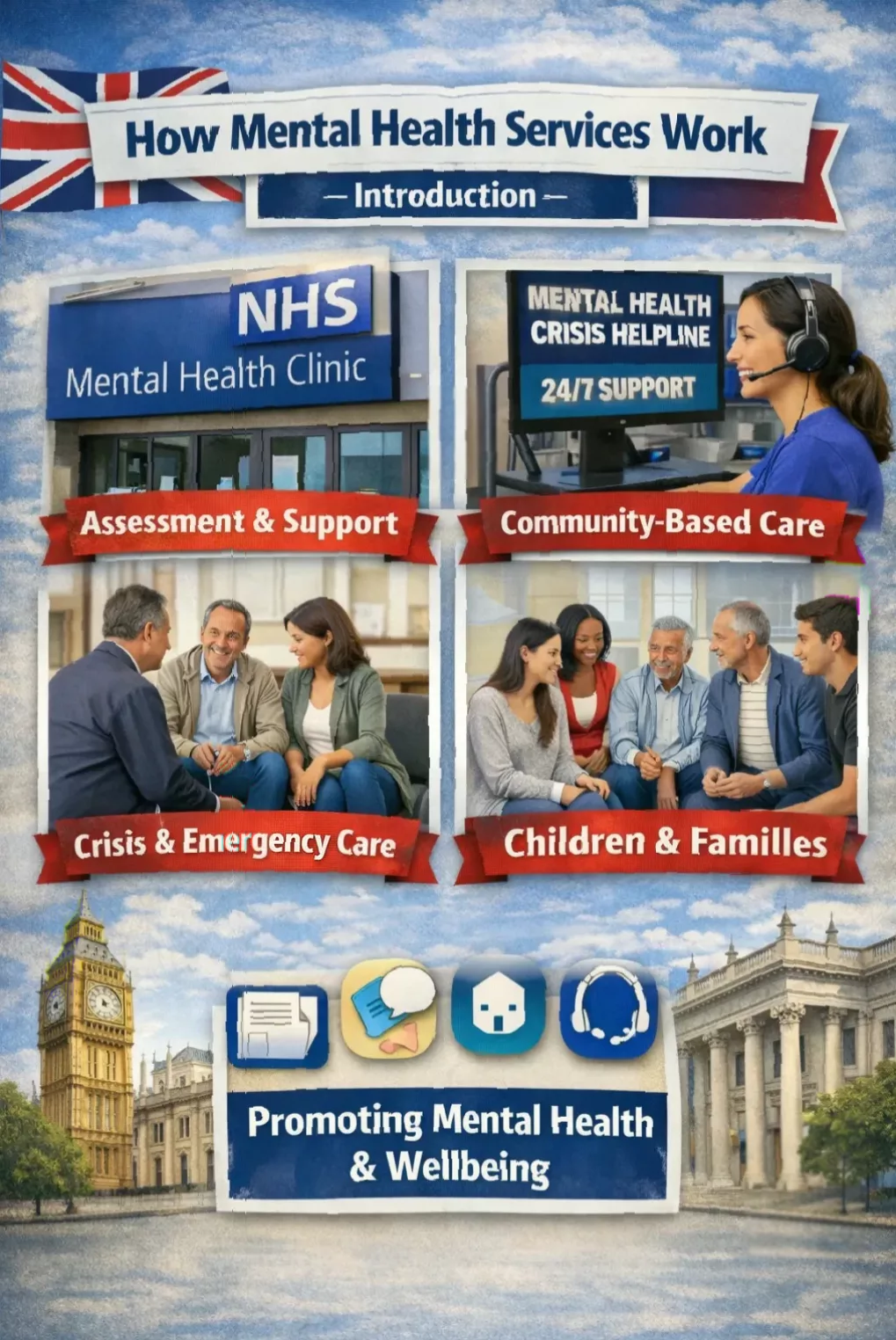
Mental health has emerged as one of the most important and urgent areas of health policy in the United Kingdom. The scale of mental illness — affecting approximately one in four people in any given year — its impact on individuals, families, workplaces and public services, and the persistent gap between the need for treatment and the availability of services have made mental health a central concern for the NHS, the government and society at large.
This guide explains how mental health services are provided in the UK, how they are funded and regulated, what the key policy developments have been and why mental health matters.
How are mental health services provided?
Mental health services in the NHS are provided across a spectrum of care, from primary care (where GPs are often the first point of contact for people experiencing mental health difficulties) through community mental health teams, specialist outpatient services, crisis services and inpatient psychiatric care. The Improving Access to Psychological Therapies (IAPT) programme, now known as NHS Talking Therapies, provides evidence-based psychological treatments — principally cognitive behavioural therapy (CBT) — for common mental health conditions including depression, anxiety, phobias and post-traumatic stress disorder. The programme treats over one million people per year in England.
Community mental health teams (CMHTs), managed by NHS mental health trusts, provide ongoing care and treatment for people with more severe and enduring mental health conditions, including schizophrenia, bipolar disorder, personality disorders and complex PTSD. CMHTs typically include psychiatrists, community psychiatric nurses, psychologists, occupational therapists, social workers and support workers. Crisis resolution and home treatment teams provide intensive support for people experiencing acute mental health crises as an alternative to hospital admission.
Inpatient psychiatric care is provided for people who require the most intensive treatment and supervision, including those detained under the Mental Health Act 1983. The availability of inpatient beds has declined significantly over the past three decades as mental health policy has shifted towards community-based care, but demand for beds — particularly for children and adolescents, people with eating disorders, and people requiring secure forensic care — frequently exceeds supply, leading to patients being placed in facilities far from their homes.
What is the Mental Health Act?
The Mental Health Act 1983 provides the legal framework for the compulsory detention and treatment of people with mental disorders who pose a risk to themselves or others. Detention under the Act — known as “sectioning” — can only be carried out by approved mental health professionals and doctors, and is subject to safeguards including the right to appeal to a Mental Health Tribunal, access to an independent mental health advocate and regular reviews of the detention.
The Mental Health Act has been the subject of long-running calls for reform. An independent review led by Sir Simon Wessely, published in 2018, found that the Act was outdated, that it disproportionately affected Black people (who are detained at four times the rate of white people), and that it did not give patients sufficient control over their own care. The government introduced a Mental Health Bill to implement many of the review’s recommendations, including limiting the grounds for detention, introducing advance choice documents (allowing patients to set out their treatment preferences in advance), reforming the use of community treatment orders and addressing racial disparities in detention.
How is children and young people’s mental health addressed?
Mental health difficulties among children and young people have increased significantly in recent years. NHS Digital surveys have found that approximately one in five children aged 8-16 in England has a probable mental health disorder, with rates rising sharply during and after the COVID-19 pandemic. Anxiety, depression, eating disorders, self-harm and behavioural difficulties are among the most common conditions affecting young people.
Children and Adolescent Mental Health Services (CAMHS) provide specialist mental health assessment and treatment for young people up to the age of 18. However, waiting times for CAMHS are often long — many young people wait months for an initial assessment, and some are unable to access specialist services at all because their condition is not considered severe enough to meet the threshold for referral. The government has invested in expanding access to mental health support in schools, including the rollout of Mental Health Support Teams that provide early intervention for pupils with mild to moderate mental health needs.
The transition from children’s to adult mental health services at age 18 is a well-documented vulnerability point, with many young people falling through gaps in provision as they move between services with different eligibility criteria, approaches and cultures. Improving transition pathways and developing services that cover the 0-25 age range are priorities for mental health policy.
What are the main mental health conditions?
Mental health conditions affect approximately one in four people in the UK in any given year. The most common conditions include anxiety disorders (including generalised anxiety disorder, social anxiety, phobias and panic disorder), depression (ranging from mild to severe, including postnatal depression), obsessive-compulsive disorder (OCD), post-traumatic stress disorder (PTSD), eating disorders (including anorexia nervosa, bulimia nervosa and binge eating disorder), bipolar disorder and schizophrenia and other psychotic disorders.
Mental health conditions can be episodic or chronic, mild or severe, and frequently co-occur with other health conditions. The impact extends well beyond the individual — mental ill health affects families, relationships, employment, education and communities. The Centre for Mental Health estimates that mental ill health costs the UK economy over £100 billion per year through lost productivity, welfare payments, healthcare costs and the impact on quality of life.
How do NHS mental health services work?
NHS mental health services in England are organised in a tiered system. Primary care — principally GPs — is the first point of contact for most people experiencing mental health difficulties. GPs can provide initial assessment, prescribe medication, refer patients to talking therapies through the NHS Talking Therapies programme (formerly IAPT — Improving Access to Psychological Therapies), and refer more complex cases to secondary mental health services.
The NHS Talking Therapies programme provides evidence-based psychological treatments for common mental health conditions, principally cognitive behavioural therapy (CBT), counselling and other structured therapies. The programme treats over one million people per year in England and has significantly expanded access to psychological treatment since its creation in 2008. However, waiting times for treatment remain a concern in many areas, and access is unevenly distributed across the country.
Secondary and specialist mental health services are provided by NHS mental health trusts, which operate community mental health teams, crisis resolution and home treatment teams, inpatient psychiatric wards, forensic mental health services, perinatal mental health services and specialist services for eating disorders, personality disorders and other complex conditions. The availability and quality of these services varies significantly between areas, and demand has grown substantially, particularly since the COVID-19 pandemic.
Crisis care for people experiencing acute mental health emergencies is provided through crisis teams, mental health liaison services in emergency departments, crisis cafes and safe havens, and the 988-style crisis helplines. The NHS Long Term Plan committed to ensuring that anyone experiencing a mental health crisis can access 24/7 support, though delivery of this commitment has been uneven.
What is the Mental Health Act reform?
The Mental Health Act 1983 provides the legal framework for the compulsory detention and treatment of people with severe mental health conditions who pose a risk to themselves or others. The Act has been the subject of a major independent review led by Sir Simon Wessely, which reported in 2018 and made wide-ranging recommendations for reform. The review found that the Act was used too often, detained too many people for too long, disproportionately affected Black people (who are over four times more likely to be detained than white people), and did not adequately respect patients’ autonomy and wishes.
The government has introduced a Mental Health Bill to reform the Act, proposing changes including strengthening patients’ rights to choose and refuse treatment, introducing statutory advance choice documents (allowing people to set out their treatment preferences in advance), tightening the criteria for detention, reducing the use of Community Treatment Orders, improving the role of the nearest relative, and addressing the racial disparities in detention rates. The Bill also proposes changes to the treatment of people with learning disabilities and autistic people under the Act, limiting the circumstances in which they can be detained in hospital.
How do workplace and community mental health initiatives work?
Mental health in the workplace has become a significant focus of policy and employer practice. The Stevenson-Farmer review of mental health and employers (2017) recommended that all employers adopt a set of “mental health core standards,” including developing a mental health at work plan, promoting open conversations about mental health, and providing support for employees experiencing mental health difficulties. Many large employers now offer employee assistance programmes (EAPs), mental health first aid training, flexible working arrangements and wellbeing support as part of their people strategies.
Community mental health support is provided by a diverse range of voluntary and community sector organisations, including Mind (the leading mental health charity in England and Wales), Rethink Mental Illness, the Samaritans (providing 24/7 emotional support), and hundreds of local organisations offering peer support, social prescribing, arts and nature-based therapies and community activities. Social prescribing — where GPs and other healthcare professionals refer patients to community activities and support services as an alternative or complement to clinical treatment — has been significantly expanded through the NHS Long Term Plan.
How is mental health funded?
Mental health spending in the NHS has increased in recent years, with the government committing to the “mental health investment standard” — a requirement for Integrated Care Boards to increase their mental health spending at least in line with their overall funding growth. Total NHS spending on mental health in England is approximately £16-17 billion per year, representing around 10 per cent of the total NHS budget.
Despite these increases, mental health advocates argue that funding remains insufficient relative to the scale of need. The historical underfunding of mental health — sometimes described as “parity of esteem” between mental and physical health remaining more aspiration than reality — means that services are starting from a position of significant underinvestment. Waiting times for psychological therapies, CAMHS, eating disorder services and community mental health support all remain longer than clinicians and patients consider acceptable.
How does mental health differ across the UK?
Mental health policy and services are devolved across the United Kingdom. In Scotland, the Mental Health Strategy sets out the Scottish Government’s priorities, with a focus on prevention, early intervention and the integration of mental health with physical health and social care. Scotland has its own Mental Health Act (the Mental Health (Care and Treatment) (Scotland) Act 2003), which provides a rights-based framework for compulsory treatment with strong protections for patients, including the involvement of named persons and independent advocacy.
In Wales, the Mental Health (Wales) Measure 2010 introduced distinctive requirements including the right to a care and treatment plan for everyone receiving secondary mental health services and the right to self-refer back to secondary services within a specified period after discharge. Wales has also invested in school-based counselling services and the CALL mental health helpline. Northern Ireland faces particular mental health challenges related to the legacy of the Troubles, with higher rates of PTSD, anxiety, depression and suicide than in the rest of the UK. The Bamford Review of Mental Health and Learning Disability provided the framework for reform, though implementation has been affected by political instability and funding constraints.
What role does the voluntary sector play in mental health?
The voluntary and community sector plays a vital role in mental health support, often filling gaps left by statutory services and providing forms of support — including peer support, social activities, advocacy, helplines and community-based wellbeing services — that complement clinical treatment. Major national charities include Mind (which provides information, advice, local services and campaigning across England and Wales), Rethink Mental Illness (which focuses on severe mental illness), the Samaritans (providing 24/7 emotional support for people in distress), Young Minds (focused on children and young people’s mental health) and the Mental Health Foundation (which promotes research and prevention).
Social prescribing — the practice of connecting people to community-based activities and support as an alternative or complement to clinical treatment — has grown significantly. NHS England has funded over 1,000 social prescribing link workers embedded in primary care networks, connecting patients to services including exercise groups, arts and creative activities, gardening, volunteering, befriending and debt and housing advice. Evidence suggests that social prescribing can improve wellbeing, reduce social isolation and decrease demand on GP services, though the evidence base is still developing and the quality and availability of community services varies significantly between areas.
Digital mental health services have grown rapidly, particularly since the COVID-19 pandemic. NHS-approved apps such as Every Mind Matters, Silvercloud and Wysa provide self-help resources, guided programmes and automated therapeutic support. Online therapy platforms deliver CBT and other evidence-based treatments remotely, improving access for people in rural areas, those with mobility limitations and those who prefer digital to face-to-face services. However, concerns remain about the quality assurance of digital mental health tools, data privacy, the digital divide and the extent to which technology can substitute for human therapeutic relationships in more complex cases.
Why does mental health policy matter?
Mental illness affects every aspect of a person’s life — their relationships, their ability to work, their physical health, their housing and their engagement with society. The economic cost of mental illness to the UK is estimated at over £100 billion per year when the costs of healthcare, lost productivity, welfare benefits, social care and the criminal justice system are included. Investing in mental health — through prevention, early intervention, accessible treatment and support for recovery — is not only a moral imperative but an economic one, delivering significant returns through improved productivity, reduced welfare dependency and better quality of life for millions of people.
Related guides
- How the NHS Works in the UK
- UK Healthcare Regulation and Quality Standards Explained
- Public Health System in the UK Explained
- How the UK Education System Works
- How the UK Government Works
Related coverage:
Read our latest UK health news
Prepared by: