A startup founded by a former Waymo engineer has secured $28 million in Series A funding to bring the rigorous testing standards of autonomous vehicles to the rapidly expanding voice AI industry. Coval, which launched in 2024 through Y Combinator and is based in San Francisco, plans to use the capital to scale its platform that runs tens of millions of simulated voice interactions before agents ever speak to real customers.
Funding and mission
The Series A round was led by Norwest, with participation from Base10 Partners, Twilio Ventures, and Y Combinator. It brings Coval’s total funding to $31 million since its inception. The company intends to invest the money in growing its sales and solutions engineering teams, and in deepening its product with more advanced simulations, new integrations, and improved human review and monitoring features.
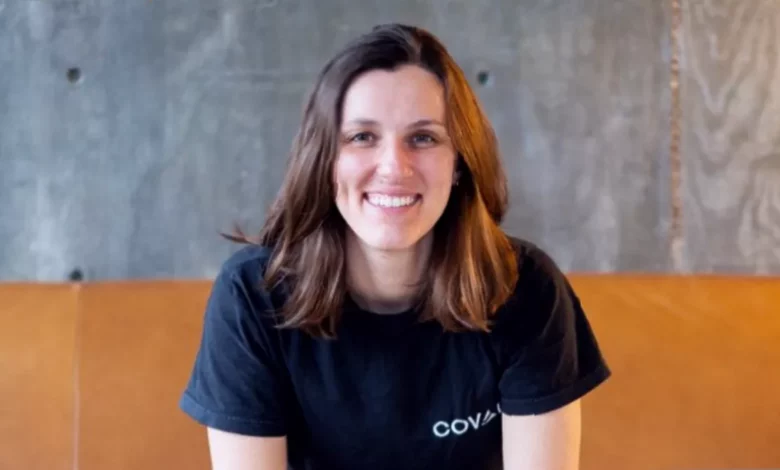
Coval was founded by Brooke Hopkins, who previously led the evaluation infrastructure team at Waymo, Alphabet’s self-driving car unit. At Waymo, her team ran millions of simulated miles for every code change, since failures after deployment were not an option. Hopkins saw that similar standards would soon be required for AI voice agents, even though few in the industry recognised the need at the time.
“Every company is going to have a voice agent just like they have a mobile app or a web app. But today, most enterprises don’t have the infrastructure to deploy these systems with confidence,” Hopkins said.
The voice AI market is growing rapidly. More than $7 billion was invested in the sector in the first quarter of 2026 alone, and the market is projected to exceed $20 billion by 2031. By 2033, the global AI voice agents market is expected to reach $35.2 billion, according to industry forecasts. Companies are already integrating voice agents into customer service, healthcare, and financial services. In January 2026, voice AI startups collectively raised $1.23 billion.
Why voice AI needs a new kind of testing
Despite this surge in adoption, most enterprises still rely on manual testing for their voice agents. Engineers review call transcripts, hunt for problems, make fixes, and hope the changes work. The method does not scale and cannot keep pace with the complexity of real-world voice interactions. Voice AI introduces challenges that go far beyond traditional software testing: acoustic variability, real-time latency, multilingual robustness, user interruptions, speech-to-text accuracy, text-to-speech quality, and regulatory compliance in sectors such as healthcare and finance.
At Waymo, Hopkins led the development of evaluation systems that ran billions of simulated miles on distributed computers, using a “Waymo World Model” to generate hyper-realistic, multi-sensor simulations that addressed the “sim-to-real” gap. She recognised that similar simulation-first approaches were needed for voice agents, where the number of possible inputs is enormous and the consequences of failure can be serious.
Coval’s platform is built specifically for voice audio, rather than adapted from general language-model tools. It runs tens of millions of simulated tests that check for accents, interruptions, background noise, and unexpected conversational turns before any agent is deployed. After launch, the platform continues to monitor live calls and automatically sends any failed conversations back into the testing pipeline. For example, a financial services company can simulate thousands of callers who give conflicting information or hang up unexpectedly, ensuring the agent handles such scenarios before interacting with real customers.
The company claims its platform can reduce manual quality checks by up to 30 times and speed up agent deployment by up to 10 times. The approach contrasts with most current industry practice, where testing is reactive and relies on engineers catching issues after they occur.
Coval’s main competitors include Hamming, which focuses on regulatory edge cases for healthcare and financial services, and Roark, a Y Combinator W25 graduate that has processed more than 10 million minutes of calls and specialises in replaying failed conversations with updated agent logic. Other players such as ReachAll, Cekura, Bluejay, and SuperBryn also operate in the space, each with different specialisations. But Coval positions itself as a comprehensive solution offering pre-deployment simulation, live monitoring, and human review, all designed from the ground up for voice.
Industry endorsements and investor backing
Coval already works with more than 60 companies, including Zoom and Deepgram – two organisations with extensive experience in voice AI failures and reliability challenges.
“Reliability and observability are a top priority for us at Zoom as voice AI moves into customer-facing production environments. Coval gives Zoom’s customers the ability to evaluate conversations systematically at scale, identify edge cases before they impact users, and move significantly faster with confidence,” said Ram Rajagopalan, head of product for CX AI at Zoom.
Deepgram, which provides voice AI infrastructure to other companies, uses Coval to test its products before launch. “Voice agents introduce a new level of complexity compared to traditional software testing. Brooke has built Coval into a core part of the modern enterprise evaluation stack by improving reliability prior to scaled deployment. For any serious enterprise deployment, this is no longer a nice-to-have,” said Anoop Dawar, COO of Deepgram.
Investors said Hopkins’ background was a decisive factor. “With her deep experience building evaluation systems for autonomous technologies at Waymo, Brooke is uniquely positioned to lead Coval in defining how companies deploy and scale voice agents reliably. She helped prove self-driving cars could work, and now she’s tackling voice AI,” said Scott Beechuk, a partner at Norwest, which has also invested in companies such as Gong, Vuori, and Spiff (now part of Salesforce).
Twilio Ventures, launched in December 2021 with a $50 million fund, invested both for financial return and strategic alignment. Twilio’s enterprise customers, who use its voice infrastructure, are a natural fit for Coval’s evaluation platform. “Trust is critical to scaling these experiences. Our investment in Coval reflects our conviction that comprehensive evaluation and testing tools, combined with a strong observability and reliability layer, are foundational to maintaining momentum in today’s voice AI renaissance,” said Andy O’Dower, VP and field CTO at Twilio.
Plans for growth and the future of evaluation
Coval says its revenue has grown ten times year over year, though it has not disclosed its annual recurring revenue or current headcount goals. The company plans to use the new funding to expand its sales and solutions engineering teams, and to enhance its product with deeper simulations, new integrations, and better human review and monitoring capabilities.
A key question for the industry is whether voice AI evaluation will remain an independent function or become absorbed into the platforms it tests. Twilio’s decision to invest in Coval, rather than build its own tool, signals that at least one major platform prefers to keep evaluation separate. As voice agents become as ubiquitous as mobile and web applications, the infrastructure for testing them reliably will be critical – and Coval is betting that independence is the only way to ensure trust at scale.