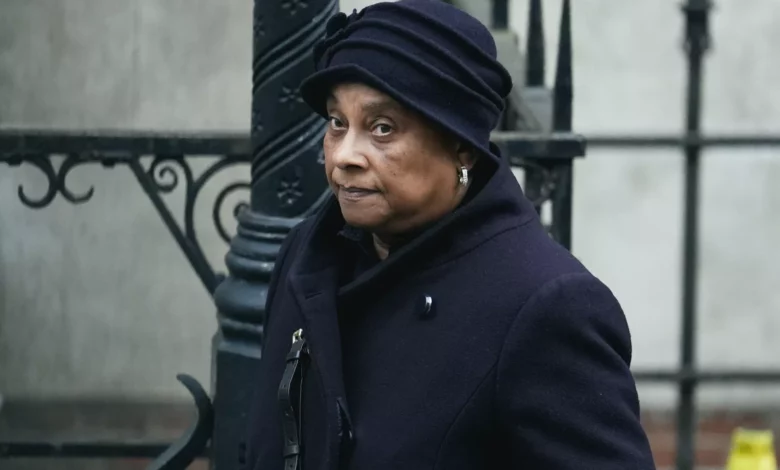
Baroness Doreen Lawrence has implored political leaders not to abandon the advances made in racial equality, warning that attempts to “go back to what it was before” risk undoing decades of hard-won progress. Speaking after the murder of 18-year-old Henry Nowak, the mother of Stephen Lawrence said many of her fellow peers in the House of Lords had “no idea what race equality means”, and argued that the country had moved towards “a much better equality for all”.
Her intervention came during a heated parliamentary debate in which Conservative figures, including former Metropolitan Police officer Lord Davies of Gower, called for “all instances of identity politics” to be “consigned to the dustbin of history”. The Conservative shadow Home Office minister asked the Government whether it would “scrap the police anti-racism commitment and all similar ideology-motivated equality, diversity and inclusion policies”. Lord Davies’ remarks were echoed by former Conservative MP Baroness Cash, who said Mr Nowak’s murder had raised “issues about the conduct of the police and their paranoia on the ground” and demanded a “proper review of police training”.
Responding for the Government, Home Office minister Lord Hanson of Flint stressed that the police still held a “sacred duty to police without fear or favour”. He added: “Everyone in this country is equal before the law and it is the promise on which our justice system rests. The equality of the citizen is the foundation of that policing and we will look at the lessons to be learned.”
Baroness Lawrence, who was made a Labour peer, offered her “condolence” to Henry Nowak’s family and stated bluntly that what had happened to him “should never have happened” and that “the police should be at fault for what happened on that night”. She directly challenged comments made by Conservative leader Kemi Badenoch, who had written in the Daily Mail that Mr Nowak’s murder and the police response must be seen as “a seminal moment for Britain on a par with the murder of Stephen Lawrence”. Mrs Badenoch argued that the country was “going backwards” because of “pernicious identity politics amplified in 2020 by the Black Lives Matter (BLM) movement, sparked by the death of George Floyd”.
Baroness Lawrence responded by pointing to the painful history of her own son’s case. “Now, when my son was murdered, there was nobody standing up and asking for judgment to happen for him,” she said. “And the mere fact that the leader of the Opposition in the Other Place can use my son’s name in referring to reform – it took 20 years and more for anybody to understand the murder of my son and to have anybody convicted.”
Police anti-racism guidance under scrutiny
The National Police Chiefs’ Council (NPCC) has announced it will review its anti-racism guidance, a move welcomed by critics who argue that current policies have contributed to a “two-tier” policing culture. The guidance currently establishes a “commitment to racial equity” and notes that this “does not mean treating everyone ‘the same’ or being ‘colour blind’”. Policing minister Sarah Jones has described the language in the commitment as “wrong”. NPCC chairman Gavin Stephens acknowledged that black communities have the lowest confidence in the police and that the wording needed review. The guidance forms part of the NPCC’s Police Race Action Plan, launched in 2022 with the aim of making the service anti-racist and boosting trust among black communities.
The debate over identity politics has intensified following the police response to Mr Nowak’s stabbing on 3 December 2025 in Southampton. Body-worn camera footage showed officers handcuffing the 18-year-old university student as he lay dying, despite him repeatedly telling them he had been stabbed and “can’t breathe”. Officers responded with dismissive phrases such as “Don’t think you have, mate”. The Independent Office for Police Conduct (IOPC) has launched an investigation, and the Hampshire and Isle of Wight Police and Crime Commissioner, Donna Jones, has commissioned an urgent inspection by His Majesty’s Inspectorate of Constabulary and Fire & Rescue Services (HMICFRS). Hampshire Police have apologised to the Nowak family, stating that officers were misled by false claims from the killer. One officer involved has resigned; three others remain in active service and are being treated as witnesses.
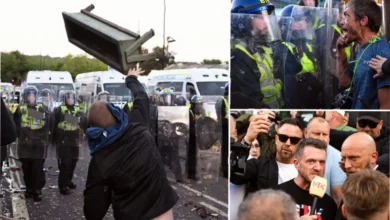
Reform UK leader Nigel Farage described Mr Nowak’s death as a “watershed moment for this country”, alleging that a “two-tier” policing system exists in which ethnic minorities are protected at the expense of the white majority. Far-right activist Tommy Robinson accused Hampshire Police of institutional racism, suggesting Mr Nowak would not have been handcuffed if he were not white. Following the murder, protests in Southampton turned violent, with demonstrators pelting police with bricks, chairs, cans and flares. Two people were arrested, and 11 officers and a police dog were injured.
The murder of Henry Nowak
Henry Nowak, a British-Polish accountancy student at the University of Southampton, was stabbed five times on the streets of Southampton on 3 December 2025. His killer, Vickrum Digwa, 23, told police attending the scene that he had been the victim of a racist attack, claiming Mr Nowak had abused him and knocked off his turban. The court later determined that Digwa had lied and that Mr Nowak had said nothing racist. The weapon used was a ceremonial Sikh knife with a 21cm blade, which prosecutors identified as a kirpan. Digwa was convicted of murder on 28 May 2026 and sentenced to life imprisonment with a minimum term of 21 years. His mother, Kiran Kaur, was convicted of assisting an offender for hiding the murder weapon.
Digwa had previously been investigated by police in 2023 for the alleged theft of ceremonial blades from a Sikh temple in Southampton, but no further action was taken. He was described in court as having a “weapon obsession”. Sikh leaders have unanimously condemned the murder and stressed that the blade used was not a kirpan, expressing concern that the actions of one individual could lead to scapegoating and prejudice against the Sikh community. Some voices have called for restrictions on the right to carry kirpans following the killing.
Henry Nowak’s father, Mark Nowak, appealed for his son’s death not to be used to create further division, hatred or tension, and criticised the police’s treatment of his son as “inhumane and degrading”. The murder has also reignited calls for knife crime to be treated as a national emergency. Baroness Lawrence, reflecting on the wider implications, cautioned against rolling back the policies that have sought to address institutional racism, a concept first established in the Macpherson Report following the 1993 murder of her son. “It is incumbent upon every institution to examine their policies and the outcome of their policies and practices to guard against disadvantaging any section of our communities,” the report found. Lord Hanson replied in the debate: “I believe that we need to maintain and retain equality, diversity, and an understanding of the impact of those challenges in the police. But that doesn’t say we can’t learn lessons about what happened in this instance.”