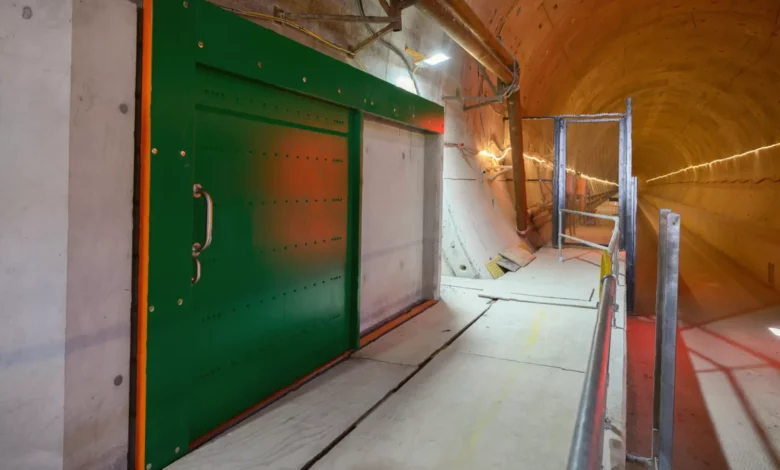
The first safety-critical cross-passage door has been installed inside HS2’s 10-mile-long Chiltern Tunnel, marking the moment the project begins its transition from a vast civil engineering exercise into a working railway. The installation signals the start of a programme that will see 300 such doors fitted across the network’s twin-bore tunnels.
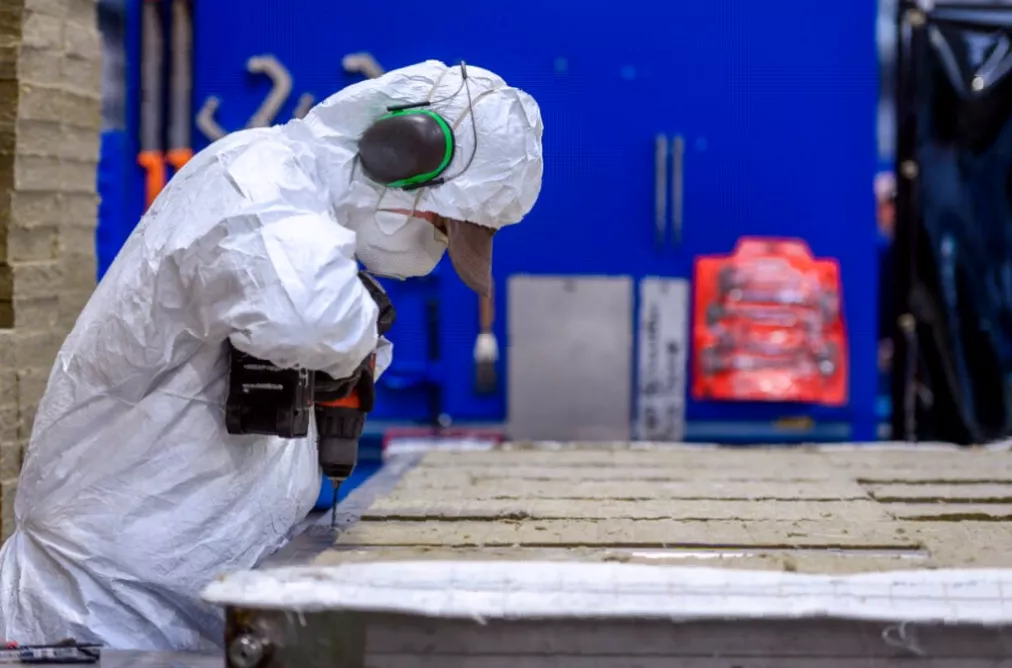
Each 60kg door is manufactured by Booth Industries at its factory in Bolton, a contract that sustains more than 130 jobs in the North West. Following a successful trial installation, the company has now completed production of the first unit and will build and install all 300 over the coming years. Booth Industries is also supplying safety doors for HS2’s Old Oak Common station and other tunnel infrastructure, with outstanding orders totalling more than £40 million.
The doors are a central element of HS2’s tunnel safety systems. In the event of an emergency requiring passengers to leave a train, walkways running alongside the tunnel bores lead to cross-passages fitted with sliding doors at either end. These allow people to move safely between the northbound and southbound tunnels, away from danger. The doors are engineered to withstand the pressure changes created by high-speed trains and to provide protection in the unlikely event of a fire. They have undergone rigorous fire, fatigue and pressure testing to meet the project’s safety requirements, and lessons from similar tunnel projects have been incorporated into the design to standardise the units and simplify installation and maintenance.
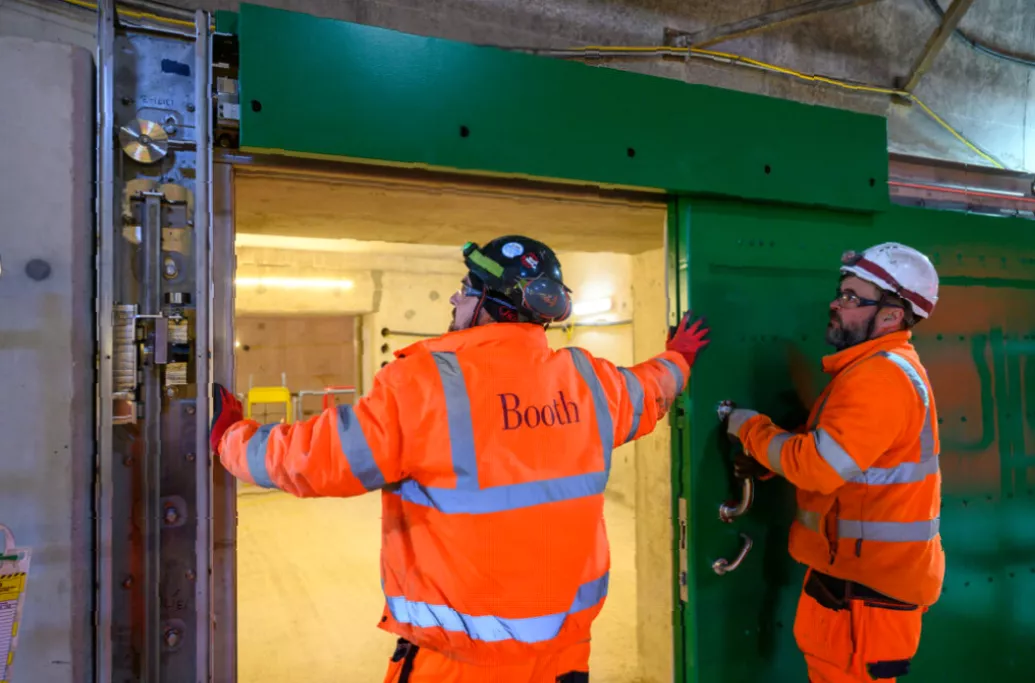
Specifically, each door is designed with a finely balanced counterweight system that makes it easy to operate during an emergency. They are built to provide 120 minutes of fire integrity and insulation, and to withstand constant pressures of 14 kilopascals. These performance specifications ensure that in the event of a fire or other incident, the cross-passage doors remain reliable barriers between the two tunnel bores.
Qasir Raza, Head of Delivery Tunnels and Lineside M&E at HS2, said: “It’s great to see the first cross-passage door come off the production line. This is a key milestone as we start to transition from civil engineering to installation of the critical systems needed to operate the railway.” He added that while the doors may not be visible to passengers, they will play a crucial role in enabling HS2 to run “a fast, reliable and safe service, day in, day out.”
Broader tunnel network and project challenges
The Chiltern Tunnel, at 10 miles, is the longest of five deep twin-bore tunnels on HS2’s route between London and the West Midlands. Together, those five tunnels stretch for more than 27 miles, with a further five cut-and-cover tunnels extending for five miles. The cross-passage doors will be installed across all of them.
Yet the project has faced sustained criticism over its spiralling costs and repeated delays. Recent estimates put the total bill at £102.7 billion, with current expectations for services to begin between 2029 and 2033 — far later than the original target of 2026 — and some projections suggesting delays as far as 2039. Transport Secretary Heidi Alexander has described the cost and time overruns as “obscene.”
HS2 has also drawn opposition from environmental activists and local campaigners over its impact on ancient woodlands and the wider landscape. The company has undertaken extensive Environmental Impact Assessments for each phase of the project. Protests have added significant costs to the overall programme, estimated to be in the hundreds of millions of pounds.