Two men have been convicted of carrying out a premeditated knife attack on an Iranian journalist in London, a stabbing that prosecutors said was ordered by a third party acting on behalf of the Iranian state.
Nandito Badea, 21, and George Stana, 25, both Romanian nationals, were found guilty at Woolwich Crown Court of wounding with intent to cause grievous bodily harm after the assault on Pouria Zeraati, a British journalist of Iranian origin. Zeraati works for Iran International, a Farsi-language dissident broadcaster that has been designated a terrorist organisation by Tehran since 2022. The two men are due to be sentenced at the Old Bailey on 3 July. A third suspect, David Andrei, was arrested in Romania and did not face trial in the UK; he is subject to criminal proceedings in Bucharest.
The attack and the evidence
Zeraati was stabbed three times in the thigh as he walked home to Wimbledon in March 2024. Prosecutors described it as a “planned attack preceded by reconnaissance which was ordered by a third party acting on behalf of the Iranian state”. Duncan Atkinson KC, prosecuting, said all three men had operated as a team, carrying out “extensive surveillance and reconnaissance” before the stabbing.
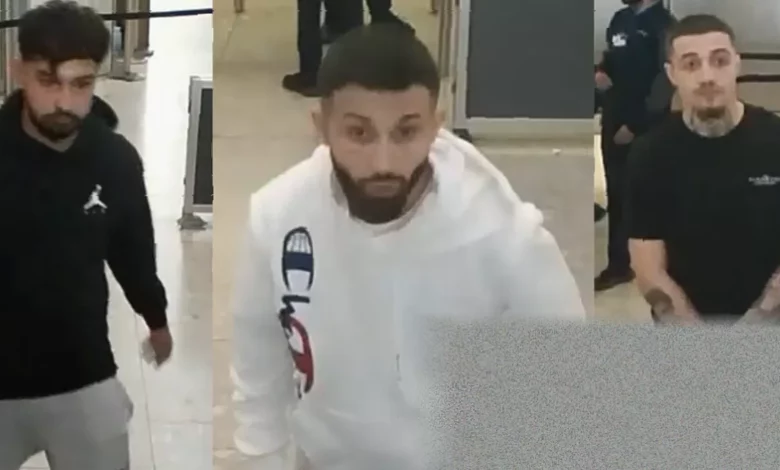
CCTV footage captured Stana engaged in what the prosecution called “hostile reconnaissance” ahead of the attack. Badea wielded the knife, according to Zeraati. Stana waited in a blue Mazda 3 getaway car. The victim said Andrei was also part of the assault. Badea and Stana told police they were surprised by the stabbing and claimed Andrei was the real culprit. Jurors were told the attackers were seen laughing as they fled the scene.
The men entered the UK from Romania in January and February 2024, staying in accommodation funded by others, including a company called Hemroc Ltd through Stana’s sister’s bank account. Badea and Stana were arrested in Romania in December 2024 and extradited to the UK.
Alleged Iranian state involvement
The prosecution’s case rested on the claim that the attack was not the work of rogue individuals but was orchestrated by an unidentified third party acting on behalf of the Iranian regime. The evidence presented to the jury included images of posters displayed in Tehran that featured journalists, among them Zeraati, with the words “Wanted: dead or alive”. The posters were shown as part of the prosecution’s effort to demonstrate the regime’s hostile posture toward Iran International journalists.
The head of Iran’s diplomatic mission in London has denied any link between Tehran and the attack. The denial, however, sits within a broader pattern of alleged Iranian-directed operations against dissidents and journalists in the UK. British security officials have warned that Iran poses a “potentially lethal” danger to individuals in the country. Since 2022, British authorities have disrupted dozens of Iran-linked plots targeting dissidents and journalists, according to UK security sources. MI5 has tracked more than 20 potentially lethal Iran-backed plots in the past year alone, intelligence that was cited in a 2024 report by the UK’s Intelligence and Security Committee. That report noted that Tehran uses proxy groups, including criminal networks, to carry out attacks with plausible deniability.
The UK government placed Iran’s intelligence and security establishment on the highest tier of its foreign influence watchlist in March 2023, due to threats against Iranian journalists. The designation requires Iran and its agents to register their activities in the UK; non-compliance can lead to a prison sentence. In February 2023, Counter Terrorism Policing advised Iran International to move to a more secure location because of the severity of threats, prompting the broadcaster to temporarily relocate its operations to Washington D.C. before returning to a new London base.
The attack on Zeraati is one element of a wider campaign of intimidation. Iran International’s offices in northwest London were the target of an attempted arson attack in April 2024, and three men were later charged over that incident. In December 2023, a man named Magomed-Husejn Dovtaev was convicted of carrying out hostile reconnaissance on the broadcaster’s London headquarters. In May 2026, a Greek national was charged under Britain’s National Security Act for allegedly assisting a foreign intelligence service, believed to be Iran’s, over the targeting of an Iran International journalist.
UN experts have condemned Iran’s intensifying repression of Iran International journalists and their families, citing credible threats to the lives and safety of 45 journalists and 315 family members across seven countries. Those threats have escalated since mid-June 2025, with family members in Iran subjected to interrogation, surveillance, and threats of arrest and death. Iranian state television has also broadcast death threats against UK-based journalists.
The Iranian regime’s reach has extended beyond journalists: there have been arson attacks targeting Jewish people in the UK. In March 2025, two men were convicted in a separate murder-for-hire scheme targeting Iranian-American journalist Masih Alinejad.
Frank Ferguson, head of the Crown Prosecution Service’s special crime and counter-terrorism division, said the evidence in the Zeraati case showed “a deliberate, targeted attack on a journalist, carried out after months of planning and surveillance”. He added: “These convictions reflect the strength of that evidence and the seriousness of an offence designed to silence a journalist through intimidation and violence.”