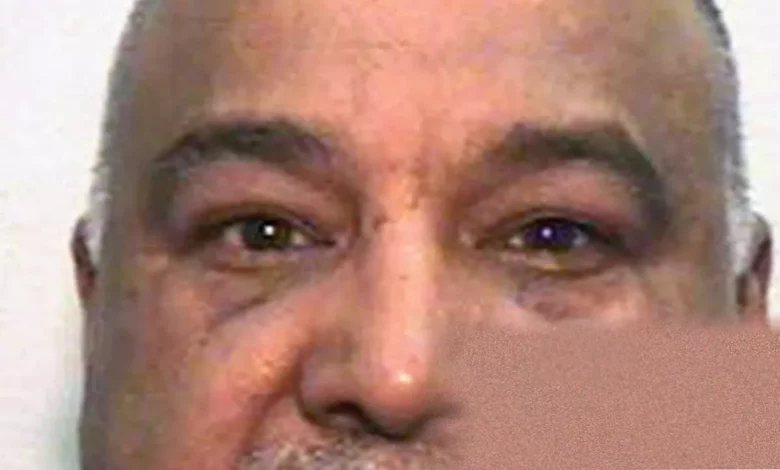
Andy Burnham has vowed to close a legal loophole that is preventing the deportation of a convicted Rochdale grooming gang leader, insisting that “nothing would be off the table” if he becomes prime minister to ensure the man is removed from the country.
In his first major intervention since becoming Labour leader-in-waiting, Burnham said he would ask the Home and Foreign Secretaries to review “all possible options” in the case of Shabir Ahmed, 73, who is due to be freed from prison on 2 July. “Like everyone, I want this vile criminal out of the country,” Burnham said. “Victims must come first.”
The Legal Loophole
The obstacle to removing Ahmed lies in a specific provision of the Immigration Act 1971. The Act exempts individuals who were ordinarily resident in the United Kingdom on or before 1 January 1973 and who had lived in the country for at least five years before deportation was considered. Because Ahmed arrived in Britain before 1973 and had been resident here for decades, the government has admitted it cannot deport him to Pakistan – even though his British citizenship has been revoked.
Under the same law, the Home Secretary has a duty to deport any foreign criminal sentenced to at least 12 months’ imprisonment, subject to certain exceptions. But for those who satisfy the pre-1973 residence condition, that duty does not apply. The provision effectively creates a carve‑out for a small group of long‑term residents, and it is this carve‑out that Burnham has pledged to close.
Ahmed, known to his victims as “Daddy”, was sentenced in 2012 to 22 years in prison for 30 child rape charges, trafficking and sexual assault involving girls as young as 13. He was a central figure in the Rochdale grooming gang, which is believed to have had as many as 50 victims. Victims were told at the time of his conviction that he would be deported on release.
A letter believed to be from the Probation Service, sent to victims this week, explained that the terms of the 1971 Act prevented his removal. It is understood that the Foreign Secretary, Yvette Cooper, has already spoken to Burnham about increasing the rate of deportations for foreign national offenders and has raised the issue with her counterparts in other countries.
Victims’ Ordeal and Distress
For those who suffered at Ahmed’s hands, the news of his impending release has reopened deep wounds. The father of a woman who was the main prosecution witness – known as Girl A – has called on Burnham to lift what he described as a “statute of limitations” to allow Ahmed to be removed. “My daughter’s life has been turned upside down, and remains upside down, and the reason is Shabir Ahmed,” he said. “This man is a racist paedophile, a horrible man who showed no remorse. He is a danger to all girls and women, whatever their race. If a person was not born here but commits a serious crime like rape or murder then we should find a way of removing them.”
Girl A, now an adult, was groomed and abused in Rochdale from the age of 12 by at least 50 men. Her family only discovered the abuse after she smashed up a restaurant when she was 14. During police interviews, she described how she and other girls were plied with drugs and alcohol, repeatedly raped and trafficked around nearby towns and cities. Her father said if Ahmed remained in the UK there was a chance he could meet her in the street. “Calling for him to be removed is not a racist position,” he added.
Another victim expressed fear for her own safety and that of her children. “The main ringleader is getting out of prison, who is well known in Rochdale, Oldham and Middleton, so even if he’s not in that area, he still knows people and has a chance to talk to people from that area and that makes me unsafe,” she said.
Claire Waxman, the victims’ commissioner, said the case highlighted a much wider problem. “Victims in this case were told the offender would be deported, and that information was incorrect. It has understandably raised expectations and has now caused further upset and trauma,” she said. She warned that too often victims were given “inconsistent or inaccurate information about offenders”, undermining confidence in the justice system and compounding their fear and trauma.
Political Reactions and Wider Context
Alex Davies-Jones, who resigned as victims’ minister on 12 May, told the Guardian it was “horrific” that Ahmed would be allowed back into the community. “If we truly are to put victims back at the heart of the criminal justice system then we have got to listen to them and act here,” she said. On the same day, Jess Phillips also resigned as minister for safeguarding and violence against women and girls, citing a lack of sufficient action on safeguarding issues. Phillips said of the Ahmed case: “There is no easy solution but it’s right that new legislative options are considered in cases where people have nationality elsewhere.”
The Home Office has stressed that Ahmed will face stringent conditions on release. He will be placed on the sex offender register for life, ordered to stay away from his victims, banned from contacting any child or young person, fitted with an electronic tag and forced to live initially in supervised accommodation with 24‑hour staffing. An exclusion zone centred on Rochdale will be in place, and if he breaches any condition he will be immediately returned to prison.
Neil Emmott, the leader of Rochdale Council, said he was “very concerned” about the impact on survivors still living in the town. “I hope that the reports that he will not be allowed into our borough are accurate and that we never see him on our streets again,” he said. “If he is seen in our borough, I will demand that he is sent back to prison immediately. As far as I’m concerned, they should have locked him up and thrown away the key.”
Yvette Cooper has stated that the Labour government will “restore order to the border” by setting up a new returns and enforcement unit with 1,000 extra staff, focusing on removing foreign national offenders. She has repeatedly said that foreign criminals “should have no place in this country”.
The legal barriers facing the government are not limited to the 1971 Act. Under the European Convention on Human Rights, deportations can be challenged on Article 8 grounds – the right to private and family life. Two other Rochdale grooming gang members, Qari Abdul Rauf and Adil Khan, had their British citizenship stripped in 2022 after a legal battle that reached the Court of Appeal, where they invoked Article 8 to try to block their removal. The Home Office has not confirmed whether they have been deported. Burnham himself previously called on the Conservative government in 2022 “to do everything within its power to deport grooming gang members”.
The Home Office said it was “committed to doing everything possible to deport foreign national offenders and are clear they should have no place in this country”. A spokesperson added: “As previous governments have found, this necessarily involves the agreement of the receiving country, which has not always been possible. But we are currently working with colleagues across government to explore all possible options in this case.”