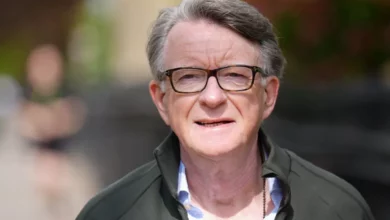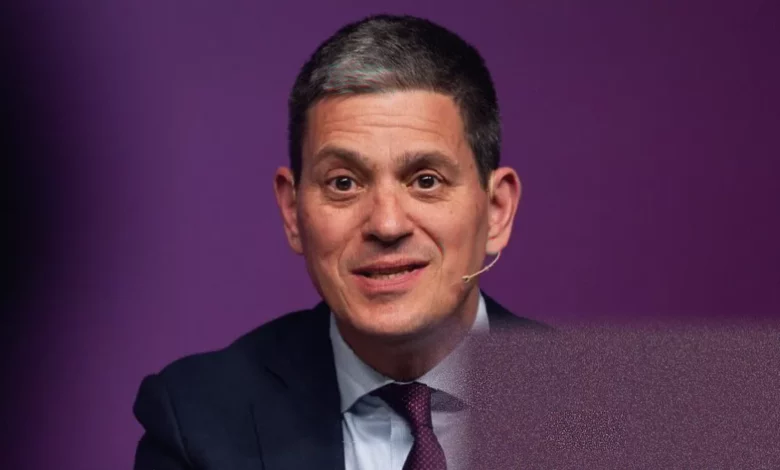
David Miliband has called for the UK to build a “national consensus” on rejoining the European Union, arguing that the country’s security and prosperity depend on an “institutionalised, deep and strong relationship with the rest of Europe”. The former Foreign Secretary, who now serves as president of the International Rescue Committee, said he was “very happy” to treat rejoining as a “long-term goal” but acknowledged that the terms Britain enjoyed before the 2016 referendum were no longer available.
Speaking on BBC Radio 4’s Today programme, Miliband made clear that the current government’s approach to resetting relations with the EU was far too timid. He pointed to the projected economic gain of £9 billion by 2040 from the reset measures – a figure he contrasted with a UK economy that reached £3 trillion in nominal GDP for the first time in 2025, making it the world’s fifth-largest national economy. “When I look at the reset so far, it’s only worth £9bn by 2040 and I remember that Britain is a £3tn economy, I’m left saying no, we need a much higher dosage in our reset,” he said.
A deeper reset – and the single market proposal
The government’s own reset efforts have included a specific proposal to create a single market for goods with the EU, presented by Michael Ellam, the Cabinet Office’s top official on EU relations, during recent visits to Brussels. According to reports, EU officials have rejected that idea, instead suggesting alternatives such as a customs union or membership of the European Economic Area – options that clash with the current government’s stance on free movement. UK officials maintain that the single market for goods remains under discussion, but Miliband’s intervention suggests he believes far more ambitious steps are necessary.
The former Foreign Secretary stressed that the EU itself is changing profoundly, with Ukraine’s potential accession now dominating Brussels’ agenda. “The big issue for Brussels today is not Britain joining; it’s Ukraine joining,” he said. Discussions are reportedly under way about associate membership and different tiers of membership for Ukraine, which applied for EU membership in February 2022 and was granted candidate status four months later. Miliband argued that the UK must recognise this shifting landscape and position itself accordingly.
Broader concerns: global disorder and a generation left behind
Miliband’s remarks extended well beyond EU relations. He said Britain was “in the eye of a global storm” with the international order being “ripped up”, the economy being reshaped by new technology, and the welfare system needing to pivot from supporting older people to investing in younger generations. He specifically highlighted the plight of young people aged 16 to 24 who are not in education, employment or training – a group that numbered 957,000 in the final quarter of 2025, representing 12.8% of that age bracket. The NEET rate for 18- to 24-year-olds rose to 15% in 2025, a figure that has been described as a “crisis” driven by rising ill-health, weak vocational education and a “hands-off” benefits system.
“We have got a massive debate to have in this country about how we spur wealth creation, distribute it fairly [and] reinvent the way in which a government works,” Miliband said. He warned that if political energy is consumed by questions of “who, not what”, the country will miss the point.
When asked directly whether the Labour party needed a new leader and the country a new prime minister, Miliband – who lost the 2010 Labour leadership contest to his brother Ed – replied: “When the world changes, we have to change. And in the two years since the general election, the world has changed fundamentally.” He insisted he was more concerned with government action than with leadership, adding that the “what” questions on wealth creation, fair distribution and the reinvention of government were absolutely central.