The government is betting on private investors to fill the gap left by deep cuts to the UK’s climate aid, with development minister Jenny Chapman confirming that the strategy hinges on leveraging far larger sums of commercial capital than the reduced grant-based budget can provide. Direct UK climate finance from the aid budget is set to fall by almost 15 per cent – from £11.6 billion over the five years to 2025/26 to around £6 billion over the next three years – as part of a wider reduction in overseas development aid to 0.3 per cent of gross national income. Chapman, who sits in the Lords as Baroness Chapman, said the government is “absolutely aiming to continue growing climate finance year on year” and intends to “go further by leveraging additional finance, even where there is less grant-based funding within that total”.
The new approach, she said, represents a shift “from traditional aid grants to long-term partnerships that bring investment, expertise and international finance”. Central to the plan is the use of UK aid more tactfully to “de-risk and catalyse much greater [private funding] flows” than in the past. The UK’s development finance institution, British International Investments (BII), will lead this effort, aiming to crowd in pension funds, asset managers and other private investors by taking on early-stage risk that conventional financiers typically avoid. Chapman described climate as a “priority area” alongside women and girls, health, and the sharing of expertise in finance and governance.
Critics warn private finance cannot fill adaptation gap
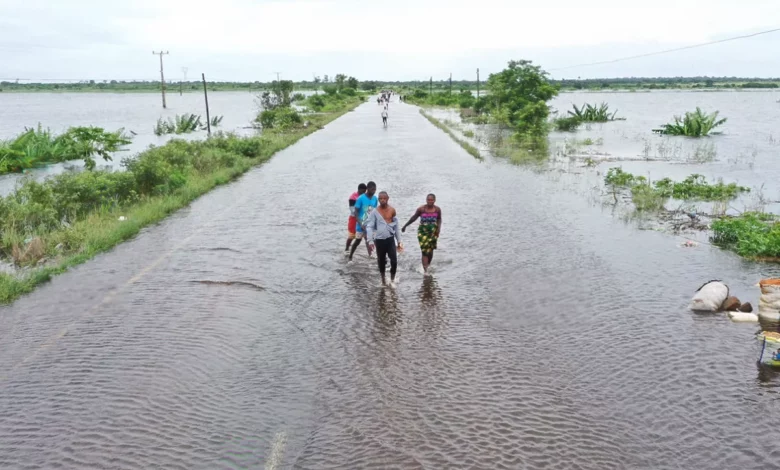
Development organisations and climate experts have reacted with dismay, arguing that while renewable energy projects can attract private capital, the vast majority of climate adaptation work – building seawalls, improving drought-resistant agriculture, protecting water supplies – offers no obvious profit stream. “You cannot charge for a seawall because everyone benefits from it; it is a classic public good… the private sector is not funding adaptation,” said Avinash Persaud, special adviser on climate change to the president of the Inter-American Development Bank, during a recent evidence session at the International Development Committee. Vera Songwe of the Brookings Institute has made similar warnings.
Separate research from the NGO Mercy Corps found that only three per cent of adaptation finance needs in developing countries have been met by the private sector, with even optimistic assumptions suggesting this share is unlikely ever to exceed 20 per cent. The criticism has been sharpened by the government’s decision to halve its planned contribution to the UN’s Green Climate Fund (GCF) – a key source of grants for low-income countries – from £1.62 billion to £815 million for the 2024–2027 funding period. Sarah Champion, the Labour MP who chairs the International Development Committee, said: “The minister talks about aiming to grow climate finance year on year, but the sad reality is that we are reducing the UK’s contribution to the UN’s largest dedicated climate fund.” She added that the government would only be able to exceed its £11.6 billion target “by including private sector investment in the total figure”, despite evidence that private finance is “rarely well-suited to non-revenue-generating interventions”.
Catherine Pettengell, executive director of Climate Action Network UK, said: “Cutting climate finance, and deprioritising grant finance to countries and communities on the frontline of the climate emergency, is totally the wrong approach from this government. UK climate finance should not be used to generate profits for companies, instead it must prevent those who have done least to cause the climate crisis paying the highest price.” Critics have also pointed to what they describe as “creative accounting”, noting that the new climate finance target represents a real-terms cut of approximately 30 per cent when adjusted for inflation, and that relabelling existing support as climate finance dilutes the actual impact. There are concerns that the growing reliance on loans and non-grant instruments risks deepening the debt burden of vulnerable countries. Harjeet Singh of the Satat Sampada Climate Foundation called the cuts “moral bankruptcy”, given the UK’s historical responsibility for emissions.
The global context has added to the unease. Developed countries collectively agreed to a new goal of $300 billion a year in climate finance by 2035, replacing the earlier $100 billion target that was belatedly met in 2022. OECD figures show that in 2023 and 2024 developed countries provided and mobilised $132.8 billion and $136.7 billion respectively, technically exceeding the old goal, but those numbers have been criticised for including accounting tricks and cuts to other forms of aid. The UK’s reduction in overseas development aid is mirrored by other nations, including the United States, which has significantly cut its international climate finance, and is partly linked to a wider UK strategy to increase defence spending.
British International Investment at the centre of the plan
At the heart of the government’s new strategy is BII, the UK’s development finance institution, which has existed for nearly 80 years. Owned by the UK government and backed by public finance, BII invests in projects for returns as low as two per cent, with the theory that a “halo effect” around its investments will encourage more risk-averse private financiers to follow. To date, BII says it has created one million jobs globally and provided 26 million people in Sub-Saharan Africa with power through investments that most conventional financiers would be too wary to make.
Earlier this month BII published a new strategy setting out its central role in the government’s plan. It aims to leverage £15 billion of new investment into developing countries over the next five years, with £8 billion coming from BII itself and the remainder “crowded in” from private investors such as pension funds and asset managers. Approximately 40 per cent of this total is expected to qualify as climate finance, and 25 per cent is set to be directed to the world’s least developed countries. BII has already launched specific initiatives, including British Climate Partners, a £1.1 billion programme designed to mobilise £3.5 billion of private capital for climate solutions in Asia – focused on India, the Philippines, Indonesia and Vietnam – and North Star, a platform to accelerate renewable power generation in India by addressing funding gaps and attracting additional private capital. The institution’s strategy also emphasises supporting a “just transition” to a net-zero economy, with a focus on job creation and skills development.
Critics, however, have targeted BII for a tendency to pursue “investor-friendly” deals, including partnerships with luxury hotels and billionaire-owned companies, rather than focusing on the areas where people in developing countries most need investment. The establishment of a Loss and Damage Fund at COP27 has also prompted calls for developed countries to contribute more finance directly, rather than channelling it through investment vehicles.
Despite the widespread criticism, Baroness Chapman insisted that the government’s approach could still generate significant funding for climate adaptation. “There are good examples of private finance being mobilised into adaptation and resilience projects, often with grant finance helping to catalyse that investment,” she told The Independent. On the decision to cut funding to the Green Climate Fund, she said: “We have had to make difficult decisions as we reduced our [overseas aid] budget, including reducing our contribution to the Green Climate Fund. However, the UK remains one of its largest contributors and we will continue to support the Fund’s leadership to maximise its impact for vulnerable countries.”