A water company has been fined a record £1.85 million after a parasite outbreak left hundreds of people ill and forced tens of thousands of households to boil their water in Devon last year. South West Water (SWW) pleaded guilty to supplying water unfit for human consumption – an offence under the Water Industry Act 1991 – following a cryptosporidiosis outbreak that devastated the Brixham area. The Department for Environment, Food and Rural Affairs confirmed the penalty was the largest ever imposed for a drinking water offence.
The outbreak and its impact
The outbreak, which ran from 31 March to 1 July 2024, affected the Littlehempston Water Supply Zone and hit approximately 16,000 households and businesses in Brixham, Kingswear and Paignton – a population of nearly 39,000. In total, 537 people fell ill, with 159 requiring contact with the healthcare system and ten admitted to hospital. Victims described suffering from watery diarrhoea, stomach cramps, dizziness, sickness, nausea, vomiting, fever and loss of appetite. One resident who needed hospital treatment told Exeter Magistrates’ Court: “My illness made me feel as if I was beaten up and it has been a long process getting over it.” Another said the water tasted as though it had come from a pond and that they lost almost a stone. A mother recounted how her son needed to be put on a drip, describing the hospital stay as “nothing short of horrendous”, adding that afterwards he would only bathe in bottled water because he was so frightened.
The boil-water notice was first issued around 14 May 2024, after SWW received the first report of illness from the UK Health Security Agency the previous afternoon. The company initially advised customers to use tap water as normal and reviewed treatment works, finding no issues. For some properties the notice remained in place for up to 54 days, with the final restrictions lifted on 8 July. Schools and other services were significantly disrupted: Mark Eager, then principal of Brixham College, said attendance and GCSE results had been affected, particularly for disadvantaged children. Pupils described missing classes, exams, trips and sports; one said she felt too ill to revise. The local economy, especially tourism, was hit hard as holidaymakers cancelled plans.
Systemic failures laid bare
Joe Millington, for the Drinking Water Inspectorate (DWI) which brought the prosecution, told the court that the outbreak was “likely caused by a compromised air valve on farmland where cattle and sheep were kept”. The valve was found covered in mud, its seal broken, with water pooling across the field. A soil sample taken next to the valve tested positive for cryptosporidium. Millington said the farm had never been inspected, despite being a “high-risk site”. Crucially, he revealed that air valves at SWW “were not being inspected in accordance with the policy [SWW] drafted in 2020”. The barrister said the risks around air valves had been known for more than ten years, and that the DWI had recommended formal inspection policies four years before the outbreak. Yet, he added: “Not a single air valve was inspected.” District Judge Stuart Smith described the situation as a “systemic failure of governance”, calling it a “serious failure” that had caused “deep and lasting harm”. He noted that water companies were “regional monopolies” with “captive customers”, leading to an enduring mistrust of tap water. The judge quoted one resident who said: “In this country we are lucky to have good drinking water but we have lost trust in our water supply.”
The DWI’s view, Millington said, was that the offence was at the “higher end of culpability”. He also told the court that at one point during the crisis SWW wrongly lifted its boil-water instruction for 28 houses because of “issues with its digital mapping system”. Dominic Kay KC, representing SWW, acknowledged the company had created an air-valve inspection policy following the DWI recommendation but accepted it “had not been implemented”. He said SWW believes there was a second ingress of cryptosporidium into the water system from the farm, and that after the outbreak officials found illegal “cross connections” – links between safe drinking water and water not fit for human consumption. The company believes the parasite first entered the mains through those cross connections, then later via the air valve. Kay also said the valve’s cover had been “deliberately removed”, allowing silt, soil and water to collect around it.
Company’s track record and response
The court heard that SWW has 22 previous convictions since June 2014, including for supplying water unfit for human consumption in north Devon in 2018, and a £233,333 fine in 2022 for providing brown, odorous water. In April 2023 the company was fined £2.15 million for a series of environmental offences across Devon and Cornwall – at the time the largest such fine in the region. The DWI, which regulates public water supplies in England and Wales, brought only three prosecutions against water companies for poor quality water between 2021 and June 2024, despite 362 instances where water was flagged as unfit.
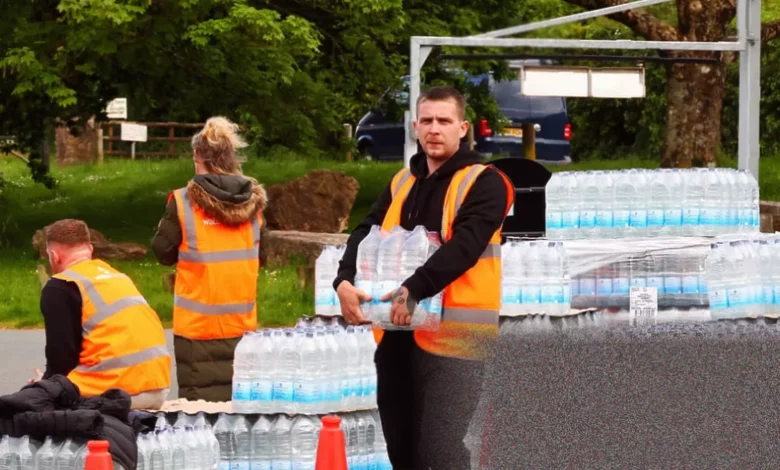
Kay said SWW unreservedly apologised and felt “genuine remorse”. David Harris, the managing director of water services at South West Water, said: “We have cooperated fully with the Drinking Water Inspectorate throughout its investigations and through the end of the legal process. We apologise again to our customers who were impacted and have always taken full responsibility for the water that was supplied.” SWW confirmed it would pay approximately £3.5 million in compensation to affected customers – initially offering £15, later increasing to £115 and then to £265 for some residents – and pledged a £1.2 million fund to help the tourism industry recover. The total cost of the outbreak and its aftermath to Pennon, SWW’s owner, was £16 million. The company said it had flushed more than 34km of pipes, laid new pipes, installed ultraviolet treatment and microfilters, deployed over 1,000 staff and distributed 1.5 million bottles of water.
Caroline Voaden, the Liberal Democrat MP for South Devon, said: “Words like incompetent and reckless are so often used to describe our broken water industry that they have almost lost their meaning. But the truth is South West Water failed at their most basic duty, and no amount of money will ever fully regain the customer trust they squandered.” Water minister Emma Hardy called the contamination “utterly unacceptable” and said affected communities “deserve answers”. The sentencing hearing was initially scheduled for 2 June 2026, but was brought forward. Alongside the £1.85 million fine, SWW was ordered to pay a £2,000 surcharge and £75,000 in costs, bringing the total to £1.93 million.