England and Wales experienced their warmest spring on record, provisional figures from the Met Office have confirmed, as the end of May brought an “exceptionally early” heatwave that pushed seasonal temperatures to new highs. The mean average temperature in England across March, April and May reached 10.41C, surpassing the previous record of 10.23C and marking the third consecutive year that England has registered a new warmest spring.
Record temperatures and the late-May heatwave
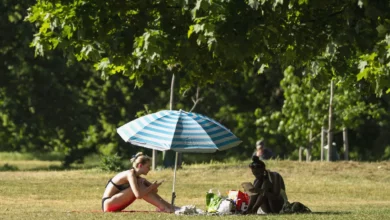
The record was driven in large part by a spell of extreme heat at the end of May. A high of 35.1C was provisionally measured at Kew Gardens in London on 26 May, a new record for the month of May — beating the previous high of 32.8C set in 1922 and equalled in 1944. Heathrow reached 35.0C on the same day, and in parts of the country temperatures topped 30C for six consecutive days. Amber heat-health alerts were issued for several English regions, warning of risks to vulnerable people and potential pressure on health services. A Met Office attribution study found that breaking the May temperature record of 32.8C is around three times more likely in the current climate than it would have been in a pre-industrial climate.
For the UK as a whole, this spring was the third warmest on record. Wales recorded a mean temperature of 9.73C, placing it second behind 2025 (9.69C), with 1893 third (9.66C) and 2024 fourth (9.44C). Scotland experienced its eighth warmest spring, while Northern Ireland recorded its joint sixth warmest. The Met Office said that forty counties had their warmest spring for mean temperature since comparable data began in 1884, and that nine of the ten warmest springs in England have occurred since 2007. Dr Emily Carlisle, a Met Office scientist, said: “This spring highlights both the natural variability of the UK’s weather and the longer-term warming we are observing. While we expect fluctuations from year to year, this spring shows some of the changes we’re seeing in our weather patterns, with more extreme conditions becoming more frequent.”

Drought fears mount as spring rainfall plummets
The combination of record warmth and severely depleted rainfall has raised serious concerns about water supplies and the potential for drought. Met Office figures show that England received only 57 per cent of its long-term average rainfall during the spring months — the driest spring since the reign of Queen Victoria. The shortfall was most acute in the south and east, where several counties received around a third of their normal seasonal rainfall: Cambridgeshire had 35 per cent of its long-term average, Essex 34 per cent, and both Kent and Suffolk 33 per cent. There was a sharp north-south divide: northern England received 90 per cent of its average spring rainfall, while southern England received just 50 per cent.
Across the UK as a whole, spring rainfall was 14 per cent below the long-term meteorological average. The driest conditions have pushed parts of the country towards drought status. The north-west of England has already seen a drought declaration, and prolonged dry weather is affecting the north-east, Yorkshire, and the east and west Midlands. Some water companies may need to implement further drought measures if substantial rain does not arrive soon. Thames Water has escalated its drought level plans and warned of potential usage restrictions.

The Environment Agency has convened a meeting of the National Drought Group in the coming weeks to assess the impact of the heatwave and prepare for the possibility of continued dry conditions. Helen Wakeham, the Environment Agency’s director of water and chairwoman of the group, said: “No parts of England are currently in drought, but the risk increases the longer it remains hot and dry. The recent heatwave has seen significant peaks in demand for water while river flows have fallen due to the very dry spring, and reservoir levels are reducing. We continue to closely track the situation and have convened a National Drought Group meeting in the coming weeks, so we are prepared if the dry conditions remain.”
The group includes representatives from the Met Office, government departments, water companies, the National Farmers’ Union, the Canal & River Trust, as well as angling and conservation experts. Water UK has noted that water companies are setting records for leak repairs and moving water between regions, while the Environment Agency is increasing inspections and recruiting additional staff to monitor compliance.

The dry spring has also dealt a blow to agriculture. Farmers are facing potential poor harvests following a record warm and dry spring on the heels of an exceptionally wet winter. UK arable crop income fell by more than £1 billion in 2024, largely due to extreme weather, and wheat production dropped by 20.3 per cent to 11.1 million tonnes — the lowest since 2020. The Energy and Climate Intelligence Unit has warned that climate change is having a “devastating impact” on UK farming and food security.
Scientists point out that warmer springs are an anticipated feature of climate change and that the current event fits a longer-term pattern. Spring is the fastest-warming season in the UK, with average temperatures increasing by 1.8C since 1970. A marine heatwave affecting waters around the UK in May 2024 contributed to last year’s land temperature records, and the world experienced a continuous streak of record temperatures for 11 months up to April 2024. Dr Carlisle said: “The fact that nine of the 10 warmest springs in England have occurred since 2007 illustrates this ongoing shift in the UK’s climate.” Helen Wakeham added that “heavier rainfall and drier summers are the shape of things to come.”