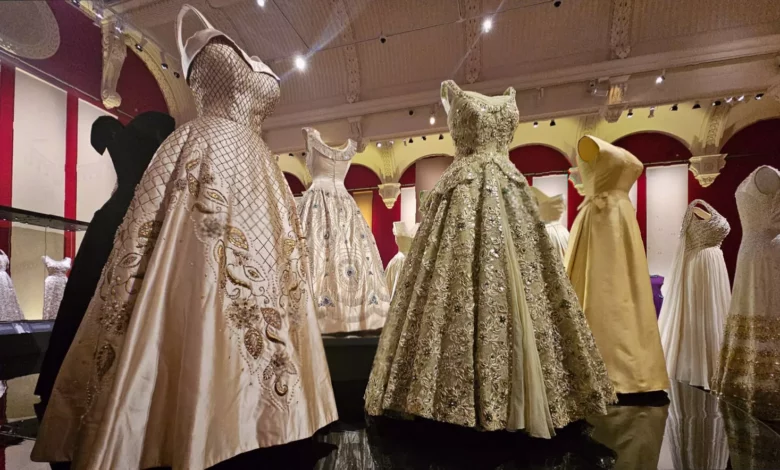
The Queen Elizabeth II fashion exhibition at the King’s Gallery has sold out within weeks of opening, prompting the gallery to extend the run by six months in a move that will allow tens of thousands more visitors to see what is expected to become the most-visited show in the history of the Royal Collection Trust.
Originally scheduled to close on 18 October 2026, the exhibition will now run until 18 April 2027, with tickets already on sale for the extended period. Tim Knox, Director of the Royal Collection, said the response had been “unprecedented” and that the extension would give visitors from the UK and overseas the chance to experience “this once-in-a-generation tribute to Queen Elizabeth II’s life and legacy.” The exhibition opened on 10 April 2026, coinciding with the centenary of the late Queen’s birth.
More than 300 items: the story of a reign told through clothing
The scale of the display is its defining feature. More than 300 items from Queen Elizabeth II’s personal fashion archive — one of the most comprehensive single-owner collections of British fashion, numbering over 4,000 pieces — are on show. Approximately half of them are on public display for the first time. The exhibition traces the evolution of her style across all ten decades of her life, from a yellow fairy princess dress she wore in 1934 to the outfits she chose for state occasions in her later years. Caroline de Guitaut, Surveyor of The King’s Works of Art and the exhibition’s curator, has emphasised the Queen’s close involvement in the creation of her wardrobe, directing details such as hemlines and embellishments.
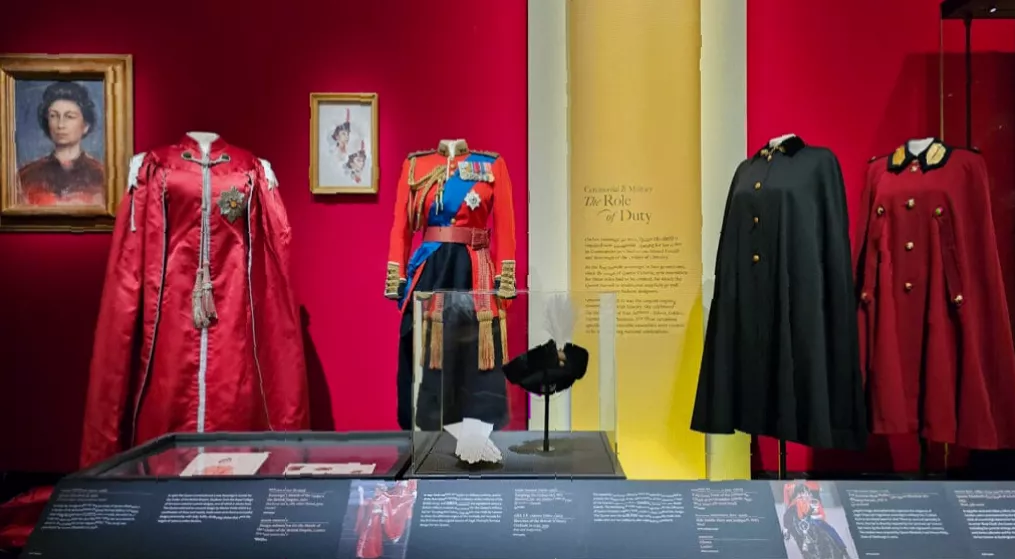
The collection is organised into four sections. The first is arranged chronologically, while the remaining three are thematic, covering her country clothing, ceremonial attire, and diplomatic dressing. Among the most significant pieces are her 1947 wedding dress and her 1953 coronation gown, both designed by Norman Hartnell. Also on display are garments worn for major events such as the 2012 London Olympics, alongside her “off-duty” wardrobe of tweed suits, riding clothes, raincoats, and headscarves. The exhibition includes design sketches, fabric samples, and handwritten correspondence, offering insight into the behind-the-scenes process of dressing the Queen. One item with deep personal and dynastic resonance is the royal christening robe, which has been worn by 62 royal babies, including the young Princess Elizabeth.
The exhibition’s significance extends beyond fashion history. It explores how the Queen used clothing as a tool for communication, diplomacy, and identity, actively directing the symbolic meaning of her attire. Her royal tour wardrobes were often designed to convey messages to host countries through colours or emblems, and her choice of designers — including Hardy Amies, Angela Kelly, Edward Molyneux, Ian Thomas, and contemporary figures such as Erdem Moralıoğlu, Richard Quinn, and Christopher Kane — reflected a strategic commitment to supporting British industry. Her outfits were meticulously catalogued in ledgers that recorded dates, events, weather, and the individuals she met while wearing them, to avoid repetition with foreign dignitaries. The archive itself numbers more than 4,000 items and traces the evolution of British fashion from the early 20th century to the present day.
The Royal Collection Trust has described the show as the largest display of the late Queen’s fashion ever staged. Knox, who was knighted in 2022 for services to museums, publishing, and the creative industries, noted that the exhibition explores how clothing was used to project stability and continuity throughout her reign.
Royal visits, associated publications and online content
King Charles and Queen Camilla visited the exhibition on the eve of the late Queen’s 100th birthday. The accompanying book, Queen Elizabeth II: Fashion and Style, which offers an in-depth look at the fashion archive with contributions from designers and experts, has already been reprinted due to popular demand. A wider centenary retail range has also proved popular, alongside a programme of online talks and behind-the-scenes films exploring the Queen’s wardrobe. Specific events include a curator’s introduction to the exhibition and “Exhibition in Focus Talks.”
The King’s Gallery itself has a history that mirrors the monarchy’s adaptation to public engagement. It opened in 1962 as the first part of Buckingham Palace to be opened to the public, built on the site of Queen Victoria’s private chapel, which was destroyed by an air raid in 1940. It was expanded and reopened for Queen Elizabeth II’s Golden Jubilee in 2002, significantly increasing its exhibition space, and renamed The King’s Gallery in 2024 to reflect the current reign. The Royal Collection it showcases is one of the largest and most significant art collections in the world.
Book now to secure tickets and avoid the 2027 price rise
Visitors are being advised to book well in advance because demand remains exceptionally high. Tickets for dates in October 2026 are the earliest currently available, and those able to attend before the end of 2026 will pay lower prices. In 2027, adult tickets will rise from £22.00 to £24.00, young persons (18–24) from £14.00 to £15.50, children (5–17) from £11.00 to £12.00, and disabled visitors from £11.00 to £12.00. Under-5s and access companions remain free. Concessionary tickets at £1 are available for those receiving Universal Credit and other named benefits, broadening access to the show.
The exhibition, Queen Elizabeth II: Her Life in Style, is at the King’s Gallery next to Buckingham Palace and now runs until 18 April 2027.