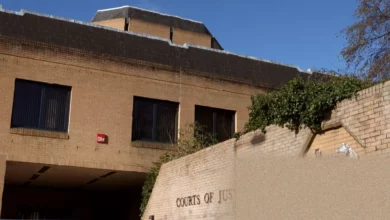
A driver has been convicted of a criminal offence after honking his horn outside a train station to greet a friend — a routine act that landed him with a court bill of £266.
Van driver caught on police radar
Jamie Spence, 52, from Chelmsford, was spotted by an Essex Police officer while sounding the horn on his Ford Transit van outside Braintree train station on 4 December last year. The officer, PC Asa Smith, told Colchester Magistrates’ Court that he had begun watching Spence’s vehicle after suspecting it was travelling above the 20 mph speed limit on the approach. Once the van was stationary outside the station, Smith observed Spence “hooted horn a number of times to try and get the attention of a friend, not for the purpose of warning other road users,” according to a statement read in court.
Spence was reported for “sounding an unauthorised audible warning instrument on a vehicle” – a charge that falls under Regulation 99(4) of the Road Vehicles (Construction and Use) Regulations 1986 and Section 42 of the Road Traffic Act 1988.
Legal process and consequences
Spence pleaded guilty to the charge. At a hearing before magistrate Richard Deacon, he was sentenced to a £146 fine and ordered to pay £120 in costs, bringing the total to £266. Court documents show he had been offered the chance to settle the matter out of court by paying a fixed penalty fine but did not respond. Essex Police decided to bring a criminal charge on 29 April, and the sentence was passed on 12 May.
The case was dealt with under the Single Justice Procedure (SJP), a system used for low-level criminal offences that does not require a public hearing. Magistrates decide such cases based on written evidence. Under the SJP, defendants who plead guilty or fail to respond within 21 days can be dealt with without appearing in court. In 2020, approximately 535,000 cases were heard via the SJP in England and Wales. Colchester Magistrates’ Court processed Spence’s case alongside 110 other criminal matters that day.
The law on horn usage: what you need to know
The case has drawn attention to the strict rules governing the use of a vehicle’s horn. The Highway Code, in Rule 112, states that a car horn is a safety device and should only be used to warn other road users of danger — for example, an impending collision or a potentially dangerous situation. It can also be used to alert drivers when approaching a blind spot or a corner, or in low-visibility conditions such as fog, heavy rain or snow.
The RAC advises motorists that the Highway Code says drivers “should only use a car horn when they need to alert other road users of danger of a collision or in the event of a potentially dangerous situation.” It adds: “Misuse of a car horn is illegal and can result in fines for the driver and owner of the vehicle.”
Using a horn to greet someone, attract a friend’s attention, express annoyance, hurry other road users or scare animals is prohibited. It is also illegal to sound a horn when the vehicle is stationary unless there is an immediate danger of a collision. In built-up areas, a horn must not be used between 11.30 pm and 7.00 am except in an emergency.
Penalties can vary. A police officer can issue a Fixed Penalty Notice of £30 for misuse. If the case goes to court, the fine can rise to up to £1,000. The specific offence code for “sounding unauthorised audible warning instrument on a vehicle” carries a £50 fine and no penalty points under normal circumstances, although the court can impose a higher penalty.
Wider context
In the same week as Spence’s sentencing, motorists in England and Wales were prosecuted for offences including failing to maintain windscreen wipers, driving the wrong way up a motorway slip road, and attending an illegal road race.
A search for “Jamie Spence” in criminal records also reveals a separate case from March 2020 involving a 35-year-old Jamie Spence from Newton Aycliffe who received a suspended prison sentence for aggravated vehicle taking, drink driving and driving without insurance. However, the court confirmed that individual is a different person from the Jamie Spence involved in the horn incident, who is 52 and from Chelmsford.