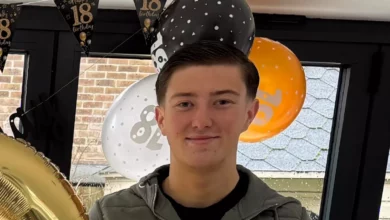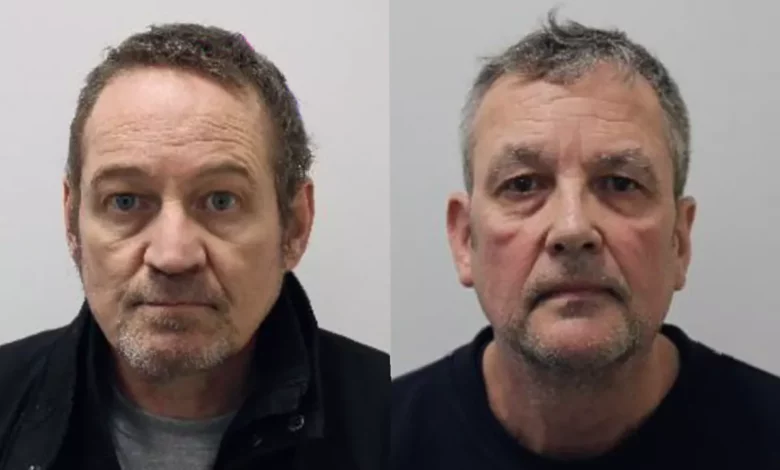
Two brothers have been convicted of murder, 42 years after a brutal attack on a civil servant that prosecutors say was driven by the pair’s “hobby” of targeting lone men they believed to be gay. Michael Stewart, 57, and Anthony Stewart, 60, were found guilty at the Old Bailey on Monday after a jury deliberated for less than three hours, finally bringing a measure of justice for the family of Anthony Littler, a 45-year-old executive officer for HM Customs and Excise who was bludgeoned to death in an alleyway in north London in May 1984.
The attack and the decades-long dead end
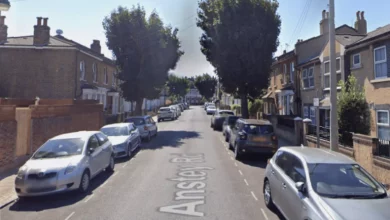
Littler had spent the evening of April 30, 1984, at a pub in Carshalton, Surrey, with a real ale enthusiast group before catching the Tube home. He arrived at East Finchley station at 12.18am on May 1 and was ambushed as he walked through a narrow alleyway known as The Causeway. He was struck twice over the head with a blunt weapon, sustaining a “catastrophic” brain injury. Members of the public found him lying in a pool of blood; a resident, Edward Dyer, had heard a loud shout that “sounded like a cry of pain”. Annalieze and James Hainge discovered the victim and called emergency services while Mr Hainge stayed with him. Littler died at the scene, still in possession of his briefcase, £80 in cash and credit cards. Prosecutor John Price KC told jurors that the assailants may have panicked and fled without robbing him when the extent of his injuries became clear.
Minutes earlier, at 12.22am, an anonymous caller had dialled 999, asking for an “ambulance – quick” and saying: “I can’t stop, just get an ambulance to East Finchley station, there’s a man hurt outside the station.” The caller, described as “abnormally concerned,” “well spoken” and with a “young sounding voice”, claimed the casualty was “bleeding heavily” before hanging up. Station staff found no trace of an injured man and the alert was stood down. Evidence at trial now showed that Michael Stewart made that first 999 call.
Despite house-to-house police inquiries and appeals on BBC Crimewatch and ITV’s Police 5, the case quickly went cold. The Stewart brothers claimed they were at home at the time, with Anthony Stewart insisting he never used the alleyway. Detectives initially considered a possible link to another assault two days earlier, in which a man reported being attacked near the tube station by two young people with a baseball bat, but that victim was never traced.
The breakthrough and the covert operation that secured the conviction
The case remained unsolved for 29 years until the defendants’ younger brother, Daniel – who was 10 at the time of the murder – came forward to police following a family dispute. He told officers that his older brothers had confessed to the killing and boasted about being involved in “queer bashing”. Over the years, Michael Stewart also admitted his guilt to a girlfriend, even showing her the scene of the crime. Another witness reported that Michael bragged about killing someone and “rung the old bill” afterwards, pointing out the location where “we killed him”. Years later, Anthony reportedly broke down in tears while confessing to the same individual.
In 2022, the Metropolitan Police reopened the investigation and deployed an unusual set of covert tactics. Officers bugged the brothers’ cars and Michael’s home, hoping to capture admissions in their own words. Senior Crown Prosecutor Samantha Yelland described the decision as “unusual” but necessary because of the absence of other evidence to prosecute a historic hate crime – the potential murder weapon had been lost, and decades had passed. While Anthony Stewart was described as a man of few words, Michael proved to have a “loose tongue” and bragged about his actions in 1984 on the hidden recordings.
Prosecutors also uncovered evidence that the alibi Anthony Stewart gave in the initial investigation was false. He and his parents claimed he was at the family home on the night of the murder, but statements from other family members indicated he was living in a bedsit elsewhere and only visited his mother on Sundays. Both brothers, of north London, denied involvement and declined to give evidence at trial. They have been remanded into custody and will be sentenced on July 3.
Victim impact and family’s long wait for justice
Detective Chief Inspector Neil John, of Scotland Yard, said: “Anthony’s life was suddenly cut short when he was killed in a brutal attack by two teenagers who we now know had a clear propensity for the most sickening kind of violence. They targeted Anthony because he was alone, defenceless and walking down a dark alley in which they knew no-one would see them carrying out their horrendous assault.” At the time of the murder, Michael was 15 and Anthony was 18 – ages that, under the law of joint enterprise, still held them both responsible for the killing.
Littler’s family have endured decades of pain. His cousin, Tricia McClure, described him as a “lovely, kind and gentle man” who “wouldn’t have hurt a fly” and “didn’t deserve what happened to him”, adding that “the sadness never goes away”. The conviction, she said, offered some measure of closure. Ms Yelland, the senior crown prosecutor, said: “I’m so pleased that we’ve managed to get justice all these years later for Anthony Littler. It’s never right that someone dies in these circumstances, in particular in a hate crime. I’m glad that we’ve been able to get justice for his family.”
The prosecution laid out the wider context of the attack: the Stewart siblings and their friends had turned targeting gay men into a “hobby” by the spring of 1984. The murder, committed in an era when homophobic violence was rife and police attitudes toward the LGBTQ+ community were often hostile, is now recognised as an historic hate crime. Scotland Yard’s own review has acknowledged institutional homophobia within the force as a factor in past cases. For Anthony Littler’s family, the verdict at last answers the question of who was responsible – 42 years after he walked out of East Finchley station and into the darkness of The Causeway.