Google Search requires user consent to function. This is the stark reality facing readers of many news websites, including those following the return of heavyweight boxer Anthony Joshua. The technology behind the search box—Google Custom Search—cannot load without a user actively clicking “Allow and Continue”, a step that triggers the use of cookies or similar tracking technologies. Without that consent, the search feature simply does not appear.
This consent mechanism is not a minor technical detail; it is a fundamental shift in how users interact with online content. The request for permission is a direct consequence of data protection regulations, most notably the UK’s General Data Protection Regulation (GDPR) and the Privacy and Electronic Communications Regulations (PECR). These rules require that websites obtain informed, freely given consent before placing non-essential cookies or accessing a user’s device. Google Custom Search, which relies on cookies to personalise results and track usage, qualifies as non-essential. Hence the pop-up: the site cannot assume permission. It must ask. The wording is explicit: “we need your consent to load Google Custom Search, which may use cookies or similar technologies.” Clicking “Allow and Continue” is the only way to proceed, and the alternative is to refuse and lose the search function entirely.
The search function and the Joshua comeback story
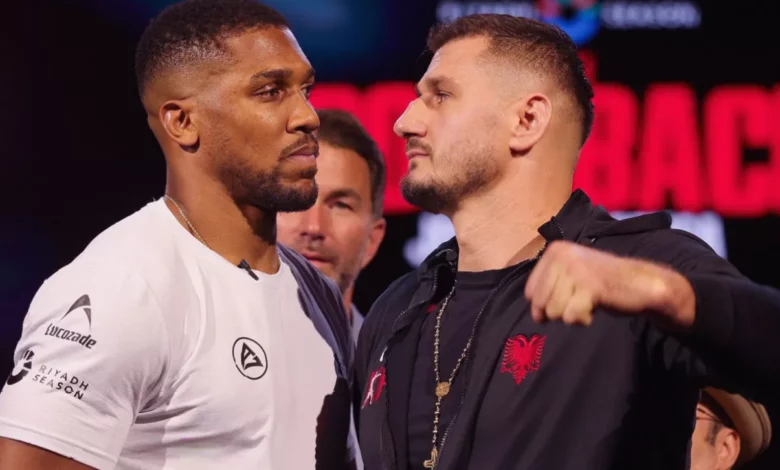
For a user intent on finding the latest news about Anthony Joshua’s comeback fight, the consent barrier is the first hurdle. Once past it, the search tool becomes the gateway to a rich and complex story—one that the research briefing details in full. Joshua is scheduled to return to the ring on July 25, 2026, in Riyadh, Saudi Arabia, in an event titled “The Comeback”. His opponent will be Kristian Prenga, an Albanian boxer with 20 wins from 21 fights, 19 of them by knockout. Prenga is described as relatively unknown at elite level but possessing genuine knockout power. The choice is deliberate: promoter Eddie Hearn has stated that Joshua needs a comeback fight before any bout with Tyson Fury, prioritising activity and recovery after a period of serious physical and mental injury.
That period of injury stems from a devastating car crash in Nigeria on December 29, 2025. The accident occurred on the Lagos-Ibadan expressway in Ogun State. The Lexus Jeep Joshua was travelling in collided with a stationary truck. Two of his close friends and team members—Sina Ghami, his strength and conditioning coach, and Latif Ayodele, known as Latz, one of his trainers—died in the incident. Joshua himself sustained minor injuries and was taken to an undisclosed hospital before being discharged. Preliminary investigations indicated the vehicle was travelling “beyond the legally prescribed speed limit” and lost control during an overtaking manoeuvre. The driver of the Jeep, Adeniyi Mobolaji Kayode, has been charged with causing death by dangerous driving, reckless and negligent driving, driving without due care, and driving without a valid driver’s licence. He was granted bail.
Hearn admitted he questioned whether Joshua would ever return to boxing after the crash, describing the fighter as “seriously damaged”. Joshua himself has referred to the incident as a period of “mental strength therapy”. The promoter’s strategy is clear: a careful rebuilding process. Joshua has resumed training, including sessions with Oleksandr Usyk in Spain and Ukraine. Usyk, a former opponent, is now reportedly helping Joshua rebuild his timing, agility and stamina, adopting a more versatile and technical approach. Joshua has been training under medical guidance, and Hearn has indicated that doctors advised him to fight before facing Fury, citing inactivity, injuries and medical advice.
The search tool, if allowed, would also reveal details of Joshua’s immediate future. A fight with Tyson Fury is reportedly signed and expected to take place in the fourth quarter of 2026, likely in November, branded as the “Battle of Britain”. Fury is also expected to have an interim bout beforehand. Joshua has outlined a clear vision for 2026: fight Prenga, then Fury, then potentially fight for a championship. He has stated his goal is to “climb the ladder” and that he is “the man for the job”. Other names mentioned for potential opponents earlier in the process include Deontay Wilder, Joseph Parker and Daniel Dubois, but the immediate focus has settled on Prenga.
Privacy and the cost of consent
The privacy implications of clicking “Allow and Continue” extend beyond the search itself. Google Custom Search is operated by a third-party company that may set cookies for purposes including advertising, analytics and personalisation. The website’s privacy policy, referenced in the consent prompt, is intended to explain what data is collected, how it is used and with whom it is shared. But the immediacy of the pop-up means many users click through without reading the policy, effectively surrendering data in exchange for a utility that once was free and unfettered.
This tension between functionality and privacy is particularly acute for sensitive stories like Joshua’s comeback. His professional record stands at 29 wins (26 by knockout) and 4 losses. He is a two-time unified heavyweight world champion. His recent fights include a knockout win against Jake Paul in December 2025, a knockout loss to Daniel Dubois in September 2024, and knockout wins against Francis Ngannou in March 2024 and Otto Wallin in December 2023. He has spoken openly about his mental health, particularly after his losses to Usyk, and has adopted a new mindset focused on dedication to boxing. He has stated he would retire if he lost his comeback fight. Following his losses to Usyk, Joshua has been working on reinventing himself under trainer Ben Davison and now Usyk, focusing on a more disciplined and tactical style. Hearn remains confident the Joshua-Fury fight will happen, describing it as “signed, sealed, delivered”.
Every one of those details—from the charge against Kayode to Joshua’s mental health therapy, from Prenga’s knockout record to Hearn’s quote about no guarantees—is accessible only if the user first grants consent to the Google search tool. The consent requirement thus becomes not merely a legal formality but a filter on information. Those who refuse the prompt lose access to a central feature of the news site. Those who allow it trade a piece of their digital privacy for the ability to learn, in all its depth, about a fighter’s recovery from trauma, his return to the ring, and the heavyweight showdown that may define his career.