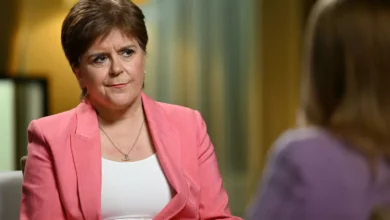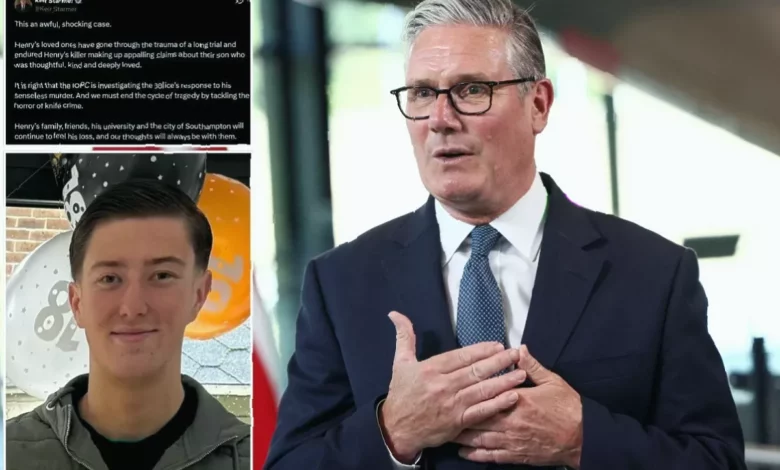
Keir Starmer issued a statement on the murder of Henry Nowak only after facing mounting public and political pressure over his silence, releasing an 89-word response hours after the killer was sentenced to life in prison.
The Prime Minister described the case as “awful, shocking” and acknowledged the trauma inflicted on the teenager’s family by a trial in which his murderer made “appalling claims” about their son. Starmer said it was right that the Independent Office for Police Conduct (IOPC) is investigating the police response, and he called for an end to “the cycle of tragedy” by tackling knife crime.
Henry Nowak, an 18-year-old Polish British student from Chafford Hundred in Essex, was in his first year studying accountancy and finance at the University of Southampton when he was killed. On the evening of 3 December 2025, he was walking home on Belmont Road in the Portswood suburb after a night out with his football team. He had been drinking at the Hobbit Pub but was under the drink-drive limit. He began filming Vickrum Digwa, who was walking away from him. Digwa turned and told Nowak, “I am a bad man,” moments before stabbing him five times with a 21cm blade. The fatal wound was to the heart.
Life Sentence for Drug-Addled Killer
Vickrum Digwa, 23, was jailed for life at the conclusion of his trial and must serve a minimum of 21 years. He was convicted of murder and possession of a bladed article. Digwa told police that Nowak had racially abused him and punched him before the attack, knocking his Sikh turban off. Prosecutors described this allegation as a “wicked lie” fabricated to justify the stabbing and mislead officers. Judge William Mousley KC accepted the prosecution’s case, saying: “I am sure that Henry had said nothing racist. You are the only person to make that claim, and it is completely at odds with his previous character.”
The judge also told Digwa that he had brought shame on his family, community, and religion, and that his actions had stirred up racial tension. The court heard that Digwa had a “weapon obsession,” that he was “skilled with weapons, trained with weapons, sleeps with weapons, searches for weapons on his phone,” according to Nicholas Lobbenberg KC for the prosecution. Police later found 20 bladed weapons at Digwa’s home. Digwa’s mother, Kiran Kaur, was found guilty of assisting an offender by removing the weapon from the scene and will be sentenced separately.
Police Response Under Independent Scrutiny
The actions of Hampshire Police on the night of the murder have come under intense scrutiny and are now the subject of an investigation by the IOPC. Officers arriving at the scene handcuffed Henry Nowak. This happened after Digwa falsely claimed that Nowak had racially abused him. Officers reportedly did not immediately believe Nowak when he told them he had been stabbed, and it took several minutes for them to realise the severity of his injuries. Nowak’s last words were reportedly, “Please, brother, I can’t breathe.”
Hampshire Police have apologised for handcuffing the teenager. The force referred itself to the IOPC the day after the incident. The IOPC is investigating the police contact with Nowak prior to his death, including the use of handcuffs and the first aid provided. The pathologist who examined Nowak stated that the fatal wound was deep and internal, making it difficult to find, and that bleeding was inside his body. Some reports indicate that even with immediate medical attention, Nowak might not have been saved. The police response has drawn widespread criticism, including from Elon Musk, who offered to fund a private prosecution against the force.
Religious Exemption for Blades Faces Renewed Scrutiny
The murder weapon was a 21cm kirpan, a Sikh ceremonial knife, which Digwa carried alongside a smaller kirpan that he did not use. UK law permits the possession and carrying of kirpans for religious, ceremonial, sporting, or historical reasons, distinguishing between a blade carried as a religious article and a blade used as a weapon. The defence must prove a good reason for carrying the knife.
The case has reignited political debate over religious exemptions for bladed articles. Hampshire’s Police and Crime Commissioner Donna Jones confirmed hours before Starmer broke his silence that she intends to write to the Prime Minister requesting a national review of the laws concerning the carrying of bladed articles under religious exemptions. “Nothing can bring Henry back,” she said. “There is no doubt Henry’s last moments were terrifying.”
Reform UK has pledged to repeal the exemption entirely. Its home affairs spokesman Zia Yusuf said: “I don’t care what religion you are. Nobody other than law enforcement will get to carry deadly weapons under a Reform government.” Yusuf also highlighted that Digwa would walk around his accountancy firm office wearing a large dagger. British Sikh organisations have pushed back against calls to ban the kirpan, warning that the actions of one individual should not stigmatise an entire faith community. They emphasise that legal protections apply only for genuine religious purposes and do not extend to acts of violence. The Sikh Federation has criticised the Crown Prosecution Service for calling the knife a “kirpan” during the trial.
Political Pressure Mounts Before Starmer’s Statement
Pressure had been building on the Prime Minister for days before he released his statement. Shadow Home Secretary Chris Philp said Starmer needed to “come out and show some leadership,” contrasting his swift condemnation of the murder of George Floyd in 2020 — when Starmer took the knee and urged Boris Johnson to challenge Donald Trump to “respect human rights” — with his silence over Nowak’s death on British soil. Philp also criticised police for prioritising an arrest over saving Nowak’s life.
Reform UK’s Zia Yusuf also attacked Starmer’s silence, saying there had been “complete silence from Keir Starmer” and from Home Secretary Shabana Mahmood. Yusuf compared the response directly to the Black Lives Matter protests in 2020, sharing an image of Starmer taking the knee. He described the police response as “one of the most catastrophic failures in modern British policing.”